


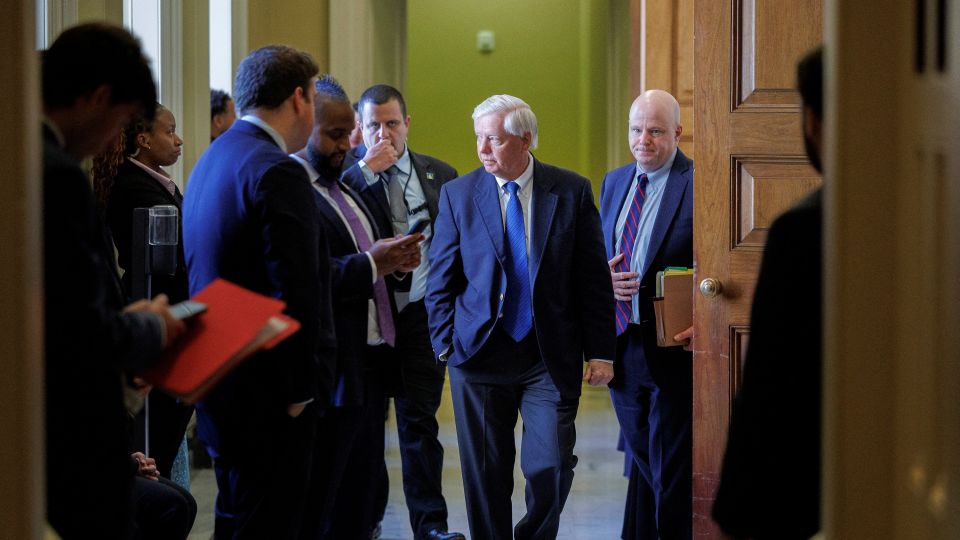
Power Vacuum: Senator’s Absence Jolts DC, Scrambles November Election Outlook
POLICY WIRE — Washington, D.C. — Capitol Hill’s meticulously crafted legislative calendar, already a precariously balanced affair, just took a jarring hit. It isn’t merely the solemn...

POLICY WIRE — Washington, D.C. — Capitol Hill’s meticulously crafted legislative calendar, already a precariously balanced affair, just took a jarring hit. It isn’t merely the solemn departure of a longtime legislator that sends tremors through Washington; it’s the stark, brutal calculus of power that follows. This town, after all, pauses for no one—even a seasoned, high-profile Senator. Their absence, sudden as it might be, throws entire committee structures into disarray and ignites an immediate, frenzied scramble for succession, a high-stakes poker game played out on the national stage.
Consider the delicate balance of the United States Senate, where razor-thin majorities can make or break entire political agendas. Every single seat is a kingdom. The departure of someone like Senator Lindsey Graham wouldn’t just be a personal tragedy for friends and family, it’d be a raw political earthquake, reshaping the landscape in South Carolina and, perhaps more significantly, the November general election nationwide. We’re talking about a cascade effect, reaching far beyond the Potomac’s humid embrace, influencing everything from judicial nominations to international security policy. [QUOTE_PLACEHOLDER]
Because the stakes are so high, state-level politics become national headline news overnight. South Carolina law, like that in many states, dictates how vacancies are filled—usually, the governor makes a temporary appointment, pending a special election. But timing’s everything here. With the next general election looming large, every minute counts, every maneuver’s scrutinized. We’re told the legal counsel is busy, right now, figuring out the minutiae, mapping out the options, but everyone knows the main goal is simply this: maintaining control of the upper chamber.
And maintaining that control means not just holding the line but perhaps even gaining ground. Imagine the immediate flurry of fundraising calls, the frantic strategist huddles. Campaigns that seemed stable now face unpredictable variables. Republicans, specifically, would need to safeguard that South Carolina seat, which historically trends red, to avert an even more challenging election cycle. They’d also have to contend with the potential loss of a senior voice on foreign relations—a vacuum not easily filled, particularly given the Senator’s long tenure on the Armed Services and Judiciary committees.
This political ripple could even impact areas seemingly disconnected from domestic American electoral battles. Take, for instance, the intricate dance of international diplomacy, particularly in sensitive regions like South Asia. A strong, consistent voice in the Senate, like Senator Graham’s, on issues of counter-terrorism funding or alliances in the broader Muslim world, suddenly falls silent. That shift in a singular influential viewpoint, or even the loss of a committee chairmanship, can leave a palpable gap. For example, America’s long-standing, often complicated, relationship with Pakistan—a nation that currently holds the world’s fifth-largest population—hinges heavily on nuanced foreign policy directives and consistent oversight from bodies like the Senate Foreign Relations Committee. Any major shake-up could influence everything from economic aid packages to strategic military partnerships, potentially creating uncertainty for Islamabad as it navigates its own internal and regional challenges. It’s a dynamic that just doesn’t stop.
But it’s not just the South Carolina Senate race; this seismic event would alter the broader national narrative. For every election analyst, the Senate math is grimly simple: currently, with Vice President Kamala Harris acting as a tie-breaker, the Senate is divided 51-49, leaving Democrats with a nominal majority. Losing just one Republican seat would push that count to 50-50 (if a Democrat won the special election), further complicating the legislative path for whoever sits in the White House. That’s why such events—even if hypothetically—keep political strategists up at night. And it forces both parties to re-evaluate every assumption they had for the autumn showdown.
Consider the recent report from the Bipartisan Policy Center, which found that nearly 40% of all Senate votes between 2011 and 2020 were decided by a margin of 10 votes or fewer. This isn’t abstract, this isn’t just theory; it means every single seat truly matters, particularly those that flip. A singular vacancy can genuinely alter the entire legislative landscape for years to come. That kind of fragility means Washington’s operating on an incredibly thin margin of error, making any disruption acutely felt.
It’s always an unnerving reminder of the human element in a system designed for institutional resilience. Personal losses inevitably become political flashpoints. It’s harsh, perhaps, but that’s the raw nature of power dynamics in the capital. The game changes, fast.
What This Means
This event, were it to occur, would initiate an immediate, high-intensity political free-for-all. For South Carolina, the immediate future hinges on gubernatorial maneuvering and then an incredibly focused, probably brutally expensive, special election cycle. It’s not just about electing a new Senator; it’s about defining the state’s political identity and loyalty on the national stage. But beyond the state’s borders, the ripples are even more expansive. A Republican Senate seat is effectively a shield against a potentially aggressive Democratic legislative agenda, or vice versa, depending on which party holds the executive. Its loss, even temporarily, significantly empowers the opposition.
Economically, markets abhor uncertainty. While the direct impact on financial sectors might be muted for a singular Senate seat, the prospect of an even more deadlocked or — conversely — suddenly agile Senate could create an entirely new set of conditions for fiscal policy debates, budget negotiations, and even trade agreements. For instance, any rebalancing of Senate power could affect critical deliberations over US foreign aid to developing nations or security agreements, impacting regions like the Indian subcontinent. India, for one, closely tracks US Congressional alignments as its foreign policy seeks to counterbalance China, an analysis I touched upon in an earlier report about India’s trade gambits. The perceived shift in American foreign policy priorities—even subtle ones driven by a vacancy—can have real consequences for geopolitical partners. The balance, we’ve gotta say, is always in motion, never settled, never really calm.