
Power’s Precarious Perch: Senate’s Eldest Statesman Discloses His Ordeal Amid Scrutiny
POLICY WIRE — Washington, D.C. — It often takes a literal tumble for the nation’s political architects to reveal the physical frailties shadowing their monumental roles. Weeks of hushed...

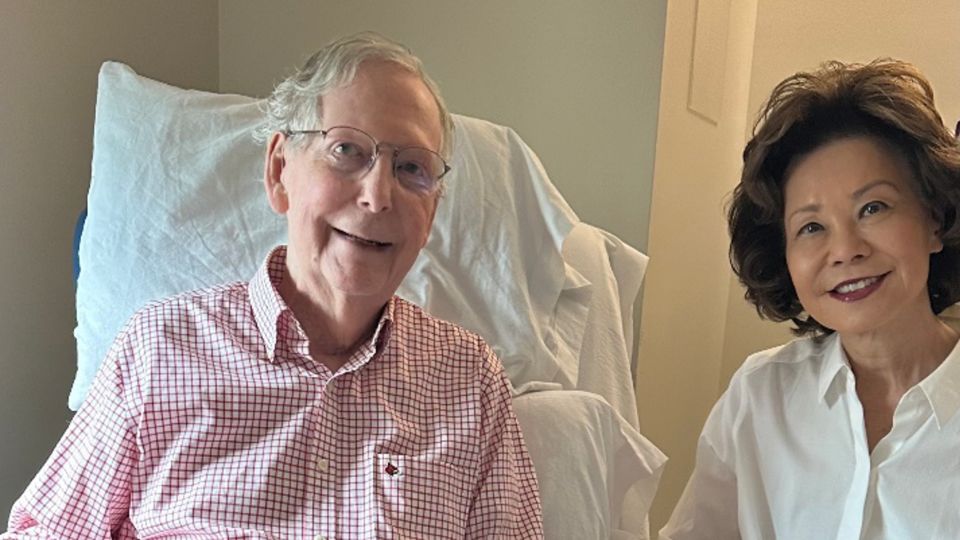
POLICY WIRE — Washington, D.C. — It often takes a literal tumble for the nation’s political architects to reveal the physical frailties shadowing their monumental roles. Weeks of hushed whispers and unconfirmed reports finally culminated in Senate Republican Leader Mitch McConnell’s office attributing his hospitalization to something rather mundane, yet utterly human: a fall. This admission didn’t come swift or easy, mind you, following an extended period where Washington’s rumor mill spun wild theories about his abrupt absence and lingering recovery.
See, for an institution whose every breath, every procedural maneuver, is parsed for strategic intent, such basic biological realities become high-stakes political events. The Leader, whose command has shaped judicial benches and legislative landscapes for ages, became a symbol of vulnerability—a stark contrast to the steely image usually projected from Capitol Hill. His period away wasn’t just a personal health matter, it felt more like a political void, creating a vacuum many were keen to fill. [QUOTE_PLACEHOLDER]
And let’s be real, the speculation itself spoke volumes. It highlighted the sheer power concentrated in a single individual, but also the anxieties inherent when that power’s foundation, however formidable, encounters unexpected shocks. When a key figure disappears from the public eye for what seems like an eternity in the 24/7 news cycle, questions, quite naturally, multiply. It makes you wonder, doesn’t it, about the mechanics of transparency in high office?
It’s not just America grappling with this. Globally, there’s a certain fascination, almost a hunger, for clarity when it comes to the health of powerful leaders. Think about Pakistan, for instance, where information regarding top officials can often be filtered through layers of bureaucracy and tradition, sometimes emerging only after prolonged public curiosity. The West often prides itself on more open governance, but even here, the slow drip-drip of information regarding a pivotal leader’s well-being can leave an uncomfortable impression. That delay, those weeks of non-disclosure, they felt, well, deliberate.
But the story isn’t just about a powerful man’s physical setback. It’s about how Washington reacts—the maneuvering, the subtle jockeying, the assessment of potential successors behind closed doors. Political lifespans extend well beyond physical primes in contemporary governance, a dynamic that consistently reshapes succession narratives. Senator McConnell, currently aged 82, isn’t an anomaly in a Congress whose members frequently serve into their later years. A 2023 Congressional Research Service report notes the average age of a U.S. Senator is around 64, making him significantly older than the typical chamber inhabitant. He’s been around. For a long, long time.
The Senate itself relies on continuity. When that continuity is tested—even by a commonplace accident like a fall—it sets off ripple effects across legislative calendars and party strategies. But there’s a silver lining here, maybe. His return, even after the opacity of his initial recovery, solidifies his grip for now, albeit with perhaps a new layer of observation applied by allies and adversaries alike. They’re all watching, you bet they’re.
📄 POLICY WIRE WHITEPAPER PUBLISHED: PAKISTAN'S NATIONAL SECURITY POLICY PRIORITIES
👉 READ BY CLICKING HEREWhat This Means
The protracted silence surrounding Leader McConnell’s hospitalization, eventually clarified as a consequence of a fall, underscores a peculiar aspect of American political leadership: the expectation of superhuman endurance against the backdrop of very human biology. His ordeal isn’t just a personal health matter; it’s a stark reminder of the age profile of critical decision-makers in the U.S. government.
Economically, prolonged leadership uncertainty can spook markets—though in this case, the Senate GOP leadership isn’t directly controlling daily market operations. Politically, however, the implications are more direct. Any perceived weakness or leadership vacuum inevitably invites internal party challenges — and external pressure. It could subtly accelerate internal succession planning within the Republican caucus, compelling potential contenders to hone their bids, even if privately.
it’s a micro-snapshot of how fragility at the top, even when brief, forces a recalculation of stability. Allies like those in South Asia, relying on U.S. policy consistency, will note such incidents—assessing the potential for sudden shifts or leadership changes that could impact foreign relations. Washington’s narrative is, after all, the world’s narrative for much of global geopolitics. For the man himself, it’s a moment of physical recovery—but for the Senate, it’s a quiet recommencement of the timeless, brutal game of political succession and endurance. The wheels, they never stop turning.