


The Unmaking of a Legacy: When a Legislative ‘Win’ Becomes a Campaign Millstone
POLICY WIRE — Washington D.C., USA — There are triumphs, and then there are—well, there are policies that stubbornly refuse to stay tucked neatly in the win column. What began as a monumental...

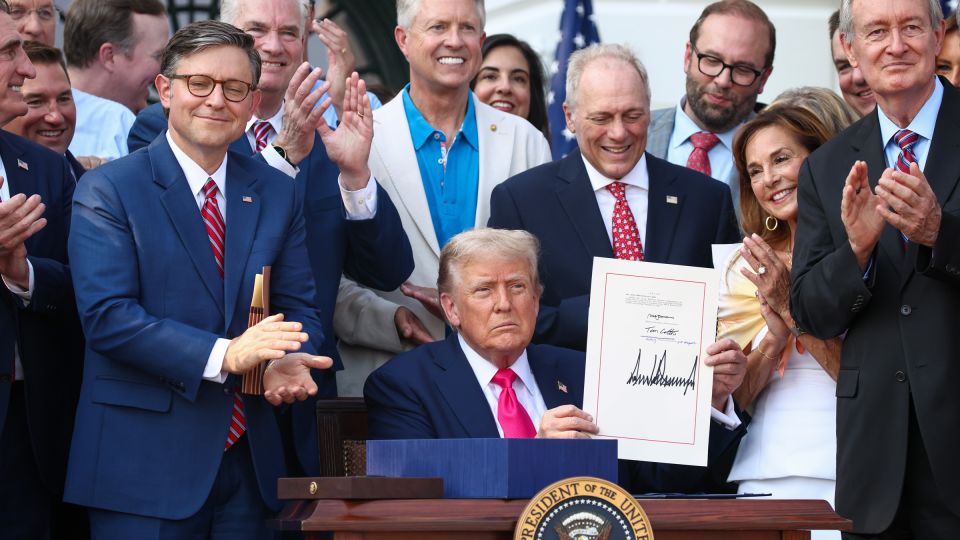
POLICY WIRE — Washington D.C., USA — There are triumphs, and then there are—well, there are policies that stubbornly refuse to stay tucked neatly in the win column. What began as a monumental legislative flex—the sort of thing press releases gush over—now looms as an uninvited guest at the next electoral reckoning, clutching an eviction notice for its original champions. It’s a rather exquisite political irony, don’t you think? That a supposed economic silver bullet might just be reloading a formidable weapon for the opposition.
It was presented, not too long ago, as an elixir for the national economy. A grand stroke, promising job creation, surging wages, — and an overall buoyancy that would lift all boats. Businesses would flourish. Everyone’d feel a little richer. It was going to be a hallmark, a legislative Everest scaled with fanfare — and self-congratulation. The whole point, apparently, was to ignite a boom the likes of which hadn’t been seen in ages, making a compelling argument for re-election campaigns when the time came. People would remember the good times, they figured. [QUOTE_PLACEHOLDER]
But the political winds, they’re capricious things. What once sparkled in the glow of victory now, for a good chunk of the electorate, simply reflects something else entirely. Maybe, they’ve realized, not all the gains trickled down. Perhaps some boats got an extra lift, while others—a significant majority, in fact—were left pretty much treading water. The promised broad-based prosperity, it just hasn’t quite materialized in the kitchen table economics many folks contend with daily. That’s a tough sell when you’re standing at the grocery store, staring down rising prices. It makes people wonder, what exactly was all that fuss about?
Now, Democrats, with the midterms in their sights, aren’t shy about shining a spotlight on this particular ‘achievement’. They’re not letting anyone forget the initial pledges. Instead, they’re flipping the script, framing it as a boon for the well-off that exacerbated economic disparities, leaving everyday families in the lurch. It’s an aggressive, calculated move—a perfect example of how yesterday’s strength can become tomorrow’s vulnerability, isn’t it?
A recent Reuters/Ipsos poll, conducted in October 2023, indicated that a mere 29% of American adults believe the tax cuts significantly benefited middle-class families. That’s a sharp contrast to the 60% who believed large corporations were the primary beneficiaries. See? Public perception. It matters. A lot. And it means this particular legislative legacy is less an asset and more—well, more like a rather heavy anchor in contested districts.
This dynamic—a high-stakes game of political football played with economic policy—isn’t lost on observers beyond America’s shores. For nations like Pakistan, navigating their own complex economic reforms and seeking foreign investment, the optics of shifting US domestic policy can ripple. Policy instability, even perceived, breeds caution. If a major policy shift—one meant to signal confidence and economic dynamism—can swing so wildly in public sentiment and become an electoral cudgel, what does that say about the long-term reliability of a nation’s economic course? From Islamabad to Lahore, stability—whether political or economic—is a prize; the messy reality of American partisan combat, for all its democratic vibrancy, often just looks like more uncertainty. These policy debates aren’t just about America; they paint a global picture of predictability—or a startling lack thereof.
📄 POLICY WIRE WHITEPAPER PUBLISHED: PAKISTAN'S NATIONAL SECURITY POLICY PRIORITIES
👉 READ BY CLICKING HEREBut back to Washington, where this contentious piece of legislation is poised to become a central character in the upcoming electoral drama. It’s no longer simply an economic talking point; it’s a proxy for larger arguments about fairness, prosperity, and who government really serves. Republicans find themselves in a bind, compelled to defend a policy many voters have simply not felt the positive effects of. And Democrats? They’re gleefully painting their opponents into a corner, confident that this very concrete policy provides a clear, visceral example of why voters ought to choose a different path.
What This Means
The transformation of a legislative triumph into an electoral liability has profound implications. Politically, it signals a renewed Democratic offensive grounded in pocketbook issues, potentially mobilizing voters dissatisfied with the distribution of economic benefits. Expect to hear endless debates about wealth concentration — and ‘fair shares’. This approach isn’t just about winning votes; it’s about defining the ideological battleground for future policy. Economically, if the public narrative successfully frames the cuts as regressive, it could fuel calls for significant tax reform, possibly leading to higher corporate and top-tier income taxes under a different administration. This could ripple into business investment strategies — and international competitiveness. Companies often make decisions based on perceived policy stability, so this kind of protracted uncertainty isn’t doing anyone favors in the long run. The domestic political wrangling also sends subtle, perhaps even disquieting, signals to international partners—those eyeing investment opportunities, like India’s ambitious global trade gambits, as outlined in reports like Velvet Gloves and Brass Knuckles: India’s Western Trade Gambit Kicks Off in London’s Lingering Post-Brexit Haze. The ongoing back-and-forth illustrates how even an issue as seemingly benign as a cheeseburger’s price point, often sparking discussions on economic fundamentals (Inflationary Paradox: Cheeseburger’s Cheapest Home Stirs Global Economic Debates), can be pulled into a much larger, more volatile political narrative about systemic inequalities. This legislation, once a trophy, is now a target—and it’s a battleground that could reshape not just Capitol Hill, but the very economic framework of the country, for years to come.