
America’s Relentless Season: When Heat Waves Meet Flash Floods, a New Kind of Normal Takes Hold
POLICY WIRE — Washington, D.C. — It isn’t merely the rising mercury that signals the season’s weary grip on the nation; it’s the peculiar ballet of scorching air giving way to...

POLICY WIRE — Washington, D.C. — It isn’t merely the rising mercury that signals the season’s weary grip on the nation; it’s the peculiar ballet of scorching air giving way to deluge, an environmental one-two punch that leaves communities reeling. We’re not talking about a fluke, a rogue summer storm, but a persistent pattern — a new atmospheric rhythm — that’s forcing folks to reconsider what normal even means anymore. This isn’t just about record temperatures or scattered downpours. No, it’s about both, hitting with unnerving frequency, painting a chaotic portrait of a country grappling with a climate that’s simply gone off script.
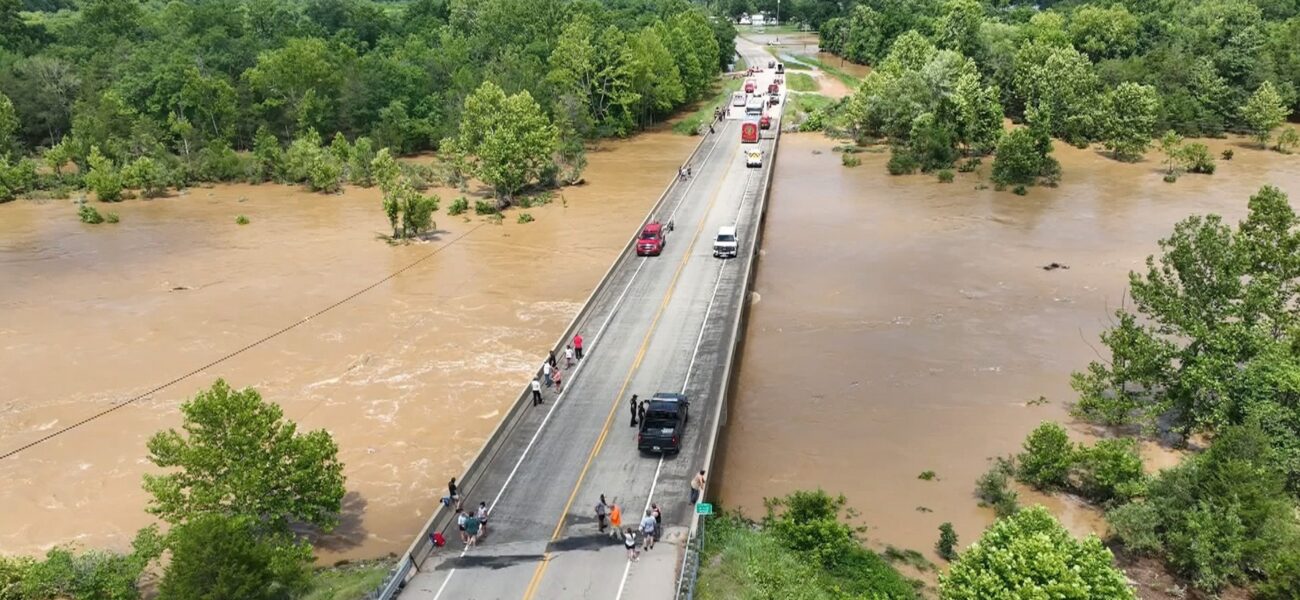
It’s become a kind of Sisyphean chore for local officials. They’re dealing with parched earth one week, then the very real prospect of urban rivers overflowing their banks the next. But this ain’t a philosophical debate; it’s practically an annual fixture, turning once-predictable seasons into something akin to a bad fever dream. Folks are tired. Emergency services are stretched thinner than worn-out shoelaces, their calls now a frantic dance between heatstroke victims and submerged vehicles. And that’s the reality for millions who just wanna get through the day.
And where are the remedies? Good question. There’s a consensus among those who pore over charts — and satellite imagery that we’re stuck in a feedback loop. One climatologist put it plainly, calling the situation [QUOTE_PLACEHOLDER], a phrase that doesn’t quite capture the sweat-soaked panic of an un-air-conditioned home or the cold dread of a flooded basement. It’s hard to ignore the stark reality when the National Oceanic and Atmospheric Administration (NOAA) confirms that global average surface temperatures in 2023 were 1.18 degrees Celsius (2.12°F) above the 20th-century average, marking it as the warmest year on record. That’s a statistic that cuts through all the policy jargon, laying bare the trajectory we’re on, hot — and bothered.
Because, really, what are we to do? Politicians speak of resilience, of adaptation. It’s a good catchphrase, sounds competent on the evening news. But when a nursing home loses power in 100-degree heat, or a whole stretch of interstate vanishes under a sudden wall of water—those talking points start feeling a bit hollow, don’t they? It’s not just a domestic problem, either. You see these patterns mirrored across the globe, from the monsoon floods in South Asia to searing droughts in the Horn of Africa. Countries like Pakistan, with its vast river systems — and dense populations, know this struggle all too well. They’ve been wrestling with devastating floods and extreme heat for generations, often with far fewer resources to protect their people or infrastructure. Their ongoing struggle with managing the mighty Indus, a lifeline that also brings unimaginable destruction when it bursts its banks, should offer us a sober reflection.
They’re navigating these environmental landmines with a grim sort of stoicism, much like the farmers in America’s breadbasket watching their crops bake then drown. We’re witnessing a shared vulnerability here, regardless of GDP or geographic location, where the sheer force of nature just doesn’t care about national borders. One local administrator, wading through knee-deep water in what used to be a town square, reportedly told reporters [QUOTE_PLACEHOLDER]. It wasn’t eloquent, but it got the message across.
It’s the quotidian tragedies, the small losses piled one upon the other, that build the true picture of what this new normal entails. The economic ripples spread, from ruined harvests to spiraling insurance costs, to infrastructure repair bills that keep getting fatter. This isn’t just a weather report; it’s a social barometer, pointing to widening disparities, testing community bonds, and challenging the very bedrock of established governance.
📄 POLICY WIRE WHITEPAPER PUBLISHED: PAKISTAN'S NATIONAL SECURITY POLICY PRIORITIES
👉 READ BY CLICKING HERESome policymakers are openly pondering what they call [QUOTE_PLACEHOLDER], an idea that’s as alarming as it’s logical, given the trajectory of things. But talk is cheap, particularly when the price tag for prevention and mitigation keeps climbing, and the appetite for unified, aggressive action seems to wane with each news cycle.
What This Means
This persistent dual assault of heat and floods isn’t merely an inconvenience; it represents a deepening crack in the foundation of societal stability. Politically, it means constant, reactive governing, with emergency declarations becoming a performative norm rather than an exception. States and federal agencies will face increased friction over resource allocation and perceived inequities in disaster relief. It’s a breeding ground for public dissatisfaction and potential polarization, especially when long-term, expensive infrastructure projects are needed but often delayed or underfunded. Expect debates around climate legislation to become even more fraught, entangled with economic fears and accusations of overreach or neglect.
Economically, the implications are stark. Agricultural output will remain volatile, leading to unpredictable food prices — and supply chain disruptions. Insurance markets, particularly for flood and property damage, could buckle under repeated, escalating claims, making coverage unaffordable or unavailable in high-risk areas. Small businesses, the engines of many local economies, are disproportionately hit by prolonged outages or direct damage, often lacking the reserves to recover fully. The cost of infrastructure hardening – seawalls, upgraded storm drains, more robust power grids – will become an immense public debt. This ongoing environmental turmoil will act as a regressive tax, disproportionately burdening low-income communities and individuals who can least afford the costs of relocation, reconstruction, or enduring repeated losses. It creates a perverse cycle where a hotter, wetter world is also a poorer, more unequal one, unless bold, coordinated policy intervention truly begins.