

Twilight Trek Trauma: New Mexico Hiker Incident Reveals Deeper Fault Lines
POLICY WIRE — Albuquerque, N.M. — It started, as these things often do, with a perfectly decent Saturday evening. Another weekend. Another person seeking solace, or perhaps just a good view, high...

POLICY WIRE — Albuquerque, N.M. — It started, as these things often do, with a perfectly decent Saturday evening. Another weekend. Another person seeking solace, or perhaps just a good view, high above the mundane hum of city life. The sky likely putting on its daily spectacular display of crimson and gold against the jagged Sandia peaks, just before twilight properly claimed the landscape. But even in a place where such majesty is routine, the routine can break, abruptly — and unforgivingly.
It was past 7:30 p.m.—a time when many folks are winding down, maybe scrolling through endless newsfeeds, definitely not scaling mountainsides—when the call came in. An [QUOTE_PLACEHOLDER] was reported, tucked away somewhere along the [QUOTE_PLACEHOLDER] near the [QUOTE_PLACEHOLDER] here in Albuquerque. This wasn’t a raging inferno, nor a collapsed building; just one solitary soul, stuck.
And so, the quiet heroes of the [QUOTE_PLACEHOLDER] scrambled. Because that’s what they do, right? They pivot from fighting fires to — well, to picking up the pieces when someone’s leisurely Saturday trek goes south. They rolled out, arriving at the scene, tracing clues until they found their quarry. Imagine that. Scouring terrain in the dwindling light, looking for a particular person, armed only with what details [QUOTE_PLACEHOLDER]
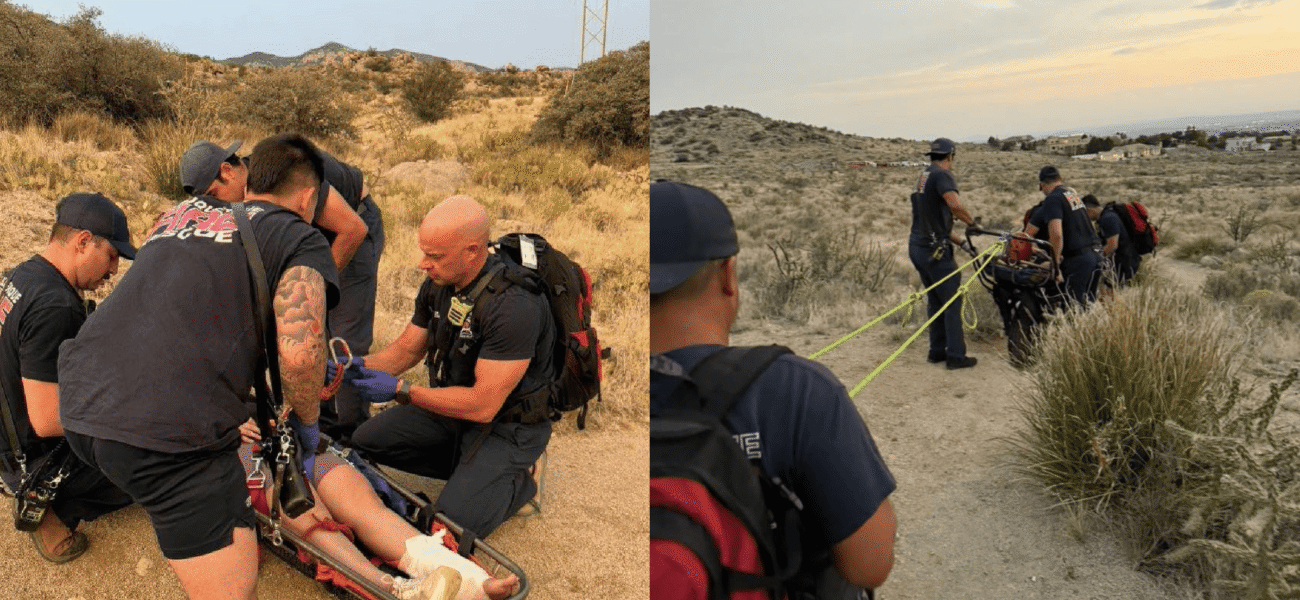
Their search wasn’t in vain. They found the person. It wasn’t life-threatening, it wasn’t some cinematic brush with disaster. Instead, they discovered the [QUOTE_PLACEHOLDER] A minor mishap, all things considered. Yet, out there on a trail, miles from easy pavement, a simple twist or stumble suddenly demands a whole emergency apparatus to be put into motion. They didn’t dilly-dally. The AFR personnel [QUOTE_PLACEHOLDER] Then, the real work: literally, [QUOTE_PLACEHOLDER] Quite the effort for a sprain, or perhaps a fracture.
From the trail’s end, the injured party got shuffled off, just like procedure dictated, as AFR [QUOTE_PLACEHOLDER] No grand pronouncements, no dramatic chases. Just the meticulous, unglamorous mechanics of public service kicking into gear, saving someone’s weekend—and maybe, just maybe, preventing a much worse scenario. The officials stated, simply, there were [QUOTE_PLACEHOLDER] One hiker down, everyone else safe — and sound.
This incident, seemingly inconsequential on the grand global stage, is hardly isolated. It mirrors a silent, escalating strain on municipal resources across recreational hotspots everywhere. Think about it: a relatively common hiking mishap, yet it mobilizes highly trained personnel, equipment, and medical transport—all paid for by the public purse. New Mexico, blessed with immense natural beauty, experiences these events with startling regularity. In 2022, the state recorded an estimated 375 wilderness search and rescue missions, costing state and local agencies millions (source: New Mexico State Parks Search and Rescue program, 2022 Annual Report). Those aren’t small change for incidents that, statistically speaking, are completely avoidable with proper planning and equipment.
And we don’t even talk about it enough. Because it’s not just New Mexico. It’s a worldwide phenomenon, really, a curious blend of leisure aspiration — and systemic burden. Consider nations like Pakistan, for instance, where mountaineering and trekking in regions like Gilgit-Baltistan draw adventurers to some of the world’s highest, most unforgiving peaks. When an incident occurs there, particularly involving foreign climbers, the logistical nightmares and resource expenditures — often involving military aviation or specialized units — dwarf what a city fire department handles for an ankle injury. The costs can be staggering, the diplomatic ripples surprisingly wide. It raises hard questions about who bears the ultimate financial responsibility for the rescue of a thrill-seeker. It’s a debate playing out from the arid foothills of Albuquerque to the icy giants of the Karakoram, often unseen by those not directly impacted.
📄 POLICY WIRE WHITEPAPER PUBLISHED: PAKISTAN'S NATIONAL SECURITY POLICY PRIORITIES
👉 READ BY CLICKING HEREIt’s not to say people shouldn’t hike. Absolutely not. The call of the wild, the pursuit of elevation — it’s fundamental to human experience. But the romantic ideal of self-sufficiency often crashes into the stark reality of publicly funded safety nets. One wrong step can reverberate through emergency budgets, tightening the squeeze on other services, impacting everything from urban fire prevention to disaster preparedness. It might seem a cynical perspective, reducing a rescue to a line item, but that’s the reality facing municipalities as more and more people hit the trails, many of them blissfully unaware of the financial machinery their simple afternoon excursion might — in fact, often does — set into motion.
What This Means
This seemingly minor rescue in Albuquerque isn’t just a feel-good news byte about quick response; it’s a stark spotlight on an intensifying fiscal dilemma for local and state governments. With outdoor recreation booming—a global trend — search and rescue operations are on a relentless uphill climb in terms of frequency and cost. It puts a silent, creeping pressure on emergency services already stretched thin by urbanization, climate events (like the increasing severity of wildfires that demand resources away from routine calls), and budget constraints.
Politically, there’s an unspoken covenant: you provide public safety, no matter the cost. But the burgeoning demand for mountain rescues, river recoveries, and trail extractions forces conversations about user fees, stricter regulations for access, or perhaps even a reevaluation of what constitutes a ‘recreational’ activity versus an ‘inherently dangerous’ pursuit deserving of premium public service coverage. And that conversation rarely gains traction until a high-profile, devastating event, because nobody wants to be the politician who suggested charging for rescue when a life hangs in the balance.
Economically, every single rescue pulls resources, money, — and highly skilled labor away from other critical functions. This isn’t just about an ankle; it’s about the opportunity cost. It’s about fewer police patrols, or delayed maintenance on public infrastructure. It’s about how much we, as a society, are willing to subsidize individual adventures. In many parts of the developing world, such as Pakistan, the sheer scale and remoteness of many popular — and dangerous — outdoor locations means that a ‘rescue’ is often a private, high-stakes affair, frequently involving international organizations or individual fundraising. This stark difference highlights disparate expectations of government responsibility and the financial stratification of outdoor pursuit safety. In essence, it shows us just how tangled our individual desire for escape becomes with our collective responsibility for community resources. For more on the strains on local services, consider the deeper dive into foothills folly and policy implications. And for other resource strains on governments, look at how wildfires challenge New Mexico’s future.