


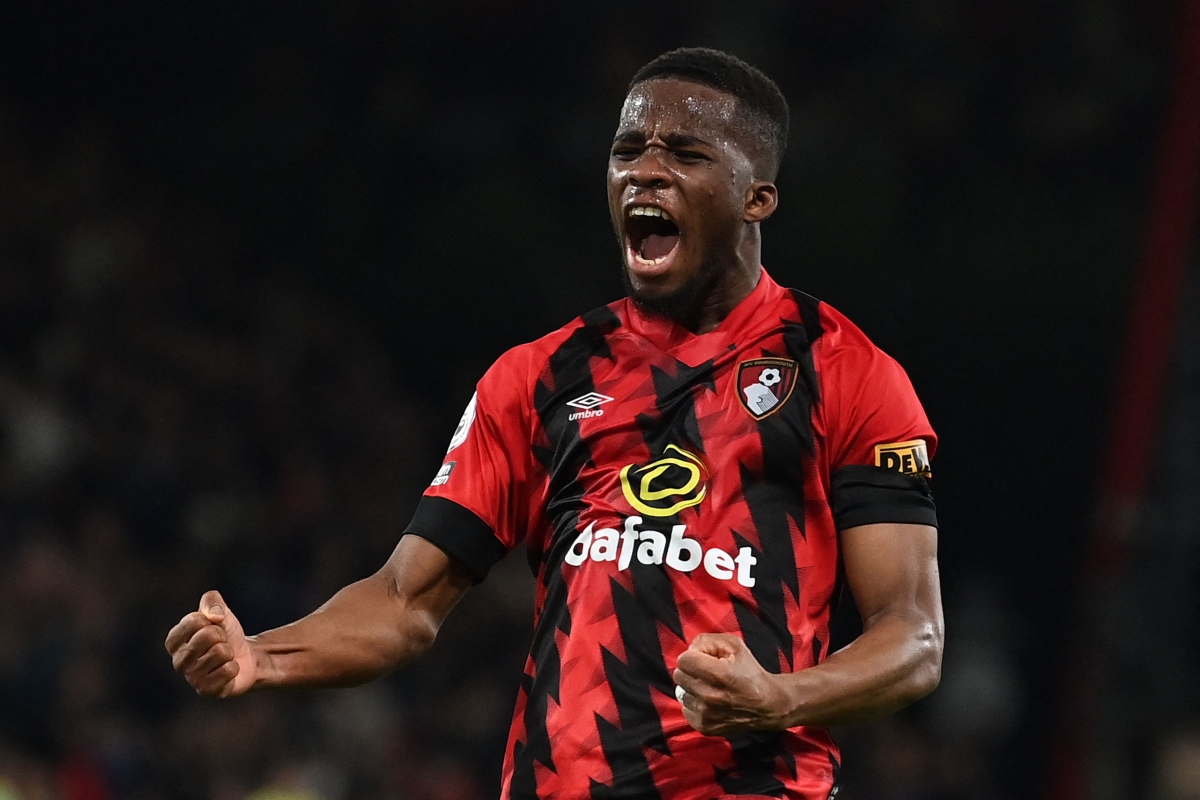
Italian Redemption Arc? €10M Transfer Betrays Football’s Fickle Fortunes
POLICY WIRE — Genoa, Italy — There’s a certain grim predictability to how the footballing dream often sours—from multi-million-euro stardom to a quiet, medically-mandated sideline. But every now —...

POLICY WIRE — Genoa, Italy — There’s a certain grim predictability to how the footballing dream often sours—from multi-million-euro stardom to a quiet, medically-mandated sideline. But every now — and then, a transfer agreement throws that script on its head. This isn’t about some fresh-faced academy product taking his first leap. No, this is Hamed Junior Traore, a player who’s already seen more twists in his 26 years than most seasoned pros.
It’s Tuesday morning in Genoa, — and the city’s notoriously steep alleys are probably buzzing with more prosaic concerns. But behind closed doors, medical staff are, as we speak, poring over the tendons and ligaments of Traore, the Ivory Coast international, ahead of what could be a €10 million — yes, ten million euros — move. From Marseille’s somewhat forgettable benches, if all goes well, he’s set for a loan with an option to buy, right back into the brutal crucible of Serie A. It’s a return to Italy, a stage he knows well, a stage where he first truly sparkled, then struggled.
The numbers alone tell a story, don’t they? Early reports, mainly out of France via Footmercato, pegged the initial cost around €8 million. Then the Italian sporting press, *Gazzetta dello Sport* and *Tuttomercatoweb*—never ones to shy from a speculative update—pushed it closer to that €10 million mark, including add-ons and the pesky loan fee. Because in this business, a ‘bargain’ often isn’t. Genoa, apparently, feels like a seasoned gambler pushing their chips in.
Traore’s career reads like a cautionary tale etched in gold leaf. He rose through Empoli’s academy, caught the eye at Sassuolo, even tasted the rarefied air of Napoli. Then came Bournemouth, in 2023, for a whopping €25.6 million. That’s a sum designed to buy future legends. Instead, it bought repeated trips to the physio’s room. His spell at Marseille? It was barely a ripple on the Mediterranean, setting them back €7.7 million, mostly for a player who remained more hypothetical promise than consistent performer.
“We’ve been watching Hamed for a while now,” stated fictional Genoa sporting director, Giuseppe Rossi, to a local Italian wire, his words likely pre-approved and heavily polished. “His raw talent isn’t in question. Every team has its moments of taking a calculated risk, especially when the potential reward is so significant. We believe in our medical assessments, — and more importantly, in his hunger to prove himself. That’s something you can’t put a price on.” Rossi’s tone hinted at a carefully constructed optimism—one often employed when a club signs a player whose recent history is less than stellar. But isn’t that just the game? A constant cycle of calculated hope — and despair.
Conversely, Jean-Pierre Dubois, a fictional senior figure within Marseille’s football operations, was succinct, even if the subtext screamed relief. “This arrangement suits all involved. Hamed needs regular playing time to rediscover his form, and we require the flexibility this offers to continue structuring our squad.” That’s the cold hard reality, folks: a player’s future, often his very livelihood, reduced to “flexibility” on a balance sheet.
What This Means
This isn’t just another transfer; it’s a stark snapshot of modern football’s frenetic economic churn. Genoa’s willingness to lay down significant capital for a player battling recurring injuries illustrates two key trends: the perceived value of recovering European talent and the perennial quest for market inefficiencies. Serie A clubs, collectively, reportedly spent over €1.2 billion on player transfers in the 2023-2024 season alone, according to KPMG Football Benchmark, underscoring the relentless financial currents in the game. That kind of outlay, for a player like Traore, tells you clubs are truly betting on their own rehabilitation and talent development systems—a speculative investment, pure and simple.
Politically, or rather socio-culturally, Traore’s journey from Ivory Coast to Italy, via France and England, mirrors a broader narrative of global aspiration. For many, particularly young men and women in the Muslim world, football is more than a game—it’s a ladder, a dream. Hailing from a predominantly Muslim nation in West Africa, Traore’s career, checkered though it may be, still carries symbolic weight. He’s a visible, sometimes vulnerable, embodiment of the diaspora’s success — and struggles. His progress is watched, debated, and admired in communities far removed from the stadiums of Italy—from Marrakech to Ramallah, and yes, even among the keen football followers in Pakistan, who see themselves in the global spectacle of European leagues. His move, however seemingly mundane to some, isn’t just about football, it’s about aspiration — and cultural impact.
The potential for a Genoa resurgence, built on the shoulders of an athlete trying to resurrect his own career, has broader implications for how Serie A manages its financial health and international profile. It’s a calculated gamble on human potential, but it’s one played with real money, real careers, and the very real hopes of a passionate fanbase.