


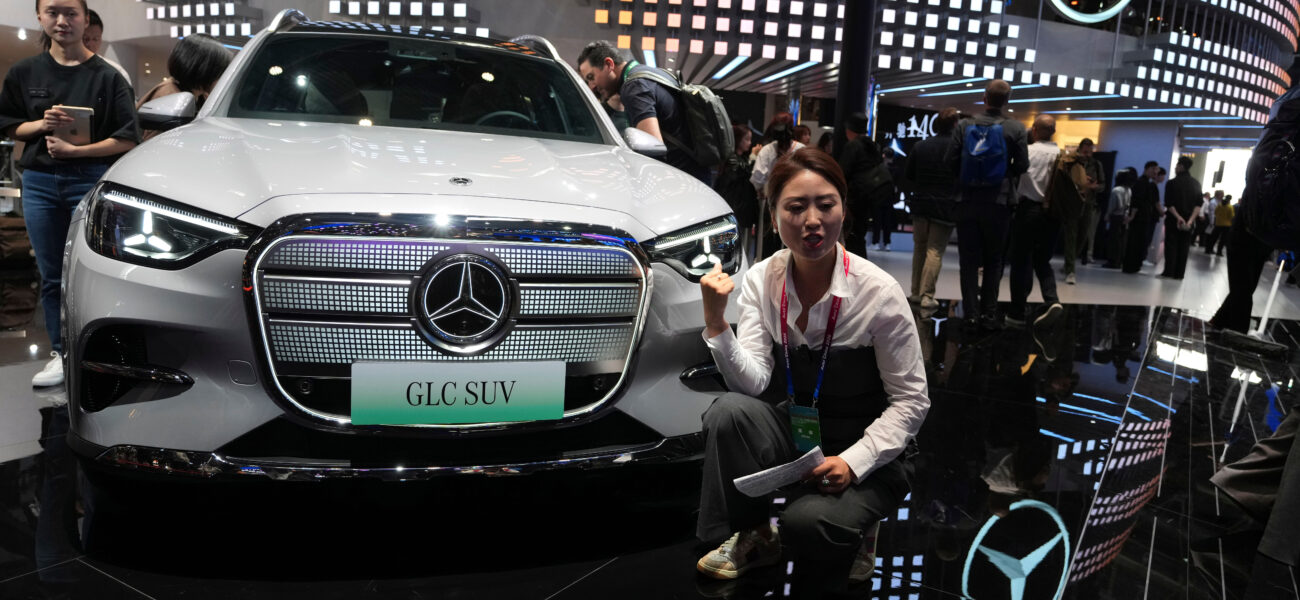
From Autobahn to Afterthought: Germany’s Auto Giants Falter in China’s Electric Shift
POLICY WIRE — Frankfurt, Germany — It wasn’t the engine roar, but a deafening silence that greeted German automotive executives this past quarter. That hum you used to hear, that steady thrum...

POLICY WIRE — Frankfurt, Germany — It wasn’t the engine roar, but a deafening silence that greeted German automotive executives this past quarter. That hum you used to hear, that steady thrum of prosperity fueled by insatiable Chinese demand, it’s just gone quiet, isn’t it? It’s like finding out your carefully calibrated, finely tuned machine suddenly runs on the wrong fuel. But this isn’t about petrol versus diesel. It’s about a fundamental reorientation of what moves millions, — and who’s building those new machines.
For decades, the phrase [QUOTE_PLACEHOLDER] was practically shorthand for industrial perfection, particularly when it came to cars. Chinese consumers, aspiring — and established alike, gravitated to names like BMW, Mercedes-Benz, and Audi. They paid a premium for that perceived quality, that undeniable status. It felt like an immutable law of commerce, something etched in Teutonic steel. But economic laws, it turns out, aren’t so different from scientific ones—they adapt, they evolve, they sometimes outright invert. The seismic rumblings in China’s auto market aren’t just market corrections; they’re tectonic.
Because now, a significant portion of that prized market has simply evaporated for the German marques. The hard numbers, when you peel back the layers, are quite stark. Data from industry analysis firm, Global Auto Insights, indicates German automakers’ combined market share in China plummeted by an unprecedented 15 percentage points over the past eighteen months, reaching its lowest point in two decades. Fifteen points, you guys! That’s not a hiccup; it’s a wholesale evacuation. And it’s not because the German cars got worse, necessarily. It’s because everyone else got unexpectedly good, — and surprisingly cheap, especially in electric vehicles.
And these Chinese rivals, often backed by shrewd domestic policies and immense state-driven investment, didn’t just meet the Germans halfway; they leapedfrog them on electrification. Think about it: a market that once fawned over the precision of a German sedan now cares more about battery range and integrated smart tech, often offered by local brands for considerably less cash. You see Chinese companies, some practically unheard of a few years back, delivering vehicles that feel futuristic, all while their pricing strategies make the German offerings seem—well, let’s just say a little last century. They’re eating lunch, breakfast, — and dinner right off the German plate.
A recent interview with one long-suffering German auto CEO, who asked not to be named given the sheer volatility of the situation, paints a picture of stark realism. He mentioned, [QUOTE_PLACEHOLDER], which suggests a growing realization of the depth of this challenge. They’re struggling to adapt to the speed of the Chinese market, a consumer base that cycles through technology faster than Silicon Valley updates its apps. German engineers, brilliant as they’re, built their reputations on slow, steady, deliberate improvement. China moves at hyper-speed. It’s a clash of corporate cultures, really.
But the ramifications stretch far beyond Munich or Stuttgart. They ripple through global supply chains, through the world’s financial markets, and into nations where automotive partnerships still represent industrial aspirations. Take Pakistan, for instance. For years, the dream of a robust domestic auto industry, capable of producing cars for its growing middle class, has leaned on collaboration with foreign players. And while Japanese brands hold a dominant perch, there’s always been an interest in attracting further European investment, maybe some of that vaunted German engineering. German brands in Pakistan’s automotive market, though niche, hold significant prestige. But what happens when the global head office is dealing with such a debilitating blow in its biggest market? The appetite for venturing into new, complex markets, particularly those with less-developed infrastructure, surely shrinks. Their balance sheets just won’t allow for it, not when they’re trying to stop the bleeding back home.
We’ve already seen other markets in the broader Muslim world, particularly in the Middle East and parts of North Africa, increasingly court Chinese investment across various sectors. Their automobiles are next on the list. These regions aren’t locked into the legacy prestige narratives in the same way Western markets are. Cost, tech, and rapidly improving quality from Chinese manufacturers—they matter a lot. It’s a compelling offer.
📄 POLICY WIRE WHITEPAPER PUBLISHED: PAKISTAN'S NATIONAL SECURITY POLICY PRIORITIES
👉 READ BY CLICKING HEREBecause ultimately, Germany’s economic engine is stalling out a bit. And it’s not just a commercial matter; it’s a political one. When a nation’s core industry faces such a direct and sustained assault, national security strategists and trade policy wonks tend to get rather twitchy. What does this mean for the future of transatlantic trade? For Europe’s standing in a multipolar world? These aren’t trivial questions. No, they’re big ones. And no easy answers either.
What This Means
This isn’t merely a commercial blip for Germany’s auto sector; it represents a significant economic recalibration, forcing Berlin to confront some uncomfortable truths. Its traditional industrial giants, pillars of the German economy, are demonstrably vulnerable in an era of rapid technological transition and intensifying global competition. The political implication? Germany’s economic leverage and perceived technological supremacy, especially in heavy industry, are being challenged directly by Beijing. This could compel a shift in German foreign policy, potentially leading to a more cautious, less assertive stance towards China, as they need access to that market—or at least an opportunity to regain lost ground.
Economically, the domestic impact will be felt in reduced revenues, potential job losses in highly skilled manufacturing, and a ripple effect across Germany’s vast automotive supply chain. this dynamic directly benefits China’s industrial strategy. It validates their massive state-led investments in EV technology, cements their role as a global manufacturing powerhouse, and demonstrates their ability to compete (and often win) on an innovation-per-dollar basis. For emerging markets, like Pakistan, this means a wider array of affordable, technologically advanced vehicles are becoming available from non-traditional sources. It shifts the entire calculus of industrial partnership away from an automatic deference to Western European quality towards a pragmatic assessment of value and future-readiness, often delivered by Asian contenders. As Southeast Asia braces for climate change, their manufacturing centers might look at these Chinese EV firms as reliable partners, not just customers.
But make no mistake, the story of Germany’s auto struggles in China is more than just about cars. It’s about a foundational economic shift, demonstrating that innovation doesn’t just happen in the labs of the established old guard anymore. And sometimes, the newcomers aren’t just playing catch-up; they’re writing the rulebook for what’s next. The global marketplace, in this way, doesn’t wait for anyone, does it? It’s relentless. Tehran’s own quiet quandaries in a changing geopolitical landscape, for example, illustrate how quickly global power dynamics can evolve across different sectors.