
The Price of Glory: World Cup’s Elite, Broken Bodies, and Billions at Stake
POLICY WIRE — Doha, Qatar — The gladiatorial arena of the modern World Cup isn’t just about 22 men and a ball anymore. No, it’s a global theatre, really. Where sovereign pride, corporate...

POLICY WIRE — Doha, Qatar — The gladiatorial arena of the modern World Cup isn’t just about 22 men and a ball anymore. No, it’s a global theatre, really. Where sovereign pride, corporate sponsorships, and the collective sighs of nations hang on the precarious health of limbs worth — literally — hundreds of millions.
It’s all rather perverse, isn’t it? Here we’re, deep into the tournament’s rarefied air, down to the final eight teams. And instead of focusing solely on tactical masterstrokes or moments of individual brilliance, conversations inevitably drift to bruised ankles and an ill-timed fever. Global glory now comes with a stern prayer: just don’t break down. Not now. Not when it all matters. [QUOTE_PLACEHOLDER]
Some narratives, predictably, have swung towards triumph over adversity. You’ve got Lamine Yamal, now a regular fixture for Spain after returning to full fitness. Neymar too, surprisingly, was able to get some minutes in what will be his final World Cup, before Brazil’s elimination at the hands of Norway. Fine. Those stories write themselves. But for too many nations, the high-wire act continues. They’re still sweating over major concerns to top players. It’s a nail-biter, a nerve-wracker, an absurd drama unfolding in real-time, often unseen.
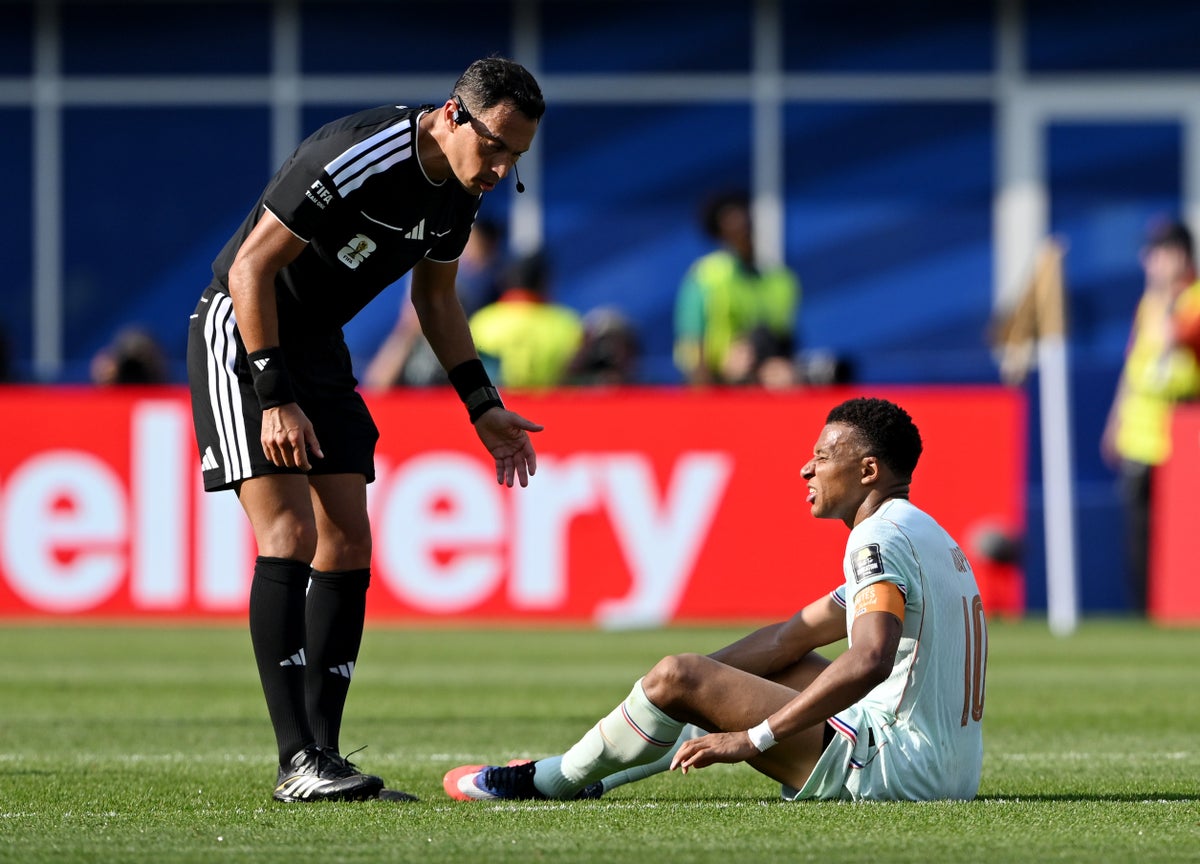
Take France’s talisman, Kylian Mbappe. After he was brought off with a knock against Morocco, an entire nation—and a fair chunk of the wider world, frankly—held its breath. Remember, this wasn’t just any match. The clash with Morocco resonated powerfully across the Muslim world; for many, Morocco’s run wasn’t just a football story, it was a symbolic charge. Mbappe was substituted as a precaution after picking up a knock in France’s 2-0 World Cup quarter-final win over Morocco on Thursday. But this wasn’t just a random defender. Morocco defender Issa Diop sliced through the France forward shortly after giving his side the lead, receiving a yellow card as Mbappe reacted in pain. France boss Didier Deschamps was taking no chances. Mbappe himself, with that characteristic insouciance of youth, played down the injury afterwards, saying: I have a minor ankle injury, but I’m completely fine.
He added, with a dismissive air, Mateta was in a better position to play the remaining minutes of the match and was fitter at that moment. That’s all that happened.
Such nonchalance, but the camera caught him with ice strapped to his ankle on the substitutes bench.
England’s woes read like a tragicomic opera, a persistent drumbeat of bad luck. The defensive lines, always a point of national anxiety, have been thin. Reece James has been out of action for England for their last three World Cup outings, once again unable to feature in their stunning round of 16 win over Mexico as he recovers from a hamstring problem. Then came Declan Rice’s turn. He was then struck down by illness ahead of the quarter-final with Norway. He managed to start but looked out of sorts — and was replaced at half-time. One minute you’re a national hero, the next you’re sidelined with the sniffles. Talk about the capriciousness of fate. And then there’s poor Jordan Henderson, Brentford midfielder. He was thought to be ruled out for the World Cup after sustaining a freak injury in the aftermath of England’s win over Mexico. Henderson leaped over the advertising hoarding but fell awkwardly — and snapped his arm. Yeah. Snapped his arm. It defies belief, really. But in a stunning development, Henderson was included among the substitutes to face Norway in the last-eight and says he will cross the bridge
of potentially featuring in the semi-finals when we come to it.
Just imagine.
Meanwhile, Spain’s attack feels gutted. Yeremy Pino, their Crystal Palace winger, suffered a collarbone injury against Uruguay. There were fears he could miss the rest of the tournament. And Victor Munoz, Liverpool’s new signing, he’s been absent for the entirety of the World Cup so far after sustaining a calf injury in the build-up to the tournament. He then suffered a further setback when he was diagnosed with another muscular injury. It’s like these teams are fighting a war of attrition, their benches constantly raided by the medics.
Even Argentina isn’t immune; Facundo Medina hobbled off with a calf problem. France, too, worries about Aurelien Tchouameni with a lingering groin problem. For Newcastle fans hoping to see Johan Manzambi of Switzerland in action against Argentina, forget it. He’s out. It’s a constant, evolving picture of physical breakdowns, one after another.
What This Means
This isn’t just about sporting inconvenience; it’s got real economic — and political implications, both seen and unseen. For one, the global commercial engine of the World Cup — sponsorship deals, broadcasting rights, national merchandising — is inherently tied to the star power these athletes possess. When an Mbappe or a Rice gets injured, even if briefly, it sends shivers down executive spines. Their mere presence drives viewership and, consequently, advertising revenue. The FIFA World Cup, for instance, drew a global television audience of 1.5 billion for its 2022 final alone, according to FIFA data. Any perceived dip in the quality of the competition, influenced by star absences, poses a financial threat.
Beyond the direct economic hit, consider the psychological impact. National morale, political narratives, even diplomatic soft power are inexplicably linked to sporting performance. A national team’s success can genuinely boost spirits and divert attention from domestic problems, if only for a short time. An injury to a beloved player can deflate that collective uplift. It makes leaders look good, or at least feel good, when their country excels on the world stage. Failure, particularly due to perceived ‘bad luck’ with injuries, can become a talking point, fueling public discourse around investment in sports or national capabilities, often for better or worse. And there’s the whole VAR’s Shifting Sands debate — one controversial call can change everything. Players breaking down physically under immense pressure, both on the pitch and from the billions watching, highlights the brutal reality behind the spectacle. It’s a harsh business, this game of dreams.