


Interstate Pursuit Halts Digital Fury: Judge’s Safety Underscored in Cross-Border Arrest
POLICY WIRE — Hobbs, New Mexico — Justice, they say, wears many hats. Sometimes, it dons a wide-brimmed state police uniform and crosses a state line to reel in someone who apparently forgot that...

POLICY WIRE — Hobbs, New Mexico — Justice, they say, wears many hats. Sometimes, it dons a wide-brimmed state police uniform and crosses a state line to reel in someone who apparently forgot that emails, even threatening ones, don’t magically vanish into the digital ether. The long reach of the law, it turns out, stretches quite comfortably from New Mexico all the way to West Texas, where a peculiar drama involving digital threats against a judge just played out with the thud of an arrest.
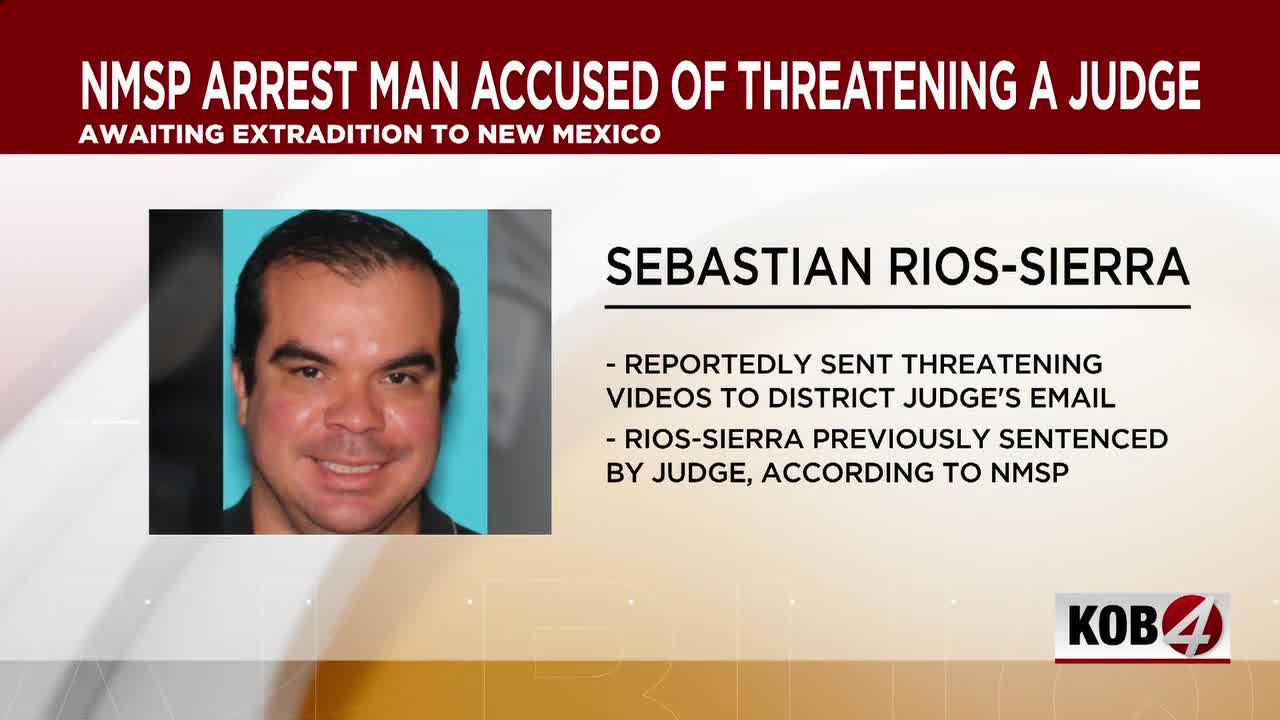
It wasn’t some grand conspiracy unraveling, just a fairly straightforward matter of someone, a 35-year-old named Sebastian Rios-Sierra, seemingly deciding that his recent brush with the courts demanded a response beyond quiet contemplation. He’s now the central figure in an interstate pursuit that began with some decidedly unwelcome digital mail. Specifically, he was [QUOTE_PLACEHOLDER] Not a personal note, mind you. Videos. Directly to the judge’s work inbox. It’s got a certain bold, if misguided, quality to it, hasn’t it?
And so, New Mexico State Police found themselves in a familiar position, kicking off an investigation. [QUOTE_PLACEHOLDER] officials said. Because when someone targets the judiciary—the very foundation of civic order—authorities tend to pay rather close attention. It’s like kicking over the chessboard in the middle of a game; it draws immediate, stern attention.
The alleged motivation? Fairly pedestrian, really, for the world of grievances. It stems from a prior sentencing. [QUOTE_PLACEHOLDER] One can almost picture the immediate, heated response to a judge’s decision, perhaps stewing into something more permanent, more dangerous, once the individual had some time on their hands and a video camera or phone within reach. It’s a classic narrative of perceived injustice bubbling over, only this time it was recorded — and mailed. Electronically, of course.
But electronic threats still fall squarely within the realm of the tangible for law enforcement. [QUOTE_PLACEHOLDER] A felony charge—that’s a serious business, regardless of the method of delivery for the threats. It really drives home that words and images, especially when conveying threats, have very real-world consequences, even when hurled from the relative anonymity of a digital space.
The pursuit didn’t take long. They tracked him down. [QUOTE_PLACEHOLDER] A textbook example of inter-agency cooperation, proof that state lines are often just lines on a map for criminal justice, not impassable barriers. And right now, [QUOTE_PLACEHOLDER] He’ll be coming home, one way or another, to face these new charges.
It makes you wonder, doesn’t it, about the casual contempt sometimes shown towards authority figures in the digital age. It’s a sentiment not exclusive to any one nation. In places like Pakistan, for instance, judicial officials face entirely different, often more existential threats, sometimes from organized militant groups or powerful political factions, rather than individual disgruntlement. Yet, the underlying challenge remains similar: how does a state protect its arbitrators of justice when the channels of communication, and thus aggression, have become so decentralized and swift? It’s a global problem, you see.
It’s not an isolated incident, this targeting of those who sit on the bench. According to the U.S. Marshals Service, they investigated nearly 1,400 threats and other inappropriate communications directed at federal judges in 2022. That’s a staggering number, indicative of the persistent pressure — and danger judicial figures navigate daily. And it isn’t just judges; the State Police stated that it [QUOTE_PLACEHOLDER] The list, unfortunately, just keeps getting longer. This isn’t a game; it’s governance, — and it doesn’t take kindly to digital broadsides.
The quick arrest, thanks in part to [QUOTE_PLACEHOLDER], provides a moment of grim satisfaction for those who value the rule of law. It’s a reminder that actions, digital or otherwise, have consequences. One can send videos. But one cannot hide forever.
What This Means
This incident, while seemingly a footnote in the sprawling tapestry of judicial affairs, actually reflects several concerning trends. First, it vividly illustrates the creeping erosion of respect for institutional authority in many corners, amplified by the ease of digital communication. The immediacy and perceived anonymity of email and video messaging can, for some, lower the bar for aggressive, even threatening, behavior, transforming what might once have been an angry thought into a criminal act. It’s a behavioral shift that puts immense pressure on a justice system already under strain. How does one maintain judicial independence and integrity when individual judges become targets for every disgruntled defendant? It’s a very real operational — and psychological burden.
Secondly, it highlights the increasingly complex task faced by law enforcement in the digital era. Threats no longer require a physical proximity; they can originate from anywhere, crossing jurisdictional boundaries with a click. This necessitates robust inter-agency cooperation, sophisticated digital forensics, and a swift response capability, which, happily, appears to have been present in this case. But it’s an arms race of sorts, against those who weaponize the internet for personal vendettas or broader attacks on democratic institutions. For federal agencies, resources devoted to protecting the judiciary and public officials are stretched thin, as evidenced by the high volume of reported threats. Protecting the very people responsible for upholding justice is a growing expense, both financially and in terms of manpower, detracting from other pressing law enforcement duties. And ultimately, when judges feel less secure, the justice they dispense risks being tainted by the subtle pressures of personal safety, which benefits no one in the long run. It truly impacts our confidence in the impartiality of our courts. A society where judges live in fear, frankly, isn’t a stable one.