

VAR’s Shifting Sands: Argentina’s Fortune Spurs Debate on ‘Sporting Justice’ and Global Perceptions
POLICY WIRE — Geneva, Switzerland — It’s a cruel game, they say. But often, it’s just a game made cruel by the humans who officiate it. Take the FIFA World Cup quarterfinal, for instance,...

POLICY WIRE — Geneva, Switzerland — It’s a cruel game, they say. But often, it’s just a game made cruel by the humans who officiate it. Take the FIFA World Cup quarterfinal, for instance, where Argentina—once again—found its path to victory smoothed by a refereeing decision that’s set global social media ablaze. And really, what are we talking about when we say “justice” in sport anymore?
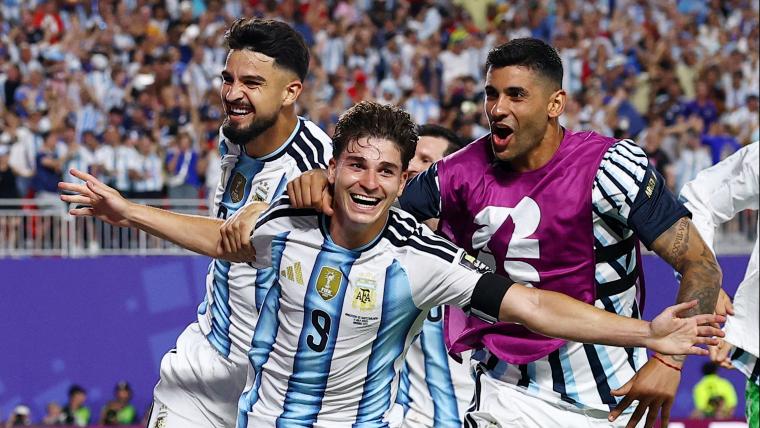
The Albiceleste dispatched a defiant Switzerland 3-1 in extra-time, but the narrative hinges less on Julian Alvarez’s stunning 112th-minute strike (though it was a cracker, undoubtedly), and more on the bewildering events of the 72nd minute. Breel Embolo, Switzerland’s talismanic forward, initially copped a yellow card. Then, VAR—that much-lauded arbiter of absolute truth—intervened. It wasn’t to correct a missed foul; it was to deem Embolo’s theatrical tumble a dive, gifting him a second yellow and an early, contentious exit. Eighteen minutes plus extra time, Switzerland was a man down. Call it karma, call it sheer luck, but many—especially those watching beyond Argentina’s borders—are calling it something else entirely.
“We played with courage, with our hearts on our sleeves,” declared Murat Yakin, Switzerland’s visibly frustrated coach, after the match. “To have it stripped away by a moment of, let’s just say, highly interpretive officiating… it’s disheartening. For the players, for the country. It simply wasn’t right.” But it happened, didn’t it?
Argentina, a team whose legacy is as much defined by divine talent as it’s by a knack for narrow escapes and officiating benevolence, leveraged the advantage. And don’t imagine this is an isolated incident. Across three World Cups, Argentina has been the beneficiary of nine game-altering referee decisions later confirmed as debatable, according to a recent analysis by Euro Football Dynamics. Contrast this with their Swiss opponents, whose diligent planning and defensive solidity had, until that turning point, effectively stifled Lionel Messi’s outfit, restricting him to a paltry 18 first-half touches. Switzerland’s defensive rock, Cristian Romero, described as a “monster defensively” in post-match assessments, found himself with less to do in the latter stages against a ten-man side. And what then?
The referee, Portugal’s Joao Pinheiro, found himself at the epicenter of a geopolitical tempest brewed over a football pitch. It’s a delicate balance, managing a sport with billions watching. “The global game demands impeccable standards, especially when the stakes are this high, and national pride runs deeper than ever,” stated Fatima Shah, a prominent sports sociologist based in Islamabad, referencing the widespread dissatisfaction across South Asia and the Muslim world where millions tune into World Cup matches with intense scrutiny. “For many in our region, who often perceive global institutions as inherently biased, such calls only reinforce a cynical view of fairness—or rather, a lack thereof—in global governance, whether in sport or policy.” It’s about trust, ultimately. They’re asking, can VAR truly deliver unbiased justice, or is it just another tool in a highly subjective, highly lucrative system?
Julian Alvarez — and Lautaro Martinez, finding gaps in a beleaguered Swiss defense, netted the deciding goals. The final score, 3-1, might suggest dominance. But those who watched it live, especially outside of Buenos Aires, they’re still seeing a scarlet letter—not for a player, but for the referee’s decision-making. The ‘justice’ of it all has certainly sparked widespread discussion.
What This Means
Argentina’s progression carries immense economic and reputational weight for a nation perennially battling fiscal volatility. A deep World Cup run can translate directly into tourism spikes, investment interest, and merchandise sales, offering a desperately needed shot in the arm. Economists for the Argentinian Ministry of Finance, for instance, discreetly estimate that advancing through this stage alone could contribute an additional 0.5% to projected Q3 GDP growth—quite the sum. But this perceived officiating bias against smaller, less historically powerful footballing nations risks alienating a significant portion of the global audience, undermining FIFA’s claims of universality and fairness. Don’t expect Swiss President Alain Berset, a keen football observer, to send congratulatory notes. Because these incidents, regardless of official statements, leave a residue. They reinforce narratives about unfair play — and unequal treatment on the international stage. It’s a subtle but significant dent in the integrity of a sport meant to transcend politics and borders.
For football’s governing bodies, it’s a tightrope walk. They’re trying to integrate technology for accuracy while facing criticism that it merely amplifies existing power dynamics, or introduces new, opaque forms of control. What seems like a trivial on-field moment quickly escalates into a larger discourse about global equity. That’s the real policy challenge here, isn’t it?