

Festival’s Echoes: Toronto’s Summer Joy Fractured by Gunfire
POLICY WIRE — Toronto, Canada — The rhythm of summer, the city’s easygoing confidence, took a body blow last night. It wasn’t the usual clamor of music — and exuberant crowds that dominated...

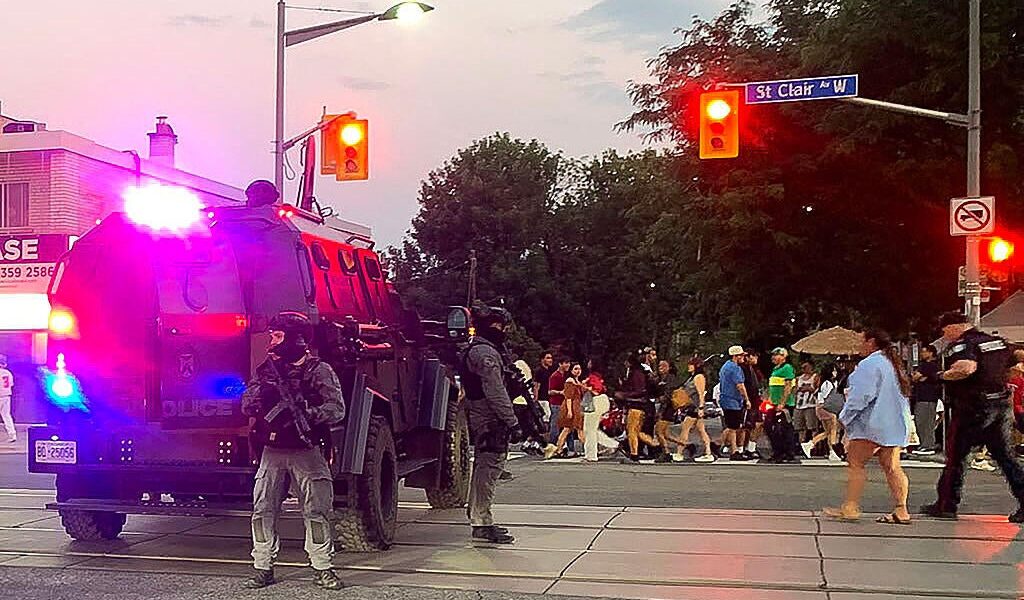
POLICY WIRE — Toronto, Canada — The rhythm of summer, the city’s easygoing confidence, took a body blow last night. It wasn’t the usual clamor of music — and exuberant crowds that dominated headlines. Instead, a stark report landed, shattering the illusion of impenetrable urban tranquility: gunfire, chaos, and a casualty count — at least 2 killed in mass shooting at Toronto street festival, police say. This isn’t just about bodies and bullets; it’s about the erosion of public spaces, the sudden vulnerability of the everyday.
An evening that should’ve been vibrant with cultural celebration descended into a panic-stricken scramble. Revelers—families, friends, neighbors—found their carefree moments brutally interrupted. Authorities are still piecing together the grim tableau, but initial accounts paint a picture familiar to anyone tracking gun violence across North America. Police confirm an ongoing investigation, and we’re left to grapple with the disturbing normalization of such incidents even in places historically lauded for their peacefulness.
Consider this a somber punctuation mark on what many imagined as a bastion of polite society. Canada, while often presented as distinct from its southern neighbor regarding gun violence, isn’t immune. In fact, a recent report from Statistics Canada (2022 data) indicates that firearm-related violent crime rose for the seventh consecutive year, representing a 6% increase from the previous year. But when events like this happen, it forces an ugly confrontation with reality—that even under open skies, at a festival meant for joy, safety is never a given. This particular festival, which often boasts community-led initiatives for peace, suddenly bears a cruel irony.
Eyewitnesses, understandably shaken, described a scene of sudden terror. There was [QUOTE_PLACEHOLDER], then [QUOTE_PLACEHOLDER], — and then people just running, pure primal instinct. The details are hazy, piecemeal at best. But what isn’t hazy is the outcome—two lives, gone. Just like that. Their stories, their potential, snuffed out amidst a throng celebrating life itself. It’s a bitter pill for a city that prides itself on diversity — and communal harmony. They’ve built a whole identity around that sort of vibe, you know?
Local politicians have already started trotting out familiar condemnations. You’ll hear talk of gun control, community investment, addressing root causes. And yes, all that’s important. But the public’s immediate concern is simple: Can I send my kids to a summer festival — and expect them to come home? Can I stroll through a park, or attend a parade, without looking over my shoulder? It’s not an academic question anymore; it’s a gut check. And sometimes, those gut checks leave deep, unhealing scars.
But how do these localized tragedies reverberate globally? The incident, while deeply Canadian, plays into a broader narrative of urban vulnerability that isn’t confined by borders. Think of the recent attacks on public spaces—concerts, markets, religious sites—that have gripped nations from Europe to Asia. There’s a shared anxiety, a global undercurrent of concern that security is fleeting, and normalcy, increasingly fragile.
It’s a chilling reminder that no city, no nation, truly exists in a vacuum. Pakistan, for instance, faces its own battles with sectarian violence and terrorism, frequently targeting public gatherings and religious sites. While the root causes differ dramatically, the shared pain of a community shattered by unexpected violence—the loss of life, the erosion of public trust—it’s a universal human experience. And the solutions? Well, they’re rarely simple.
What This Means
The Toronto shooting isn’t an isolated statistical blip; it’s a harsh indicator of converging pressures. Economically, repeated incidents of public violence, regardless of scale, deter tourism, impact local businesses that thrive on community events, and subtly devalue the social fabric. Think of festival organizers scrambling for insurance, vendors rethinking their presence, or families simply choosing to stay home. That’s real money, real community engagement, draining away. It signals a creeping sense of insecurity, something that undermines urban resilience from the ground up.
Politically, the aftermath demands more than just hand-wringing. Expect renewed calls for stricter gun legislation—even in a country that already has a reputation for it—and an intensified debate on policing strategies for large public gatherings. Mayors and local officials will face pressure to demonstrate tangible improvements in safety, or they’ll face the political consequences. They’re effectively stuck between civil liberties — and public safety, a bind as old as governance itself. It’s a difficult conversation to have, especially when public anger runs high.
And for regions like South Asia and the wider Muslim world, often unfairly stereotyped for instability, this incident offers a moment of shared reflection. It highlights that the challenge of maintaining peace in diverse, densely populated urban settings is a global one. No matter where you are, from Toronto to Karachi, from Beirut to Birmingham, the fundamental questions remain the same: how do we protect our people, and how do we preserve our way of life, when the threat of violence feels increasingly omnipresent? But, really, what’s the actual plan beyond platitudes?