
Venice Biennale Caught in Geopolitical Crossfire: EU Wields Funding Ax Over Russia Link
POLICY WIRE — Venice, Italy — Not with a bang, but with the quiet whimper of withdrawn euros. That’s how geopolitical realities sometimes smack into the seemingly insulated world of high art. The...

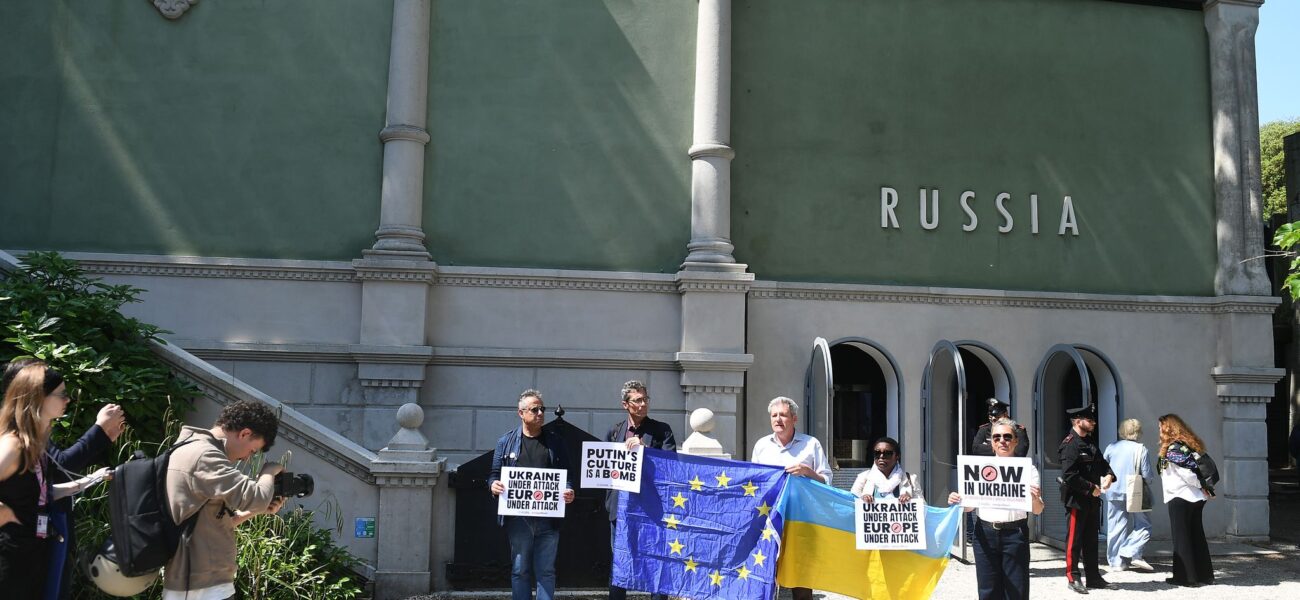
POLICY WIRE — Venice, Italy — Not with a bang, but with the quiet whimper of withdrawn euros. That’s how geopolitical realities sometimes smack into the seemingly insulated world of high art. The venerated Venice Biennale, long a gilded stage for international artistic expression, now finds itself tangled in the rather grittier fabric of European Union foreign policy—specifically, its stance on Russia’s continuing military aggression. It’s less about aesthetics, and much more about the chilly hardball of international finance, even for something as culturally sacred as a sprawling art exhibition.
Sources close to the ongoing financial discussions—and let’s be frank, these are rarely discussions where smiles are genuinely exchanged—suggest a calculated move by Brussels. The European Commission, usually the quiet architect of fiscal regulations and agricultural subsidies, has apparently begun to scrutinize the Biennale’s funding streams with an unexpected keenness. It isn’t a blunt refusal, no grand, declarative cancellation. It’s subtler than that, a creeping chill in the air around the budget approvals, making life difficult for the arts administrators who just want to curate, not mediate international crises.
But make no mistake: the underlying message is clear as Venetian glass. The issue at hand? The perceived allowance or, as some quarters in the EU Parliament might put it, ‘tacit complicity’ with Russian artistic or institutional participation, however peripheral, at one of the globe’s most visible cultural events. And for some within the cultural establishment, that’s just a bridge too far—art, they’d argue, transcends borders, political squabbles.
Yet, the current climate isn’t one for idealism, is it? Political allegiances, financial muscle, they’re the new paints on the palette. The European Union, determined to maintain a united front against Moscow, sees cultural events, even the hallowed Biennale, as extensions of national and bloc soft power. It’s a pragmatic, some might say brutal, approach to foreign policy, making even the most detached curator think twice about who they invite to the party.
And it’s not like the cultural sector is awash in easy money. A recent report by the European Parliament’s Budgetary Control Committee stated that overall funding for EU-affiliated cultural initiatives declined by 7.2% in the last fiscal year. So, when the taps tighten further, the ripple effects are significant. They don’t just impact whether a particular installation gets built; they cut deep into the fabric of artistic livelihoods, travel budgets for less affluent artists, and the logistical machinery of a colossal event that props up a significant chunk of Venice’s seasonal economy. It’s more than just an aesthetic choice; it’s an economic one, too.
For nations outside the immediate European purview—say, those in South Asia or the broader Muslim world—this European entanglement of art and politics isn’t an entirely alien concept. Many Pakistani and Bangladeshi artists, for instance, have long navigated complex political landscapes at home, where artistic expression often clashes with state narratives or cultural conservatism. They’re used to the tightrope walk, the careful framing required to secure both domestic acceptance and international visibility, sometimes facing accusations of westernizing influences, other times lauded for bringing a unique perspective to global conversations. The difference here, of course, is that the pressure isn’t emanating from a national government; it’s from a supranational body dictating terms on ostensibly non-political endeavors. And sometimes, that political tension can prevent much-needed dialogue, even beyond art.
📄 POLICY WIRE WHITEPAPER PUBLISHED: PAKISTAN'S NATIONAL SECURITY POLICY PRIORITIES
👉 READ BY CLICKING HEREOne Biennale insider, choosing discretion over outspoken criticism, indicated the difficulty for institutions like theirs. The expectation that they should operate as an extension of foreign policy is a new and challenging one, [QUOTE_PLACEHOLDER]. But then again, funds speak volumes, don’t they? And the EU’s coffers are not insignificant. They’re a significant lifeline for many European cultural undertakings.
But how do you delineate the line? Is merely showcasing the work of a Russian artist, perhaps one critical of their government, tantamount to endorsing the Kremlin’s policies? The nuanced distinction, it seems, is getting lost in the broader strategic calculus. It feels like a return to Cold War cultural diplomacy, only without the pretense of intellectual discourse as its primary engine. It’s starkly transactional. You play ball, you get the budget. You don’t, well, expect some empty spaces on your funding spreadsheets.
What this means, broadly speaking, is that culture’s supposed ‘neutral ground’ is rapidly eroding. Institutions like the Biennale, which have traditionally tried to float above the political fray, are finding their anchors firmly grabbed by sovereign hands—or, in this case, supranational ones. For artists — and organizers, it adds yet another layer of scrutiny to their creative and logistical choices. The financial squeeze means difficult decisions are looming—whether to capitulate to the political winds and risk alienating a portion of the artistic community, or stand firm and face increasingly precarious finances. It’s Venice’s brush with politics, and it’s getting messier than usual. For Pakistan and its neighbors, it’s another reminder that global politics casts a long shadow, reaching even into the quietest studios.
What This Means
The tightening of EU cultural purse strings over Russian participation at the Venice Biennale signals a concerning evolution in international diplomacy: the increasing politicization of ostensibly non-political, universal platforms. Economically, a reduction in funding doesn’t just hit the Biennale’s bottom line; it has a cascading effect on Venice’s tourism, hospitality, and associated services, impacting local economies that rely heavily on the influx of cultural travelers. Politically, it showcases Brussels’ readiness to leverage its financial power to enforce a unified foreign policy stance, effectively turning cultural grants into instruments of statecraft. This could set a worrying precedent for other international events, forcing organizers globally to assess geopolitical allegiances with heightened sensitivity when curating their programs. It’s less about fostering cross-cultural understanding and more about drawing sharp lines in the sand, potentially isolating artists from sanctioned nations regardless of their personal views or dissent. This approach risks silencing dissident voices within targeted countries, who often rely on international platforms for visibility. The cost might not just be artistic freedom, but a further splintering of global cultural exchange itself. The impact on nations like Pakistan is indirect but significant—it signals a global trend where cultural interactions become increasingly conditional on political alignment, making participation in international forums a diplomatic tightrope walk for any country navigating complex geopolitical waters.