


Futures Bet: White Sox Draft Strategy Unveils Shifting Baseball Economics
POLICY WIRE — Chicago, United States — Forget the glamour shots and the rookie cards. This year’s MLB draft, for those of us who peer beyond the stat sheets, felt less like a celebration of raw...

POLICY WIRE — Chicago, United States — Forget the glamour shots and the rookie cards. This year’s MLB draft, for those of us who peer beyond the stat sheets, felt less like a celebration of raw talent and more like a high-stakes, meticulously risk-adjusted economic projection. The whole affair, frankly, was an exercise in corporate valuation, a relentless pursuit of the next fungible asset, perfectly molded for an increasingly analytical game.
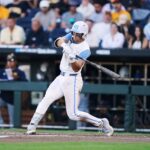
Take the 2026 class, particularly for a club like the Chicago White Sox. Everyone — and I mean everyone — knew the top pick would be Roch Cholowsky, a shortstop out of UCLA. And guess what? The Sox, holding the coveted No. 1 overall slot, dutifully obliged. No dramatic swings, no unexpected curveballs, just the perfectly rational acquisition of the consensus blue-chip prospect. It’s a calculated move, safe as houses in a volatile market, but one that raises questions about whether baseball, in its endless quest for efficiency, might be inadvertently flattening the curve of imagination. We’re witnessing an almost factory-like production of high-value position players, predominantly shortstops, making up a staggering twelve of the first 21 picks among position players.
And while the White Sox played it safe at the top, their subsequent maneuvers reveal the nuanced financial engineering now commonplace in player acquisition. General Manager Chris Getz, addressing the press corps—probably exhausted from calculating bonus pools—suggested the draft strategy was less about splash and more about strategic portfolio diversification. “We’re building a roster, not just collecting trophies,” Getz stated with a tight-lipped resolve. “Every dollar we spend, every pick we make, is about long-term value, even if it doesn’t always scream headlines.”
Because they locked in Cholowsky at likely an under-slot deal, the team had fiscal wiggle room. That bonus pool, hovering at $20,489,500 for the first ten picks, became a canvas for clever financial artistry. They grabbed Landon Thome, a versatile infielder who projects more as a second or third baseman, at pick No. 34. This move was telegraphed, an almost brazen assertion of intent after a last-minute trade. Then came Cole Prosek at No. 41—a kid ranked as a first-round talent, somehow tumbling into their laps in the second round. Both Thome and Prosek are the kind of ‘over-slot’ plays teams love, where you get premium talent by strategically deploying your budget. They’re banking on these young guns delivering outsized returns.
But it isn’t all about infielders who can hit. Eventually, they needed some arms. Joey Volchko, a hard-throwing righty from Georgia, was picked 77th. He’s raw, yes—a mid-90s fastball that’s mysteriously hittable and breaking stuff that misses the zone—but the potential, that tantalizing, high-upside possibility, was too much to ignore. His polar opposite? Eric Segura, the 105th pick, an Oregon State hurler ranked a surprising 196th by MLB Pipeline. Segura, for all intents — and purposes, is the organizational darling, the overachiever. He consistently ‘outkicks his coverage,’ proving scouts wrong. As one long-time scout, Harold ‘Doc’ Jenkins, quipped over a lukewarm coffee, “You love the Seguras. They’re like that stock everyone overlooks, then it quietly just… keeps going up.” He’s a testament to the belief in development over pure, unrefined physical gifts. Sometimes, the unsung workhorse is the smartest bet.
📄 POLICY WIRE WHITEPAPER PUBLISHED: PAKISTAN'S NATIONAL SECURITY POLICY PRIORITIES
👉 READ BY CLICKING HEREThis draft wasn’t just about baseball players; it was a microcosm of capital allocation, a sophisticated bet on human futures. The game itself has grown beyond America’s borders, seeking talent wherever it can be found. And yet, one can’t help but notice the peculiar geographic omissions in this global sweep. Baseball’s financial empires stretch globally, yet certain swathes of the world, like South Asia or the broader Muslim world, remain largely untapped—a market inefficiency left unturned, even as organizations pour millions into a comparatively saturated, traditional talent pipeline. While the immediate focus is on homegrown prospects, the global implications of talent sourcing, or the lack thereof from certain regions, present a curious economic dilemma that continues to mystify observers of the sport.
What This Means
The White Sox’s draft strategy—a blend of the consensus No. 1 and calculated value picks—underscores a deepening trend in professional sports: the prioritization of data-driven talent assessment and financial prudence over sheer speculative gambling. This isn’t just about drafting players; it’s about managing a complex talent supply chain. The high concentration of shortstops picked reflects a market responding to demand for athletic, versatile infielders, who can be moved to other positions if necessary. It’s an intellectualized approach to asset deployment, ensuring maximum return on investment by selecting prospects with transferable skills. But there’s a downside: this hyper-optimization risks stifling true outliers or innovative, less traditional talent pipelines. We might be creating a uniform product, sacrificing the idiosyncratic brilliance that once defined the sport for the sake of measurable potential. In an era where every decision is quantified, the romance of the draft gives way to the spreadsheets, and while efficient, one wonders what, precisely, is lost in translation.