


Shadows Deepen: Attempted Attack on Former MK Raz Points to Fractured Body Politic
POLICY WIRE — Tel Aviv, Israel — It’s often the small, chilling incidents, the ones that don’t quite escalate into full-blown tragedy, that scream the loudest about a nation’s health. And this week,...

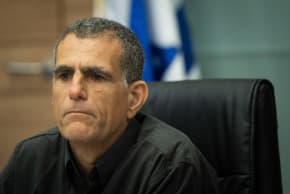
POLICY WIRE — Tel Aviv, Israel — It’s often the small, chilling incidents, the ones that don’t quite escalate into full-blown tragedy, that scream the loudest about a nation’s health. And this week, Israel’s body politic just got another guttural shriek. Because nestled amongst headlines of geopolitical maneuverings and economic indicators comes the rather stark news: prosecutors have formally indicted a 28-year-old man from Beersheba, Yiftah Sella, for an attempted attack on Mossi Raz, a former Knesset member.
It wasn’t a car bombing. Not a high-profile assassination. It was, instead, something arguably more insidious: an alleged attempt rooted in ideological animosity. But that’s where the real story lives, isn’t it? It’s not just about one politician or one agitated young man. It’s about the volatile brew of hyper-polarization—a cocktail we see fermenting in so many democracies these days—spilling over, threatening to consume anyone deemed an ‘other.’
Mossi Raz, for those who don’t follow the granular contours of Israeli politics, isn’t a figure known for placid consensus. He’s a former Meretz MK, part of the country’s embattled left. He’s been an outspoken advocate for Palestinian rights, a voice for peace initiatives, and—naturally, in a land where nuance often gets vaporized by rhetoric—a lightning rod for fierce condemnation from the political right. You might not agree with him, but he’s undeniably part of the democratic fabric.
And then there’s Sella. Details are scarce, deliberately so, for reasons of legal procedure. But we know he’s young. Twenty-eight. And from Beersheba, a city that—much like the country itself—is a complex mosaic of demographics, tensions often simmering just beneath the surface. One has to wonder what combination of digital echo chambers, local grievances, and perhaps some misguided fervor pushed a relatively young man to allegedly target a former legislator.
“When the public discourse turns into a shouting match where opponents aren’t just wrong, but are framed as enemies of the state, these kinds of dangerous individual actions become depressingly predictable,” Raz said recently, reflecting on the broader climate of threats faced by dovish politicians. “This isn’t about me alone; it’s about a democracy that’s forgetting how to listen to itself.” He isn’t wrong. You see this everywhere, from Washington to Westminster—the creeping dehumanization of political opponents, fertile ground for darker impulses. And it’s concerning.
Meanwhile, officials are tight-lipped. An unnamed Ministry of Justice spokesperson, speaking on background given the ongoing proceedings, stated unequivocally: “The state views all threats against its public representatives with the utmost gravity. Maintaining a safe environment for open debate—without fear of reprisal—is a cornerstone of our democratic process.” Which, honestly, sounds nice and clean, but the truth is usually far messier. Threats have indeed seen a noticeable uptick.
📄 POLICY WIRE WHITEPAPER PUBLISHED: PAKISTAN'S NATIONAL SECURITY POLICY PRIORITIES
👉 READ BY CLICKING HEREThis incident, small as it might appear, echoes a broader phenomenon observed globally. According to a 2023 report by the Anti-Defamation League (ADL), a non-governmental organization focused on civil rights, online extremist content and threats targeting public figures have increased by 22% over the past two years in Western democracies. That’s a sobering thought, isn’t it? A 22% bump in people wanting to silence others through menace. We’re not talking about civilized disagreement anymore. This isn’t a tennis match.
The implications of such incidents resonate far beyond Israel’s borders, particularly within the wider Muslim world. To many in, say, Pakistan or other South Asian nations, Raz’s brand of politics—pro-Palestinian, dovish—often represents a flicker of hope for dialogue in an otherwise bleak narrative of conflict. When even voices advocating for peace face alleged physical threats, it can easily be perceived as further evidence of an unwillingness to tolerate dissent within the Israeli state, reinforcing existing grievances and potentially complicating regional peace efforts. It complicates everything. This isn’t just domestic politics anymore; it’s international perception management on a rather dramatic scale.
What This Means
This indictment isn’t just another case for the judicial docket; it’s a symptom. It reveals a political landscape in Israel that’s becoming increasingly frayed, where disagreement risks metastasizing into animosity, and animosity into action. Economically, while a single incident won’t directly rattle markets, it does feed into a perception of instability—a ‘country risk’ that makes foreign investors and potential partners, especially those in more measured democratic settings, just a little more wary. When the public discourse gets this venomous, when political lines become so absolute that dissenters are viewed as traitors, it erodes the very foundations of civil society.
For Israel, a country already contending with immense external pressures, the internal fault lines are arguably more insidious. The fragility of its democratic norms is on display, particularly concerning the right to political expression and security for elected officials—or even former elected officials. The global perception of Israel’s democratic health is important; these sorts of incidents certainly don’t help paint a picture of a robust, inclusive society. It paints a picture of a society under incredible strain. But hey, who doesn’t love a good dose of drama with their morning news?