


Diplomatic Scrimmage: American Lawmaker’s West Bank Detention Ruffles Feathers, Again
POLICY WIRE — Washington, D.C. — For all the carefully choreographed press releases and diplomatic platitudes that typically surround a Congressional delegation’s swing through the Middle East,...

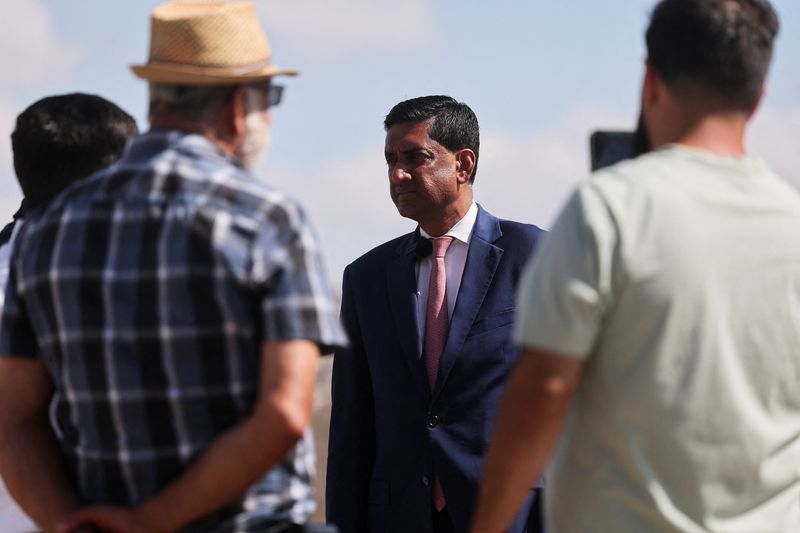
POLICY WIRE — Washington, D.C. — For all the carefully choreographed press releases and diplomatic platitudes that typically surround a Congressional delegation’s swing through the Middle East, sometimes the harsh realities on the ground have a funny way of intruding. Suddenly, the meticulously crafted talking points just… shatter. This week, it wasn’t a rogue rocket or a high-stakes intelligence leak that upset the apple cart; it was a clutch of Israeli settlers in the West Bank, effectively detaining a sitting American congressman, Ro Khanna (D-CA).
It’s a curious turn, isn’t it? A prominent lawmaker from the heart of Silicon Valley, touring contested territory, finds himself not just confronted, but temporarily held against his will. The incident, as reported by Khanna’s own office and later corroborated by Israeli press, occurred near the settlement of Homesh. He was attempting to observe the difficult reality faced by Palestinian olive farmers whose land access is routinely restricted or harassed by settlers. That’s when things got messy. Settlers, unbothered by official credentials, blocked his vehicle, preventing his progress, for a while. Not a good look, really.
And it immediately puts Washington in an awkward spot, trying to reconcile its stated commitment to a two-state solution with the increasingly brazen, and often violent, actions of those who oppose it. This wasn’t some minor dust-up; it was a clear display of jurisdictional anarchy that makes a mockery of any semblance of order. “This wasn’t a misunderstanding; it was a brazen display of who holds power here, and it’s frankly unsustainable,” Khanna later quipped to aides, expressing a simmering frustration. “It’s hard to talk about a two-state solution when basic freedoms are denied to elected American representatives—imagine what everyday Palestinians face.” It’s a sentiment many silently share, but few in his position openly vocalize with such bluntness.
But the official line from Jerusalem, as always, paints a different picture. A spokesperson for Israel’s Foreign Ministry, eager to defuse any diplomatic blowback, quickly released a statement that sounded well-worn and vaguely regretful. “Israel maintains security for all individuals within its sovereign territories and areas of security control,” the spokesperson noted, reportedly referencing an incident at Homesh. “While regrettable, such events underscore the complex security environment we operate in. We trust local law enforcement responded appropriately to disperse all parties involved.” Which is a fancy way of saying, ‘Oops, but also, it’s complicated.’ Because it always is, isn’t it? Always complicated, always layered with history, grievance, — and disproportionate power.
This episode, minor in its direct physical impact but hefty in its symbolic weight, won’t exactly warm diplomatic ties with nations across the Muslim world. From Islamabad to Jakarta, news of a U.S. lawmaker, especially one with South Asian heritage like Khanna, being treated with such disregard on what’s internationally recognized as occupied land, fans the flames of a familiar narrative. It’s about perceived American hypocrisy. These capitals watch Washington pour billions into security assistance for Israel—approximately $3.8 billion annually, as confirmed by the Congressional Research Service for Fiscal Year 2024—while elected officials get blocked from simply observing conditions in Palestinian areas. That kind of optics, frankly, ain’t pretty.
📄 POLICY WIRE WHITEPAPER PUBLISHED: PAKISTAN'S NATIONAL SECURITY POLICY PRIORITIES
👉 READ BY CLICKING HEREBecause every such incident fuels an already raging fire of public opinion that America simply turns a blind eye to settler expansion and violence. And it’s not just about what governments say; it’s about what the street believes. It plays right into arguments that the US commitment to international law or human rights is highly selective, applying rigorously to some nations, but conveniently flexible for others. A narrative like that can seriously impede other American foreign policy objectives across critical regions.
What This Means
The detention of Representative Khanna, while physically inconsequential, sends a powerful, unsettling ripple through the quiet diplomatic currents between Washington and Jerusalem. Politically, it deepens the schism within the Democratic Party on Israel, strengthening the hand of progressives who advocate for a tougher stance against settlement expansion and settler violence. For Prime Minister Benjamin Netanyahu’s government, it’s another embarrassing international headline, a visible symptom of their inability, or unwillingness, to rein in the most extreme elements of the settler movement, which increasingly dictate the political agenda.
Economically, instability in the West Bank doesn’t just impact local Palestinian livelihoods—the olive groves Khanna aimed to observe are vital for communities. It also deters foreign investment, exacerbates an already fragile security situation, and contributes to the economic desperation that breeds further extremism. More broadly, for American foreign policy, it damages credibility. The State Department continually walks this impossible tightrope, issuing statements of concern about settlement activity while simultaneously underwriting much of Israel’s security apparatus. Incidents like Khanna’s brief detention expose the inherent contradictions of that policy, making America’s peacemaking efforts seem more like wishful thinking than genuine diplomatic leverage.