


Diamond Dynasty or Economic Downturn: Braves’ Roster Shuffle Reflects Deeper Industrial Tides
POLICY WIRE — Atlanta, USA — When the glaring artificiality of prime-time streaming eclipses the organic drama of the ballpark, one has to wonder: does a minor league roster shuffle, however...

POLICY WIRE — Atlanta, USA — When the glaring artificiality of prime-time streaming eclipses the organic drama of the ballpark, one has to wonder: does a minor league roster shuffle, however consequential for a handful of aspiring men, truly register beyond the narrow confines of immediate fan obsession? It’s a rhetorical flourish, of course—everything registers, particularly when millions are sloshing about—but it highlights the almost farcical theatricality underpinning what purports to be sport. Tonight, for instance, the Atlanta Braves face their counterparts from St. Louis in a ritualized display, and the precise concatenation of bats and gloves chosen for the occasion offers a peculiar lens into the intricate, sometimes cruel, machinery of modern professional baseball.
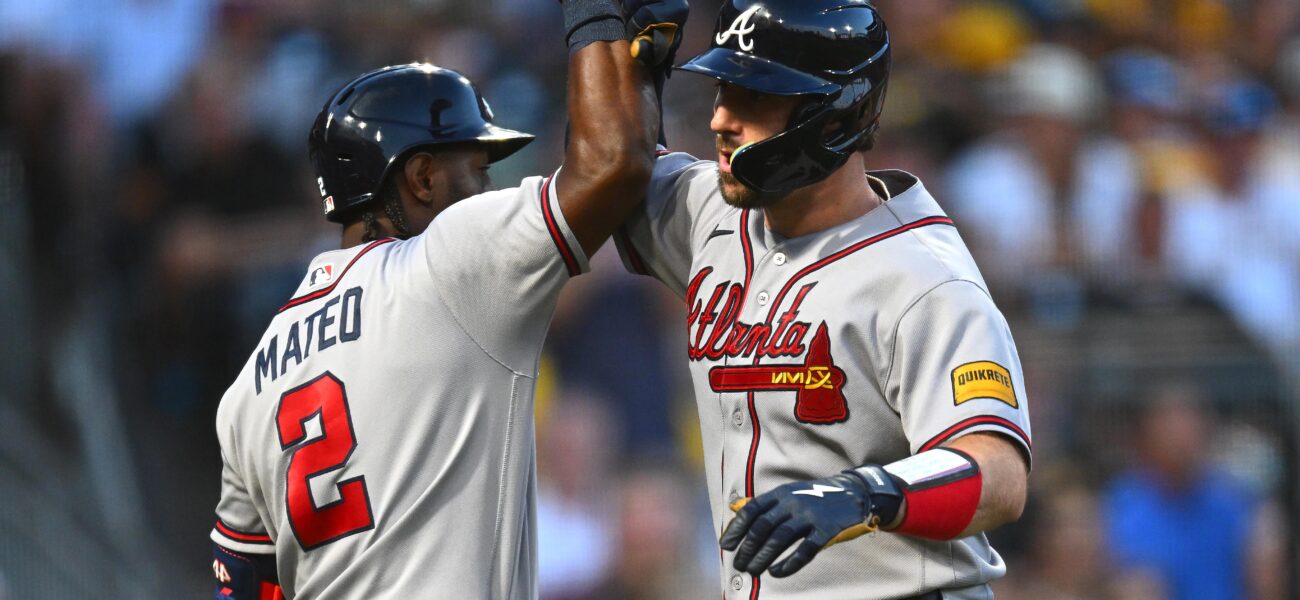
Team strategists, cloistered in their war rooms, render verdicts that reshape careers with a stroke of a pen—or, more likely, an analytics spreadsheet. They’ve decided Eli White gets the nod, taking over for a hobbled Mike Yastrzemski. Jorge Mateo, usually consigned to the pine, steps in for Jim Jarvis. And Joey Bart, a fellow with a curious track record against the opposing pitcher, finds himself behind the dish. These aren’t mere substitutions; they’re micro-adjustments in a high-stakes economic equation, each player a variable in a multi-million-dollar performance calculation.
It’s this ceaseless churn, the perpetual optimization of human capital, that truly captures the imagination, not the mere thwack of a ball on a bat. Player well-being? It’s often secondary to immediate competitive advantage, a cold, hard truth of the industry. Because even minor ailments like Yastrzemski’s elbow inflammation, pushing him onto the Injured List, trigger a cascade of roster maneuvers – recalls, options, outright releases – each impacting families, careers, and the precarious balance sheets of ancillary services. And while we speak of injuries, it’s worth noting the human cost; these are highly specialized athletes, their bodies their primary instruments, subject to immense strain.
“The modern baseball executive isn’t just managing a team; they’re navigating a highly liquid, constantly fluctuating talent market,” stated former League Commissioner Harrison Thorne in a recent keynote address to sports management students. “Every single player decision—who’s called up, who’s sent down, who catches a specific pitcher—it’s an asset management exercise with immense financial implications. The margin for error is shrinking faster than a spring training roster after cut day.” It’s a game played as much in boardrooms as on the field, a ballet of analytics and agents. We often miss the grand ballet for the granular details, don’t we?
But beyond the immediate spectacle, beyond the shifting pieces of a Braves-Cardinals matchup, lies a narrative of grander design: Major League Baseball’s often-frustrated aspirations to become a truly global behemoth. But, for all its North American dominance, MLB remains an afterthought in much of the world, especially in South Asia. In bustling cities from Karachi to Kolkata, the thwack of willow on leather in cricket stadiums commands frenzied devotion and astronomical broadcast rights, making baseball feel almost quaint, an exotic pastime relegated to grainy cable channels or the digital peripheries of the internet for a diasporic few.
“Look, our brand needs to resonate everywhere,” insisted U.S. Congressman Tariq Shah (D-CA), an outspoken proponent for cultural exchange programs. “We’ve got incredibly talented South Asian Americans, third-generation kids, who follow these games passionately. We have to tap into that, actively. Think of the soft power. Think of the new fan bases, the untold economic shifts this could unleash. But it’s not enough to simply exist; you’ve got to innovate for new audiences, otherwise, you’re leaving billions on the table.”
📄 POLICY WIRE WHITEPAPER PUBLISHED: PAKISTAN'S NATIONAL SECURITY POLICY PRIORITIES
👉 READ BY CLICKING HEREWhat This Means
The daily minutiae of a Major League Baseball lineup, while seemingly insignificant to the uninitiated, is a potent microcosm of broader economic and sociological forces. It reflects the intricate ballet of labor relations, where athlete contracts and team payrolls represent multi-million-dollar bets. Every substitution, every injured list designation, is a cog in a vast financial machine. the reliance on television deals, such as the Apple TV broadcast mentioned in the original report, illustrates how revenue streams dictate schedules and presentation—prioritizing subscription numbers over, say, traditional fan experience. The league’s annual media rights revenue, a staggering sum approaching $1.7 billion as of 2023, per Forbes, underscores the media’s pervasive influence on game strategy, player valuation, and the overall commercial viability of the sport itself.
This endless tactical churn also masks the global ambitions, or perhaps the provincial limitations, of baseball as a worldwide enterprise. While North America—and pockets of Latin America and East Asia—are enamored, the sport largely fails to captivate audiences in regions like South Asia, a massive market overflowing with youth and discretionary income, where sports like cricket reign supreme. This isn’t merely about preference; it’s about significant missed opportunities for market penetration, cultural outreach, and indeed, economic growth. Teams, in their insular focus on winning the next game, might inadvertently overlook the larger strategic imperative of cultivating a global brand, of finding new pools of talent and new revenue streams beyond established geographic borders.