


Soccer Shock: How America Embraced the World’s Game, Despite Itself
POLICY WIRE — Washington D.C., USA — Just weeks ago, the prognosis felt grim. You had this nation — grappling with stark divisions, its White House loudly advocating for border...

POLICY WIRE — Washington D.C., USA — Just weeks ago, the prognosis felt grim. You had this nation — grappling with stark divisions, its White House loudly advocating for border walls and “America First” — bracing to host the most globally unifying spectacle imaginable. Pundits openly worried. Would it work? Could the world’s most accessible sport genuinely take root in a place that seemed, at least officially, bent on exclusion?
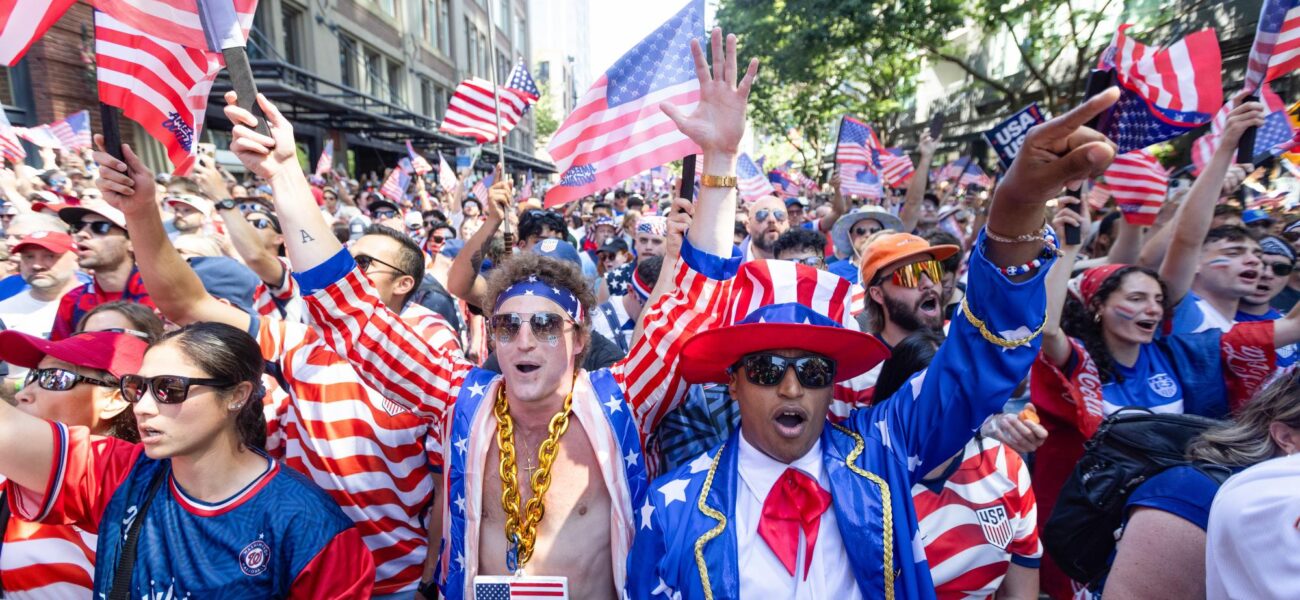
Turns out, the people had other plans. When the first whistle blew, a funny thing happened: Americans — real Americans, the kind you’d meet on any city block — didn’t just show up, they absolutely lost their minds for the beautiful game. Stadiums swelled. Pubs vibrated. And frankly, the politicians were left scratching their heads.
Before kickoff, there were legitimate fears, sure. Travel restrictions were making visa acquisition a Kafkaesque nightmare for fans from places like Senegal — and Haiti. The former President — a figure whose rhetoric about annexing Canada and invading Mexico made for charming pre-tournament banter — certainly hadn’t helped soothe international jitters. And then, there were the brazen “hydration breaks” during games, thinly veiled commercial grabs by FIFA. Yet, somehow, none of that mattered once the ball was actually in play.
Record crowds became the norm. Through the initial 78 matches, an average of 64,511 fans streamed into stadiums for each game, according to the Sports Business Journal — a staggering 10,000 more than the prior tournament in 2022. Occupancy rates consistently hugged the 99.7% mark. And FIFA? They boasted 6.5 million tickets sold. These weren’t just overseas tourists, mind you. These were homegrown fans, a new wave, falling head-over-heels for soccer. And they showed up, en masse. They watched not only their own national team, but games featuring other nations. On a random Sunday, a match between England and Mexico, with no direct US involvement, pulled in a jaw-dropping 21.7 million viewers on Fox, plus another 23.2 million on Telemundo.
Because the games were good. Really good. This tournament, averaging three goals per game (a high since 1958, for heaven’s sake), smashed previous American gripes about low-scoring soccer. Big names delivered: Mbappé, Messi, Haaland. Plus, we got these wonderful Cinderella stories, like Curaçao, a Caribbean island nation of just 150,000 residents — the smallest country to ever qualify — scoring its first World Cup goal. Spectacles like these captured the imagination. People felt it, deeply.
“It’s been a revelation, honestly,” noted Secretary of State Evelyn Reed last week during a rare moment of levity with reporters. “To see such an outpouring of goodwill and shared passion, bridging cultures right here on our soil, that’s diplomacy in action, isn’t it? Much more effective than any communique I’ve penned.” But for many, this “diplomacy” came from below, not from on high. On New York City streets, in bars packed to the gills, the vibrant, raucous spirit of global soccer took hold. “It was such a vibe! They made history and gave us hope. ‘Si se pudo!’ we chanted when the final whistle blew,” recounted Steven Guevara, an Ecuadorian American watching his team in Queens, “Beer was thrown in the air in celebration, and complete strangers were hugging.”
📄 POLICY WIRE WHITEPAPER PUBLISHED: PAKISTAN'S NATIONAL SECURITY POLICY PRIORITIES
👉 READ BY CLICKING HEREThis tournament’s unexpected success — at least to some — wasn’t just about what happened on the pitch. It became this incredible, undeniable display of American multiculturalism, a genuine, grassroots defiance of the official political mood. While the administration talked “sweeps,” communities of immigrants and their descendants were hosting spontaneous street parties. Pakistani-Americans, watching their friends and neighbors from other diasporas celebrate, were reminded of the shared immigrant experience that built the American mosaic — a spirit that thrives regardless of policy headwinds.
What This Means
The World Cup in the United States served as a poignant, accidental referendum on the nation’s soul, didn’t it? On one hand, you had a federal government consistently sending mixed signals about its welcome mat. On the other, you had citizens — old — and new — throwing open their hearts to the world. It’s a reminder of soft power’s peculiar nature; it often bypasses state apparatus, emerging from the ground up, rather than descending from policy papers. Economically, the infusion of travel and tourism dollars — an undeniable boon — came on the back of precisely the kind of international exchange some factions publicly disavow. Politically, this enthusiasm for a global sport challenges the simplistic isolationist narratives that gained traction in recent years.
But the real long-term impact might lie in how it changes America’s self-perception. For decades, soccer lagged behind the ‘Big Four’. Yet, data from Nielsen ratings revealed the US Men’s National Team’s (USMNT) round-of-16 loss drew an average of 33 million viewers to Fox, peaking at 41 million. That’s a larger audience than the 2025 World Series or even the previous month’s NBA finals Game 5. It shows where the cultural currents are truly headed. And that shift isn’t lost on observers abroad. “This event has highlighted a deeper reality of American society that too many, even in the Muslim world, tend to forget,” observed Dr. Amira Khan, a political sociologist specializing in cultural diplomacy at Georgetown University. “The United States is, at its core, a land of people from everywhere. Policy can try to gate it, but culture? Culture finds a way around the fence every time.” And because that human connection resonates so deeply, because it reminds everyone of a world bigger than any single nation, it might just stick this time. That, by itself, is a policy statement worth considering for future global engagement.