


Seoul’s Summit Shuffle: How Urban Peaks Redefine K-Leisure and Soft Power
POLICY WIRE — SEOUL, SOUTH KOREA — Most capitals grind you down. They’re a relentless symphony of concrete, traffic, — and ambition. Not Seoul. This sprawling Asian metropolis, a modern marvel...

POLICY WIRE — SEOUL, SOUTH KOREA — Most capitals grind you down. They’re a relentless symphony of concrete, traffic, — and ambition. Not Seoul. This sprawling Asian metropolis, a modern marvel forged from a bitter past, hides an open secret—a jagged, green heart that thumps beneath its shiny, glass facade.
Walk out of a hyper-modern subway station, and you’re often just a stone’s throw—sometimes a quick uphill walk—from a hiking trail. Suits disappear. Activewear emerges. Grandmothers, some sporting gear more professional than Everest guides, scamper past slick, young office workers with astonishing ease. This isn’t just exercise; it’s a social institution. It’s what locals half-jokingly call ‘k-hiking,’ a distinctly South Korean phenomenon woven into the fabric of daily life.
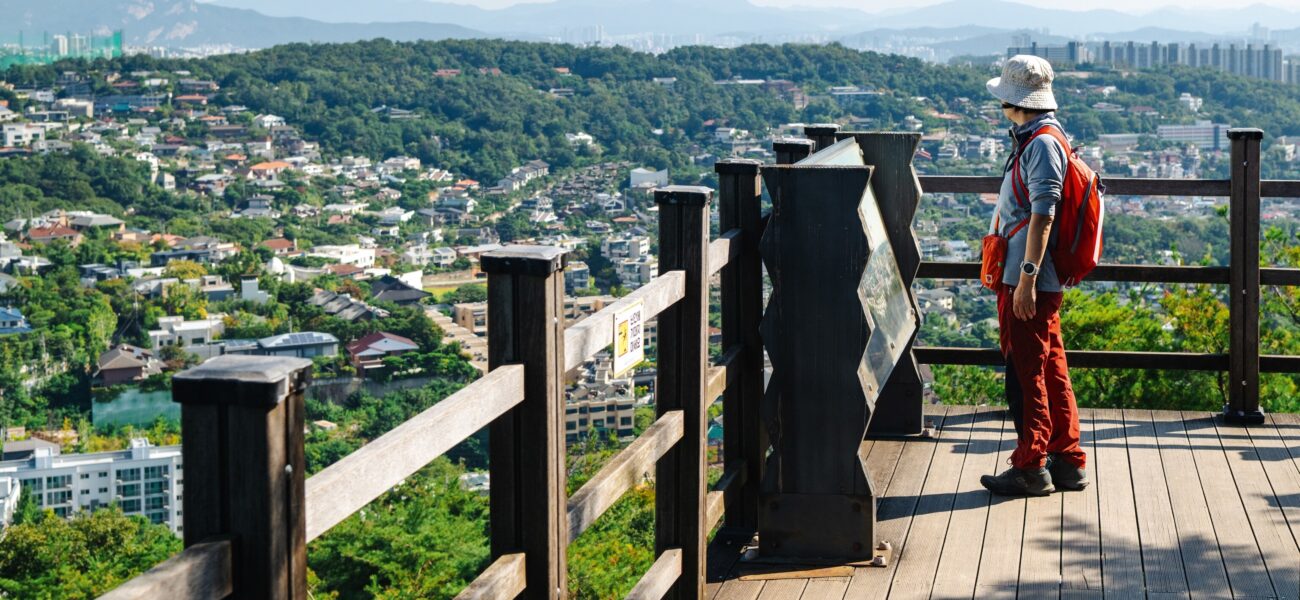
It’s a peculiar thing, seeing a global financial hub embrace nature with such unbridled enthusiasm, particularly when that nature is quite literally in its backyard. These aren’t pristine, distant wildernesses. They’re part of the city. Peaks like Bukhansan and Gwanaksan loom large, visible from countless windows, constant reminders that respite is merely an escalator ride and a short trek away. They offer quietude, a perspective-shift—and a healthy dose of shared cultural endeavor.
But there’s more to it than just burning off the kimchi jjigae. This integrated urban-mountain lifestyle has quietly become a subtle, potent tool for national identity and, dare we say, soft power. It paints a picture of a nation that values well-being, community, and an ancient connection to its land, even as it hurtles into the future.
“We don’t just build skyscrapers; we cultivate solace,” Seoul Mayor Oh Se-hoon once remarked at a tourism forum, his tone perfectly calibrated between civic pride and strategic foresight. “Our mountains aren’t roadblocks; they’re green highways to well-being and, frankly, good PR.” His administration has poured considerable resources into maintaining and publicizing these urban oases, knowing they offer something few other mega-cities can match: instant nature immersion.
Because, in a world often choked by urban sprawl, Seoul offers an antidote. It’s not just for residents, mind you. Tourists from all corners are discovering these trails, perhaps tired of identical global shopping malls. A recent report by the Seoul Metropolitan Government indicated a staggering 6.3 million unique visitors—domestic and international—tackled a city trail last year alone, generating an estimated 250 billion KRW in related economic activity, a figure many other cities would envy.
And what about a different perspective? Consider a recent interfaith dialogue summit, where Pakistan’s former Minister for Religious Affairs, Senator Talha Mehmood, offered a thoughtful observation on his brief foray into Seoul’s mountains. “In our lands, especially the rugged regions, mountains hold a spiritual reverence, a place for contemplation,” he noted, wiping sweat from his brow after a relatively easy ascent. “To see them so effortlessly woven into modern Seoul, a capital known for its speed—it tells you something about a nation’s heart, doesn’t it? That quest for elevation, be it spiritual or physical, it resonates across cultures. Perhaps it offers a shared pathway for global dialogue.” He’d clearly grasped something more profound than just a good cardio workout.
📄 POLICY WIRE WHITEPAPER PUBLISHED: PAKISTAN'S NATIONAL SECURITY POLICY PRIORITIES
👉 READ BY CLICKING HEREThis subtle, almost accidental diplomacy of hiking trails isn’t lost on the government. Park Bo-gyoon, former Minister of Culture, Sports — and Tourism, in an interview last year, articulated it well. “There’s a quiet strength in South Korea that perhaps goes unnoticed amidst the K-pop — and tech exports,” he observed. “These mountains, they’re not just physical challenges. They foster resilience, togetherness, and a deep appreciation for nature. And when visitors see that, they understand us better.”
The city’s embrace of its peaks offers a curious counter-narrative to its image as a strictly cutting-edge digital society. It’s a society, it turns out, that also knows the quiet power of a forest path, a rocky climb, and a panoramic vista—even if that vista includes the very skyline you just escaped.
What This Means
This ‘k-hiking’ phenomenon, often seen merely as recreation, is quietly positioning Seoul as a unique urban model. Economically, it diversifies the city’s tourism appeal beyond traditional shopping and cultural sites, attracting a segment of travelers interested in experiential, nature-based activities within an urban framework. Politically, it’s an extension of South Korea’s broader soft power strategy. By showcasing a balance between relentless modernization and deeply ingrained cultural practices—such as a communal reverence for nature and a commitment to personal well-being—Seoul subtly broadcasts a more holistic, appealing image to the world.
It’s not just about drawing more visitors, though that’s certainly a perk. It’s about cultivating a specific brand: innovative, yes, but also grounded, healthy, — and accessible. In an increasingly interconnected and competitive global landscape, where nations jockey for influence and positive perception, presenting a capital city where you can conduct a board meeting and then, an hour later, be trekking a mountain peak, speaks volumes. It’s an unspoken message about quality of life, urban planning efficacy, — and perhaps even national character. You can almost feel a country’s soft power shifting its weight on the global stage, much like a hiker adjusting their pack on a steep ascent.