


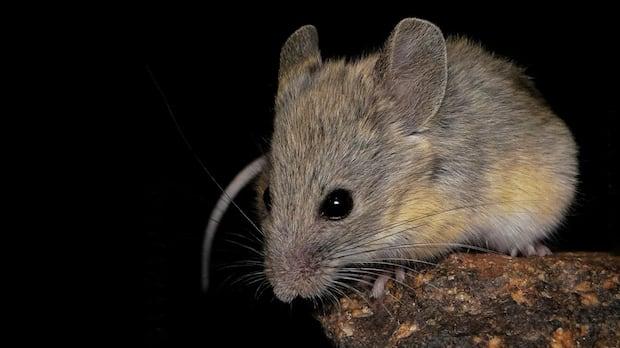
Andean Mouse Thrives at Extreme High Altitudes
POLICY WIRE — An international research team has identified key biological adaptations enabling a species of leaf-eared mouse to thrive at altitudes nearing 7,0...

POLICY WIRE — An international research team has identified key biological adaptations enabling a species of leaf-eared mouse to thrive at altitudes nearing 7,000 meters in the Andes, an environment where humans struggle to survive. The study, published Thursday in the journal Science, details how the high-altitude Andean leaf-eared mouse (Phyllotis vaccarum) generates heat efficiently in low-oxygen conditions and processes harmful compounds from its diet.
The species was found on the summit of Volcán Llullaillaco, located on the Chile-Argentina border, at an elevation of 6,739 meters. At this altitude, the air provides approximately 44 percent of the oxygen available at sea level, according to the study. Temperatures in this region are consistently below freezing, — and the available vegetation is sparse and often toxic.
Grant McClelland, a McMaster University biology professor and co-author of the study, described the environment as “so barren that you can’t imagine anything would live there.” He added that knowing these mice live up there routinely and survive, it was pretty mind-boggling.
Researchers, including those from McMaster University in Hamilton, Ont., determined that Phyllotis vaccarum possesses the broadest known elevation range of any mammal, inhabiting areas from Chile’s northern coast at sea level to Andean peaks exceeding 6,700 meters.
To understand these adaptations, the team collected mice from various elevations across this range. They compared the animals’ genomes and conducted laboratory tests on both highland and lowland mice under identical conditions. These tests measured heat production at oxygen levels simulating sea level, 4,300 meters, — and 7,000 meters.
The findings indicated that while all mice experienced a reduction in heat-producing capacity as oxygen levels decreased, the highland mice exhibited a significantly smaller decline compared to lowland members of the same species and a related lowland species. This ability to maintain body heat in freezing, low-oxygen conditions was identified as a potentially life-saving advantage.
📄 POLICY WIRE WHITEPAPER PUBLISHED: PAKISTAN'S NATIONAL SECURITY POLICY PRIORITIES
👉 READ BY CLICKING HEREGraham Scott, another McMaster biology professor and co-author, explained that producing body heat requires oxygen to fuel energy-intensive muscles. He noted that in the extreme cold of high elevations, shivering is crucial for warmth. Scott stated, “And so the way in which muscles support the metabolism for shivering is a lot like the way that a marathon runner would support movement.”
Further analysis of a hind-leg muscle used for shivering revealed that the mitochondria in highland mice had a greater capacity to convert oxygen and nutrients into energy than those in lowland mice. Mitochondria are cellular structures responsible for energy production. Scott highlighted that One of the big things is that there’s just more of them.… They’re just packed full of mitochondria. He also noted that these mitochondria possess a really high capacity to use lipid fuels, which provide a sustained energy source for shivering.
The study also uncovered adaptations related to the mice’s diet. Given the limited vegetation on the highest slopes, the mice often consume plants containing harmful compounds. Genetic analysis showed signs of natural selection in genes that aid in detoxifying these substances. Scott commented, “At these elevations, they really have to eat whatever they get,” — and that “These mice have had to adapt to cope with eating these plants with toxic compounds in them.”
McClelland concluded that “Evolution never ceases to surprise us as biologists,” adding that “any environment you look at on Earth, including those that seem to be completely inhospitable to life itself, you’re probably going to find something that’s found a way to survive and thrive in that environment.”