


Missouri’s Deluge: When a ‘Thousand-Year’ Storm Becomes Another Tuesday
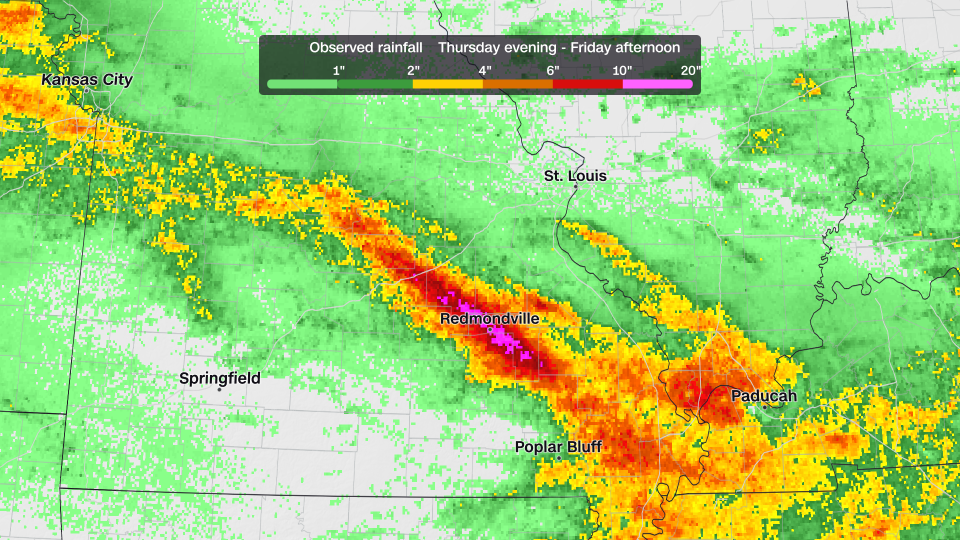
POLICY WIRE — Washington D.C. — Imagine counting a thousand years. Now imagine the weather event statistically expected to occur just once in that vast stretch of time — then watch it unfold over a...

POLICY WIRE — Washington D.C. — Imagine counting a thousand years. Now imagine the weather event statistically expected to occur just once in that vast stretch of time — then watch it unfold over a couple of days in southeast Missouri. It ain’t some abstract statistical oddity anymore; it’s a waterlogged mess, displacing scores and testing the very foundations of local emergency responses. We’re talking catastrophic flooding, the kind that rips folks from their beds, submerges livelihoods, and frankly, makes you wonder just how long we’ve got until the next supposed millennia-marker event arrives with depressing regularity.
It’s a bizarre headline to type, this talk of a [QUOTE_PLACEHOLDER] in southeastern Missouri. Because for locals, it feels like déjà vu. The waters rose, as waters always do, after an intense, relentless downpour. Rescue teams, bless ’em, scrambled. They weren’t pondering historical weather averages; they were pulling dozens from swamped homes — and stranded cars. It’s that immediate, gritty reality of human helplessness against nature’s sudden fury that often gets lost in the drier pronouncements of meteorological data.
State officials are, predictably, offering the usual reassurances, but the damage is plain as day. Roads washed out, entire neighborhoods resembling shallow lakes — it’s a chaotic scene, folks relying on boats where their front yards used to be. Emergency responders from across the region had to really hustle to get everyone out of harm’s way, particularly in the most hard-hit areas.
And let’s be blunt: when we toss around terms like [QUOTE_PLACEHOLDER] what we’re actually doing is tacitly acknowledging a new normal. These aren’t freak occurrences anymore, are they? Not really. They’re just the next extreme weather bulletin on your smartphone. We’ve seen similar scenes play out, tragically, time — and again. It makes you ask: are our aging infrastructure, our drainages, our levees, designed for a past that’s already gone?
You can see this grim cycle on a global scale. Consider Pakistan, for instance, a nation that’s endured its own share of unimaginable weather events over recent years. Their 2022 monsoons displaced millions and caused billions in damages— a climate catastrophe of almost biblical proportions. They’re routinely at the sharp end of climate shifts, grappling with an existential threat. It’s a country, like many in the global south and parts of South Asia, wrestling with severe resource limitations and existing poverty that exacerbates the suffering when these mega-deluges hit. It’s a stark comparison: here, it’s ‘dozens rescued’; there, it’s often hundreds of thousands or even millions.
But the American Midwest is hardly immune to these pressures. It’s not just coastal cities or desert states; it’s everywhere. A recent report by the National Oceanic and Atmospheric Administration (NOAA) indicated that annual precipitation in the contiguous U.S. has increased by about 4.6% since 1895, with some regions experiencing even more significant spikes in heavy downpours. That’s a hard number right there, sourced from decades of empirical observation. It isn’t some crystal ball forecast; it’s what we’ve already measured, folks. And the models say it’s not letting up.
📄 POLICY WIRE WHITEPAPER PUBLISHED: PAKISTAN'S NATIONAL SECURITY POLICY PRIORITIES
👉 READ BY CLICKING HEREAnd it’s a particular problem for states like Missouri, which might not always see themselves as front-line states in the climate crisis, but clearly are. The costs—both human and financial—stack up, relentlessly. We’re perpetually in reactive mode, aren’t we? Shuttling people to safety, cleaning up the mess, but how much proactive adaptation is truly happening? Because, like it or not, these aren’t just Missouri’s problems; they’re everyone’s problems, just showing up in different ZIP codes on different days.
What this kind of ‘unprecedented’ event really throws into sharp relief, from a political and economic perspective, is the ever-widening gap between our infrastructure’s capabilities and nature’s increasingly aggressive demands. It’s not just about repair anymore; it’s about reimagining entire systems. Cities — and rural areas alike are staring down a future where the old engineering blueprints simply won’t cut it. Federal funds, often allocated after a disaster declaration, rarely cover the true economic fallout, let alone the psychological toll on communities that suffer repeated blows. But state — and local governments are already stretched thin, facing their own budget crunch and competing demands.
Politically, it’s tough terrain. Nobody likes to campaign on raising taxes to fortify against theoretical future floods—until the theoretical future arrives with two feet of water in the living room. Then, everyone’s asking: [QUOTE_PLACEHOLDER]? This event in Missouri serves as another, unfortunately stark, reminder that climate resilience isn’t some abstract policy debate; it’s a concrete need with devastating real-world consequences if ignored. It forces lawmakers to confront the immediate, visible destruction while trying to plan for a more resilient future. It’s a tough sell when every other interest group is screaming for its share. The economic ripple effects are extensive too: damaged crops, lost workdays, skyrocketing insurance premiums, and the slow, agonizing decline of property values in vulnerable zones. It isn’t just about what happened today; it’s about what happens tomorrow, and the day after that, when these ‘once-in-a-lifetime’ events decide they rather fancy visiting every few years.