


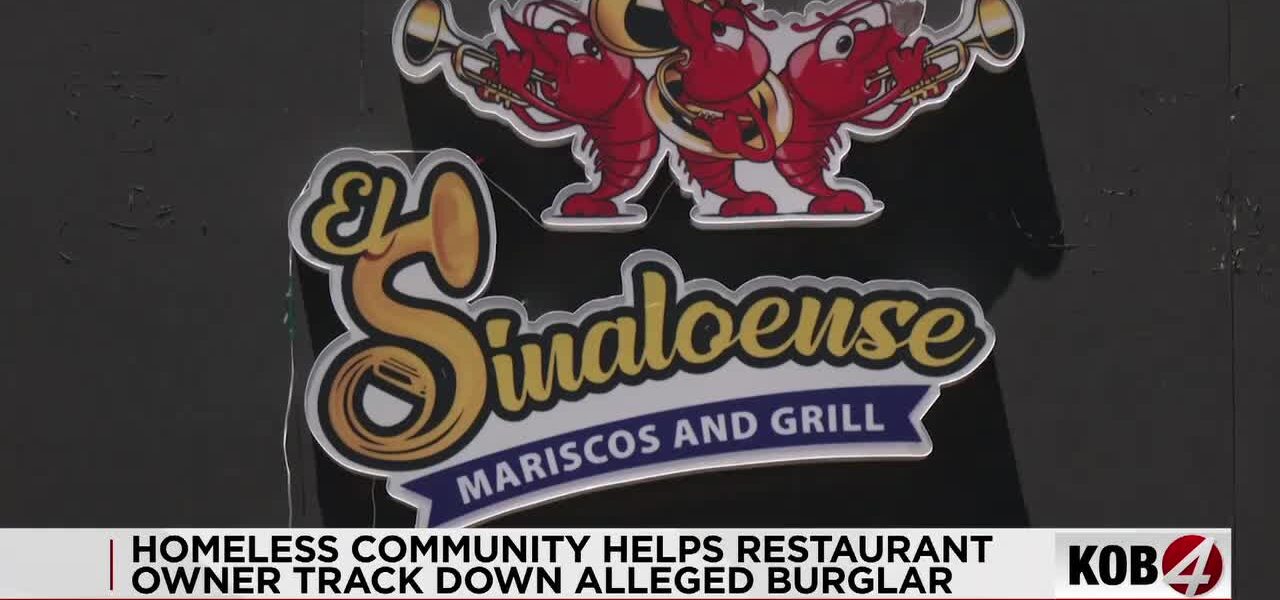
Shrimp Scams and Street Justice: Albuquerque’s Informal Economy of Reconnaissance Unravels a Heist
POLICY WIRE — Albuquerque, USA — When nearly a thousand dollars worth of shrimp, alongside cold hard cash and various potent libations, vanishes from a New Mexico establishment in the dead of night,...

POLICY WIRE — Albuquerque, USA — When nearly a thousand dollars worth of shrimp, alongside cold hard cash and various potent libations, vanishes from a New Mexico establishment in the dead of night, you don’t typically turn first to your long-time patrons for an investigation. But for Leo Hernandez, the proprietor of El Sinaloense, a recent pilferage wasn’t a call to the long arm of the law alone—it was a test of his human investment, an informal network of reconnaissance that put many an official database to shame.
It’s the kind of gritty narrative often dismissed by policy wonks, yet it defines urban survival in swaths of the developing world—and apparently, in pockets of America too. The theft, which emptied Hernandez’s coffers by a grand and left some serious seafood deficit, happened back on June 17. He received a late-night phone call. A simple heads-up, but it kicked off a rather extraordinary hunt. Hernandez explains, [QUOTE_PLACEHOLDER] Simple. Direct. And devastating for a small business owner.
And he wasn’t subtle about it. The thief, later identified as 44-year-old Fabian Soto, allegedly bypassed conventional entry. Security footage apparently shows Soto looking around for a weapon—not a sophisticated tool, but an improvised one. “He just smashed it. He picked up a big rock and just threw it in there. You could see him on the cameras that he’s going around looking for a big rock, and he just smashed,” Hernandez recalled. This isn’t a precision operation, it’s desperation, or perhaps just a contemptuous disregard for others’ property.
The local constabulary would, no doubt, take their time. Because in the cold, hard numbers game of American law enforcement, property crimes—like a restaurant break-in—often fall by the wayside. The Federal Bureau of Investigation’s Uniform Crime Reporting Program indicates that nationally, the clearance rate for burglary in 2021 hovered at a dismal 12.3 percent. Meaning, less than one in eight such cases typically gets solved. But Hernandez wasn’t waiting for official channels to grind through their inevitably sluggish process. He possessed a different, arguably more potent, form of leverage.
What followed was an object lesson in community engagement—a masterclass, really. He printed out still frames of the suspect, a grainy image from his surveillance system, — and took to the streets. Not the Internet, not an anonymous tip line, but actual pavement pounding. His circuit involved six years of fostering relationships, of handing out burritos and sodas, a simple economy of goodwill that now paid unexpected dividends. [QUOTE_PLACEHOLDER] But the mugshot wasn’t the first stop; it was the second, validated by local intelligence.
It wasn’t complicated, he just asked around. “And that’s when I asked, like, we know everyone around the area, so I asked everyone around. We found out his name and who he was and everything.” Simple, effective—organic. For Hernandez, the revelation wasn’t just about identifying a suspect; it was about confronting a betrayal. [QUOTE_PLACEHOLDER] He hadn’t changed his ways, though, still extends a helping hand where he can. But, boy, talk about an awkward Thanksgiving at the next community gathering, eh?
📄 POLICY WIRE WHITEPAPER PUBLISHED: PAKISTAN'S NATIONAL SECURITY POLICY PRIORITIES
👉 READ BY CLICKING HEREHernandez sums it up with almost melancholic pragmatism. [QUOTE_PLACEHOLDER] It’s a transaction, yes, but not of cash. It’s an informal exchange of decency and deference, built over years, often against the backdrop of indifference from the broader, formal justice system.
What This Means
This Albuquerque episode offers a sharp lens on the shifting landscapes of public safety and social cohesion, not just in American suburbs but across the globe. We often observe similar community-led informal justice systems in regions where formal state structures are perceived as weak, inefficient, or even corrupt—places like many towns in Pakistan’s Sindh province, or densely packed neighborhoods in Cairo’s old city. There, a concept often dubbed ‘biraderi’ (brotherhood) or neighborhood committees serve as first responders and arbiters, resolving disputes and policing petty crime long before, or instead of, official channels get involved. The difference here, of course, is that Hernandez operates within a nominally strong state. But it points to a widening gap, a quiet crisis of faith in centralized authority.
The economic implications for small businesses are stark. For many entrepreneurs, particularly those operating on thin margins in communities often overlooked by municipal investment, crime isn’t just a loss of property; it’s an existential threat. They can’t always afford private security or sophisticated alarm systems. So, what’s their real insurance? It’s the trust they build with the folks living — and working nearby. It’s the unpaid labor of community surveillance. It becomes an unspoken compact: you serve the community, — and in return, the community watches your back.
Politically, this small incident highlights a quiet but profound shift. As faith in traditional policing wanes in some quarters—due to anything from perceived slow response times to larger debates about police funding and methods—citizens and businesses are adapting, crafting their own, sometimes makeshift, social contracts. This isn’t necessarily about opting out of the system; it’s about building supplementary mechanisms. And sometimes, like in this case of a vanished shrimp shipment and a determined restaurateur, these organic, messy, human networks actually get the job done. The lesson here, for anyone paying attention from Washington D.C. to Islamabad, is clear: formal institutions can draw up all the protocols they want, but sometimes, real governance—the kind that makes a tangible difference in everyday lives—happens on the street, one shared burrito at a time.
📖 GET YOUR FREE COPY NOW OF POLICY WIRE DIGITAL MAGAZINE JULY 2026 EDITION
👉 READ & DOWNLOAD FREE MAGAZINE