

The Last Whistle: A Gaza Aid Worker’s Dream Drowned in Conflict
POLICY WIRE — Gaza City, Palestine Territories — Remember the roar? That brief, almost impossible moment when the FIFA World Cup trophy—actual, glittering gold—landed right here in Gaza? People...

POLICY WIRE — Gaza City, Palestine Territories — Remember the roar? That brief, almost impossible moment when the FIFA World Cup trophy—actual, glittering gold—landed right here in Gaza? People weren’t just staring; they were laughing. Kids, too. They touched it. That wasn’t just a PR stunt; for a fleeting while, it was a defiant, shining shard of normal in a place where normal just isn’t. And Mohamed Yacoubi, an aid worker with more heart than the local hospital has beds, he’d had a hand in it, somehow, helping orchestrate that brief, beautiful distraction. But now, Yacoubi’s gone, his own story ended, not with a stadium cheer, but with a casualty count, caught in the grinder like too many others.
It’s a peculiar kind of irony, isn’t it, when the bringer of momentary, international joy becomes another statistic in a conflict that seems allergic to happy endings. Yacoubi, as accounts detail, wasn’t a footballer, nor a celebrity; he was one of those gritty, indispensable individuals keeping humanitarian operations limping along in a strip that’s been under siege for longer than some of its residents have been alive. He’d done everything, from coordinating food distributions to making sure essential supplies actually got to people who were—let’s be honest—desperate. This man didn’t just push papers; he moved mountains, metaphorically speaking, against bureaucratic hurdles and blockades that’d make your head spin.
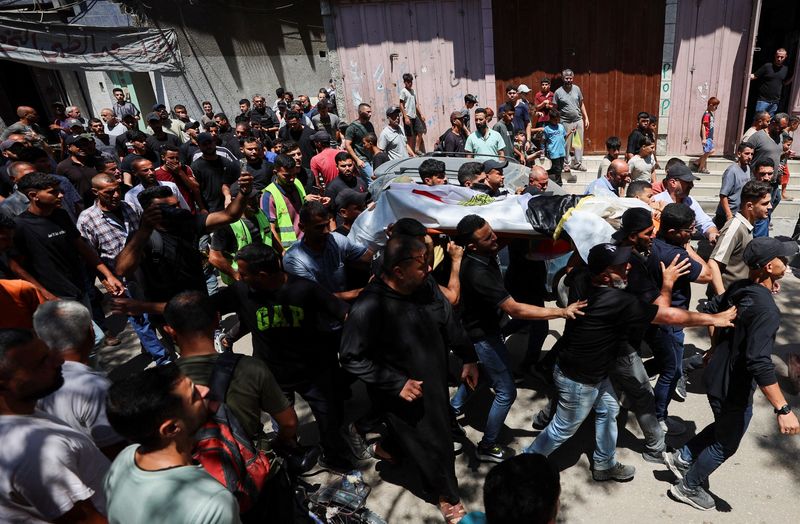
His work went beyond mere logistics, extending into community upliftment, often engaging young people, reminding them there was a world beyond checkpoints and drones. It’s hard to imagine the daily grind, but Yacoubi did it, every single day. The mourning in Gaza, they’re saying, isn’t just for an individual; it’s for the crushing of another tiny, fragile hope—a symbol of something positive extinguished.
News of his passing ripped through communities already stretched thin by incessant conflict. For many across the wider Muslim world, from the bustling streets of Lahore, Pakistan, to the quiet villages of Indonesia, Yacoubi’s fate resonates with a chilling familiarity. He embodied a quiet heroism, a steadfast commitment to alleviating suffering that’s often met with incomprehensible risk. And frankly, the response from those outside seems to be a tired shrug, another round of carefully worded statements. It’s almost as if the capacity for shock has finally snapped.
Yacoubi was killed [QUOTE_PLACEHOLDER], according to initial reports emerging from the ground. While the specific details are, as always, contested—with each side offering its own version of events—the outcome remains grim: another aid worker, dedicated to humanity, lost to the relentless maw of regional strife. A UN report from March 2024 indicated that at least 175 humanitarian aid workers have been killed in conflicts globally this year alone, a figure that scarcely registers anymore amidst the cacophony of 24/7 news cycles.
But Yacoubi wasn’t a faceless number; he was the man who, only a couple of years ago, stood beaming as children swarmed around that golden trophy. It’s a bitter pill to swallow. His memory, however, isn’t solely defined by his tragic end, but by those small, luminous moments he helped create. And we don’t forget those.
📄 POLICY WIRE WHITEPAPER PUBLISHED: PAKISTAN'S NATIONAL SECURITY POLICY PRIORITIES
👉 READ BY CLICKING HEREWhat This Means
The death of an aid worker like Mohamed Yacoubi isn’t just a personal tragedy; it’s a stark indicator of an eroding global humanitarian space. Economically, this type of casualty ratchets up the insurance premiums for agencies, shrinks the pool of willing field staff, and inevitably drives up the cost of aid delivery. Donors, already wary of funding initiatives in volatile regions, might grow even more hesitant, creating a vicious cycle where those who need help most receive it least.
Politically, incidents like this deepen the existing chasm of mistrust between conflict parties and the international community. It suggests a blatant disregard for established norms protecting neutral humanitarian actors, making negotiations for access—already fraught—even more arduous. It’s a loud, unmistakable signal to the world’s most vulnerable that their lifelines are increasingly tenuous, dependent on the capriciousness of ongoing hostilities. For the Palestinian people, it represents another blow to their agency, their resilience, and their ability to forge any semblance of normal life. And for aid organizations, it forces an agonizing re-evaluation of risk versus reward, asking how much more can they, or should they, sacrifice.
The incident also reinforces the narrative across many parts of the developing world, particularly in South Asia and the wider Muslim world, that international law and humanitarian principles are selectively applied, especially in conflicts involving powerful state actors. This perceived double standard only fuels resentment and cynicism toward international bodies and Western foreign policy, complicating future diplomatic efforts and coalition building. Ultimately, Yacoubi’s death isn’t just an isolated tragedy; it’s a symptom, a painful reflection of a world where human decency seems to be losing its footing against political calculus and ceaseless violence. We’re facing an acute crisis of credibility on a global scale.
The echoes of that World Cup cheer—and the brutal silence that now follows—won’t fade anytime soon, especially for those who knew him, for those he helped, and for those who wonder if anyone’s truly listening. It’s a somber chapter in an already heart-wrenching saga.
📖 GET YOUR FREE COPY NOW OF POLICY WIRE DIGITAL MAGAZINE JULY 2026 EDITION
👉 READ & DOWNLOAD FREE MAGAZINE