


Ukraine Drones Hit St. Petersburg: Russia’s Safe Zone Ends
A Ukrainian drone strike on St. Petersburg's oil terminal shatters Russia's security narrative. Discover how Kyiv's long reach impacts the war and global stability.

POLICY WIRE — Washington D.C. — They say war changes everything, but some things just take a while to catch up. For months, Moscow has postured, bombed, — and blockaded, projecting an image of impregnability behind its borders. Well, that illusion just took a pretty direct hit, didn’t it?
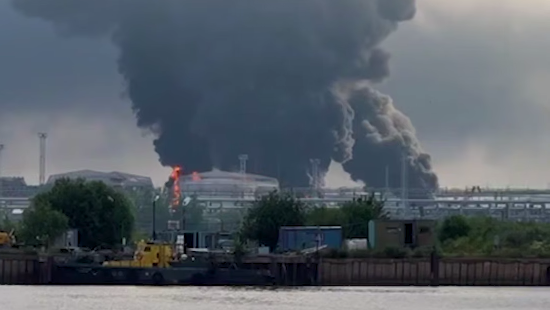
It wasn’t a military barracks in Rostov. Not some grimy supply depot near the Ukrainian front. No, a Ukrainian drone, or drones, just flew some 700 miles to whack a major oil terminal right outside St. Petersburg—a city practically synonymous with Russia’s imperial grandeur, its second-biggest economic powerhouse. Think of it: Russia’s historical nerve center, Peter the Great’s window to Europe, suddenly finding itself squarely in Kyiv’s sights. This isn’t just about blowing up a storage tank; it’s about punching a hole in Moscow’s long-cherished narrative of homeland security. It’s a message, loud and clear.
Ukrainian officials, who generally stay coy about such operations, have let their silence speak volumes. And while they haven’t taken direct credit for the specific Leningrad region incident, the implication is quite obvious. “We’re showing them there’s no safe harbor for their war machine, anywhere,” said Mykhailo Podolyak, a Ukrainian Presidential Advisor, his words — spoken after previous, similar incidents — ringing especially true now. It’s not just a physical attack; it’s a psychological jab, a slow-burn strategy aimed at domestic Russian complacency and its resource economy. Kyiv’s shadow play is forcing the Kremlin’s hand, again and again.
But the Kremlin? Naturally, they’re downplaying it, as is their habit. Russian defense ministries and state media quickly reported intercepting all incoming UAVs—Unmanned Aerial Vehicles, to use the formal lingo—over the region. State-run TASS news agency cited officials who conceded a minor fire at the Novatek gas terminal, which they said was quickly extinguished. A mere inconvenience, nothing to see here, comrades. But you can’t really ignore the fact that the terminal temporarily halted operations. Because, you know, when your critical energy infrastructure gets hit, you tend to reassess things. But Dmitry Peskov, the ever-stoic Kremlin spokesman, delivered the familiar line: “These pathetic provocations will achieve nothing but further cementing our resolve.” Hard to be resolved when your fuel keeps catching fire, though, isn’t it?
And let’s not pretend these are isolated acts of mischief. They’re part of a sustained campaign to disrupt Russia’s war economy, a grind-down tactic. About 25-30% of Russia’s crude oil exports transit via Baltic Sea ports, according to industry estimates. Hit these points, — and you hit Moscow right in its wallet, not to mention complicating its logistical efforts. It forces Russia to divert precious air defenses away from the front lines, thinning out what was once considered impenetrable. It’s a calculated risk, no doubt, given the potential for escalatory responses. But Ukraine, besieged — and battered, doesn’t exactly have the luxury of playing it safe.
The geopolitical tremors from such attacks aren’t just felt in Europe. Think about nations like Pakistan, always navigating the treacherous currents of global energy markets and Great Power rivalries. Pakistan, a net importer of energy, relies on stable, affordable supplies. And Russia remains a key—if complicated—supplier for Islamabad, constantly juggling its own geopolitical alignments and domestic economic pressures. When Russian oil terminals catch fire, global oil prices tend to twitch, and those twitches invariably echo down to the bustling markets of Lahore and Karachi. It’s a chain reaction. A destabilized supply chain in the Baltic affects the budget planning desks in Islamabad, making the task of keeping the lights on—and the economy humming—that much more precarious.
📄 POLICY WIRE WHITEPAPER PUBLISHED: PAKISTAN'S NATIONAL SECURITY POLICY PRIORITIES
👉 READ BY CLICKING HEREWhat This Means
This latest strike—assuming its Ukrainian provenance—signals a dangerous but predictable new phase in the grinding conflict. Politically, it deepens the embarrassment for the Kremlin, undermining its narrative of control and showcasing the ever-lengthening reach of Ukraine’s defensive capabilities. It tells the Russian populace that the war isn’t just ‘over there’; it’s creeping closer to home, quite literally, igniting fears about broader stability. Economically, even minor disruptions to crucial export hubs like those near St. Petersburg can chip away at Russia’s revenue streams, which are essential for financing its war machine. It also presents a dilemma: fortify far-flung facilities — and stretch already thin resources, or accept vulnerability.
For international allies — and adversaries alike, it changes the strategic calculus. Western nations might tacitly approve of the pressure applied to Russia’s economy, even as they publicly call for de-escalation. But Russia’s partners, particularly those in the global south who rely on Russian energy or commodities—countries like India and, yes, Pakistan—will be watching nervously, weighing how sustained attacks might impact global commodity prices or, more broadly, Russian foreign policy focus. It suggests a future where no side’s backyard is entirely safe, upping the ante for everyone involved. And frankly, that’s not exactly a comforting thought for global stability.
The rules of engagement, such as they’re, are still being written, often in the smoky afterglow of fresh explosions. And as the smoke clears over the Gulf of Finland, it’s clear: the front lines are becoming a whole lot less defined.