


Utah Killing: Beyond the Bloodstains, A Fractured Nation’s Echo in a Courtroom Drama
POLICY WIRE — PROVO, Utah — A quiet gasp. A mother’s tear. It wasn’t the DNA forensics or the damning video confession that first ripped through the packed Utah courtroom Friday, but a...

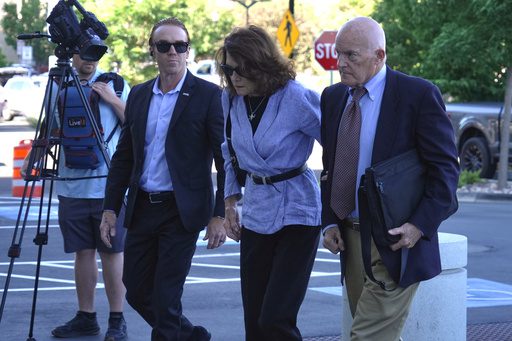
POLICY WIRE — PROVO, Utah — A quiet gasp. A mother’s tear. It wasn’t the DNA forensics or the damning video confession that first ripped through the packed Utah courtroom Friday, but a shared, primal moment of raw grief. Charlie Kirk’s widow, Erika, gripped by an unspoken weight, clung to his mother, Kathryn, their heads bowed as pixelated footage—said to depict Tyler Robinson, the man accused of shooting the conservative firebrand—scuttled across a rooftop on a chilling loop. The alleged killer, the state claims, a barely visible shadow moving from the roof’s edge, a chilling prelude to an instant that cleaved a life and sparked a national conversation about political discourse gone lethal. It’s in these silent beats, these fleeting human exchanges, that the real story of American political violence often finds its grimmest outline.
Prosecutors, playing to both the bench — and the hungry public eye, haven’t been shy. They’ve rolled out a formidable collection of what they term ‘overwhelming’ evidence: DNA, the surveillance footage, and crucially, an alleged digital confession from Robinson himself. But here’s where it gets interesting, because the defense isn’t just folding its cards. No, sir. Attorney Michael Burt isn’t suggesting Robinson didn’t do it. Instead, he’s poking holes, drilling into the very notion of forensic infallibility. "If you had a lot of DNA on your hand, we shook hands and I went to pick up an exhibit, a gun, and I touched the trigger of it, your DNA could be on that trigger, right?" Burt queried Caitlin Oliver, a forensic biologist with the Bureau of Alcohol, Tobacco, Firearms and Explosives. "It’s possible. Yes," she conceded. It’s a lawyer’s dance, isn’t it? Casting doubt, muddying the waters, even when the tide feels strong.
And boy, does that tide feel strong for the prosecution. They’ve got Robinson’s former roommate, Lance Twiggs, telling tales of remorse. Then there’s the infamous Discord chat — an instant message platform not known for its diplomatic undertones — where Robinson allegedly posted, "it was me at UVU yesterday." No nuance there. These digital footprints, prosecutors argued, tie the knot. "Your Honor’s heard four days of testimony now. The evidence is overwhelming. It’s devastating," insisted Chief Deputy Utah County Attorney Chad Grunander, his voice a hammer stroke designed to convince Judge Tony Graf. It feels less like a preliminary hearing, more like a full-blown declaration of victory.
Because, really, this isn’t just another homicide case in Utah County. This is a story that bleeds into the national psyche, stirring up all sorts of uneasy questions about the nature of our public discourse. Kirk, a 31-year-old conservative voice, a figure closely aligned with former President Donald Trump—his very identity is political. And prosecutors aren’t shying away from that, either. They claim Robinson specifically targeted Kirk because of his political views, an aggravating circumstance that could put the death penalty on the table in Utah. It’s a claim that ignites a different kind of fuse, you know? The one tied to partisan fury.
📄 POLICY WIRE WHITEPAPER PUBLISHED: PAKISTAN'S NATIONAL SECURITY POLICY PRIORITIES
👉 READ BY CLICKING HEREThis court, with its meager 14 public seats (a statistic gleaned from court observers and easily missed in the noise), has become an accidental theater for America’s simmering animosities. The legal wrangling unfolds against a backdrop of public anxiety and, indeed, conspiracy theories—unsubstantiated talk of second shooters and staged events. That’s the sort of froth this kind of charged atmosphere kicks up. It’s not unlike the constant tension points we witness in regions far away, say, across South Asia, where a perceived insult or an ideological divide can sometimes quickly devolve into street-level violence or, worse, an organized act with dire consequences. It speaks to a global pulse, a certain fragile equilibrium everywhere. Professor Paul Cassell, a law expert at the University of Utah, noted the lengthy preliminary process likely aimed to dispel these wild conjectures, "The prosecution wanted to put out into the public record the overwhelming case."
But the defense remains unbowed. They’ve picked at every thread. DNA isn’t ironclad, they say, its presence doesn’t mean intent. The roommate’s testimony is contested; Robinson never talked about Kirk before, Twiggs said. This narrative chess match continues. And soon, Judge Graf will decide if the state’s weighty narrative is enough to move this saga—this human tragedy wrapped in a political flashpoint—to a full trial. This case isn’t just about a murder, it’s about what we, as a society, are willing to accept in our political battles, and where the lines between words and deeds finally blur beyond recognition.
What This Means
This prosecution’s aggressive posture in the Kirk case signals a strong message from authorities regarding politically motivated violence. If the death penalty is pursued — and ultimately levied due to political targeting, it sets a chilling precedent. Such an outcome could intensify calls from one side for greater protection of public figures—especially those perceived as targets due to their prominence in the contentious political sphere—while simultaneously being framed by the other side as a selective application of justice. Economically, heightened political instability or perceived targeting could have subtle but real impacts; think about the investment climate in areas prone to public unrest, or even the logistical and security costs incurred by political events. Policy-wise, a conviction here, particularly one predicated on political motivation, could spur legislative debates over speech, assembly, and domestic terrorism statutes, much like the reverberations from broader political shocks often lead to renewed conversations about Asia’s economic vulnerabilities after natural disasters. The legal and political ramifications could ripple out for years, fundamentally shaping how we discuss—and prosecute—acts at the intersection of belief and brutality.
📖 GET YOUR FREE COPY NOW OF POLICY WIRE DIGITAL MAGAZINE JULY 2026 EDITION
👉 READ & DOWNLOAD FREE MAGAZINE