

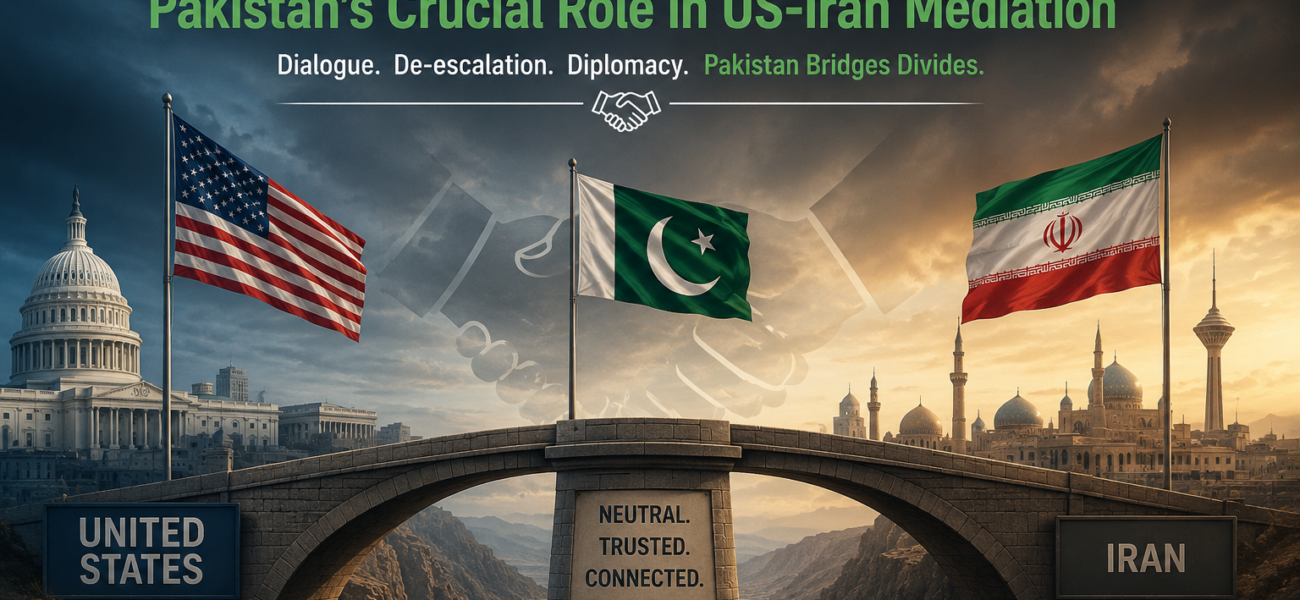
The Last Diplomatic Bridge: Pakistan’s Crucial Role in US-Iran Mediation
As new skirmishes between the United States and Iran risk to further escalate months of intricate negotiations, Pakistan has again risen as the leading mediator for moderation. Islamabad has stepped...

As new skirmishes between the United States and Iran risk to further escalate months of intricate negotiations, Pakistan has again risen as the leading mediator for moderation. Islamabad has stepped up its diplomatic efforts toward both Washington and Tehran, even as the latest escalation is challenging the chances of implementation of a regional accord generally seen as the most viable way to resolve one of the Middle East’s most dire conflicts, the Islamabad Memorandum of Understanding (MoU).
Diplomatic sources revealed that Pakistan, having made new intervals with both capitals under the coordination of Qatar, has established new contacts to stop further military action and bring back renewed talks under Islamabad MoU. Sure, the series of attack-and-defence has complicated it, but Pakistani authorities are sure that diplomacy has not failed; it’s in its more challenging times. They believe that long peace treaties outlast the crises in which they have emerged and continue to take root and thrive.
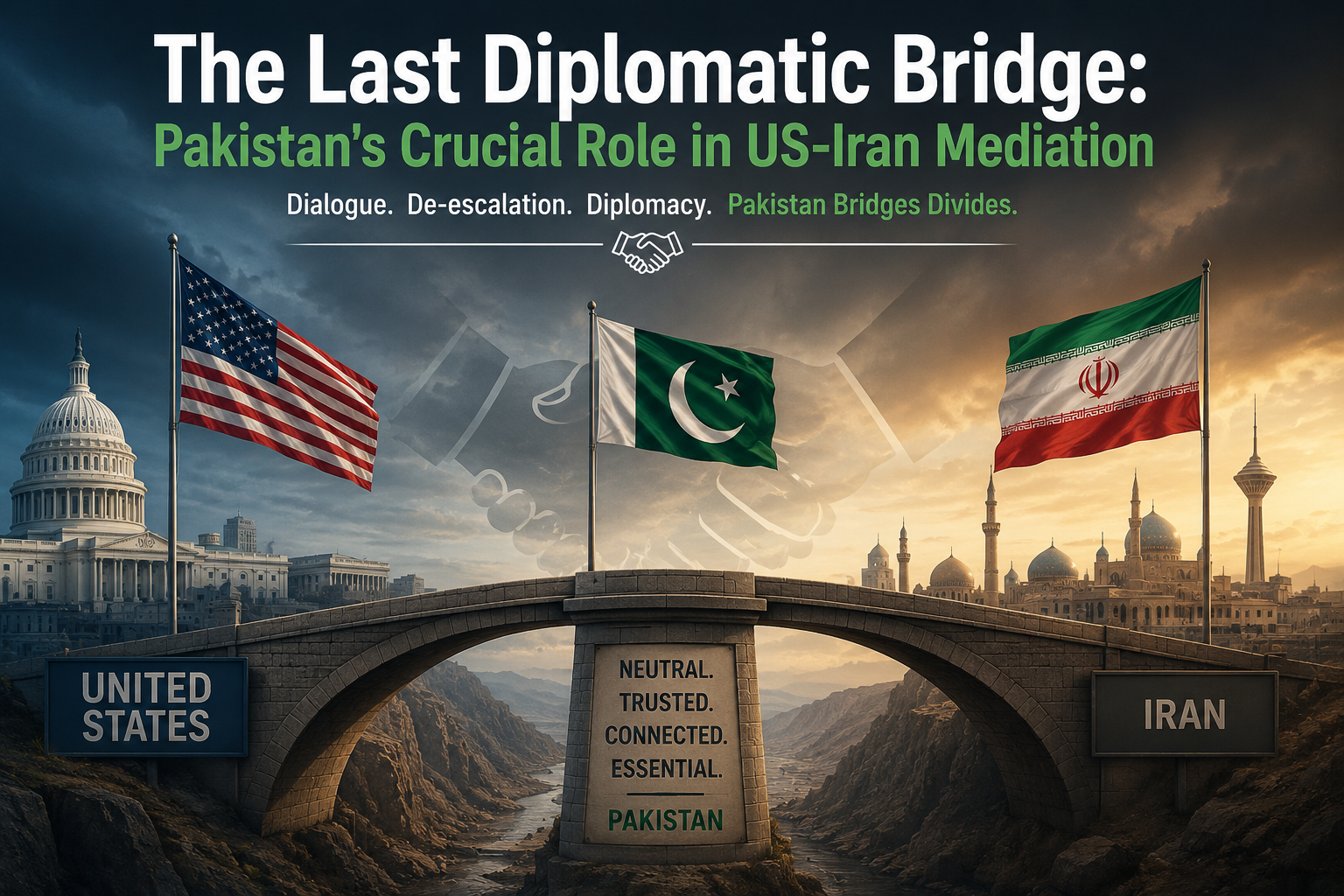
It is this special diplomatic status that has instilled confidence in Pakistan. Islamabad can rely on both Washington and Tehran for ties as well as its credibility with the bigger Muslim world is a big advantage over most of its regional partners. Sharing a border of more than 900 km with Iran, Pakistan has a clear national interest in averting instability which may spill over its border. All the while, the United States is still a key strategic and economic partner. This is a policy which Pakistan has maintained for long that is well-balanced for which it has come out to be a bridge for adversaries and does not count itself among the partisans.
No one can deny the importance of Islamabad Memorandum. The deal was inked under months of conflict after intense talks coordinated by Pakistan, which set a roadmap of 60 days for Washington and Tehran to talk a final deal. It also wanted to ensure the right to “free navigation” through the Strait of Hormuz, which allows about 1/5 of worldwide oil supplies to pass through on a daily basis. Organized by region, a major disturbance of these waters would not only compromise the stability of the Gulf, but also drive energy prices through the roof globally, leading to serious repercussions in Asia and Europe.
The latest sparring at sea came after Iran has launched missiles at an international trading ship in the Strait of Hormuz and then American military to retaliate. Pakistan has responded with prudence and calmness despite US President Donald Trump’s recent public pronouncement of the Islamabad MoU “over,” after he stated that it was “no longer in its phase of execution.The Islamabad MoU was moved to “no longer in its phase of execution” by the US President Donald Trump and Pakistan’s reaction has been measured and calm. Islamabad called on all stakeholders to respect their commitments as per the agreement while adopting a constructive approach towards talks and dialogue, rather than rhetoric.
In Pakistan’s changing foreign policy this measured diplomacy is reflective of the current aspect. Over the years, Islamabad has tried to assert its role in the region as an honest broker of negotiations on the complicated geopolitical issues, including discussing the Kashmir dispute with all the stakeholders. It has been internationally recognised for its mediation efforts in the US-Iran bilateral talks and multiple mediation efforts to ease tensions in bilateral talks held in the region have recognised Pakistan’s constructive role. “Islamabad’s increasingly active role in other regional mediation efforts has been reported by Reuters as well, reflecting its growing stature as a credible peacemaker in the region.
This collaboration with Qatar further bolsters the endeavour in Pakistan. Doha has become famous for being able to play a conciliatory role at the negotiating table for a number of conflicts, whereas Pakistan has built the trusted political networks and geographical location that make it a place of interest for regional actors. The two nations are reportedly making exceptional efforts for an immediate cessation of hostilities in advance of the technical talks called for under Islamabad framework of talks.
📄 POLICY WIRE WHITEPAPER PUBLISHED: PAKISTAN'S NATIONAL SECURITY POLICY PRIORITIES
👉 READ BY CLICKING HERE
The difficulties are still huge though. Extraordinary Pakistani sources say progress on issues other than the US-Iran deal, including the ongoing Lebanon violence in the south, have hampered efforts to implement the pact. Iran claims to be concerned about wider security issues in the region if the Strait of Hormuz is opened fully, while Washington says previously agreed pledges must be grounded on its own terms. The many issues here show the difficulty of Middle Eastern diplomacy, in which several conflicts may be entangled.
Despite all these challenges Islamabad keeps going on to the highest political and military engagement levels. Pakistan’s Chief of Army Staff Field Marshal Asim Munir recently had a phone conversation with Iranian Foreign Minister Seyed Abbas Araqchi to discuss the situation in the region. The call reiterated the significance both countries accord to maintaining direct communication during periods of heightened tension and the key position of Pakistan as an active interlocutor.
To Pakistan, the Islamabad MoU is not simply to avert a fresh military standoff but also a shield against a culture of fear.To Pakistan, the Islamabad MoU means more than averting yet another military standoff; it’s a protective facade to stop culture of fear. It’s about proving that middle powers can lead international peace by setting examples with stuffy ideas instead of pushing nuclear missiles.It is about reigniting the ideals of principled diplomacy – not military coercion – in driving international peace. Islamabad, which from the outset has been consistent on the need for sustainable security in the face of any conflict, has said so much in this context that some of the conflicts are getting increasingly polar.
The initiative of the Pakistan also fits into its overall regional connectivity and economic security strategy. Direct impact of Peace in the Gulf is on the energy security of Pakistan, exports, foreign employment and overall economy. Therefore Islamabad is not only pursuing a pragmatic foreign policy characterised with an element of diplomacy but also with a strong force of national interest centred upon the stability of the region.
Diplomacy or confrontation will be the issue in the upcoming weeks. Despite this, a few facts have already emerged, one being that Pakistan is not playing the threat game, while others are continuing to. Islamabad has thus strengthened its image as a responsible regional player, defusing the situation through dialogue and, invariably, instead of the path of division or mediation. In a world which is becoming more and more unstable politically, Pakistan’s steadfast stance of peace in the future could very well become one of the most important geopolitical gifts to the security of the world.
Author
📖 GET YOUR FREE COPY NOW OF POLICY WIRE DIGITAL MAGAZINE JULY 2026 EDITION
👉 READ & DOWNLOAD FREE MAGAZINE