


Beyond the Taillight: New Mexico’s High Court Reaffirms Justice in Officer’s Killing
POLICY WIRE — SANTA FE, N.M. — A flickering taillight. That’s often all it takes—a seemingly insignificant infraction—to set in motion a chain of events that rips a hole straight through families and...

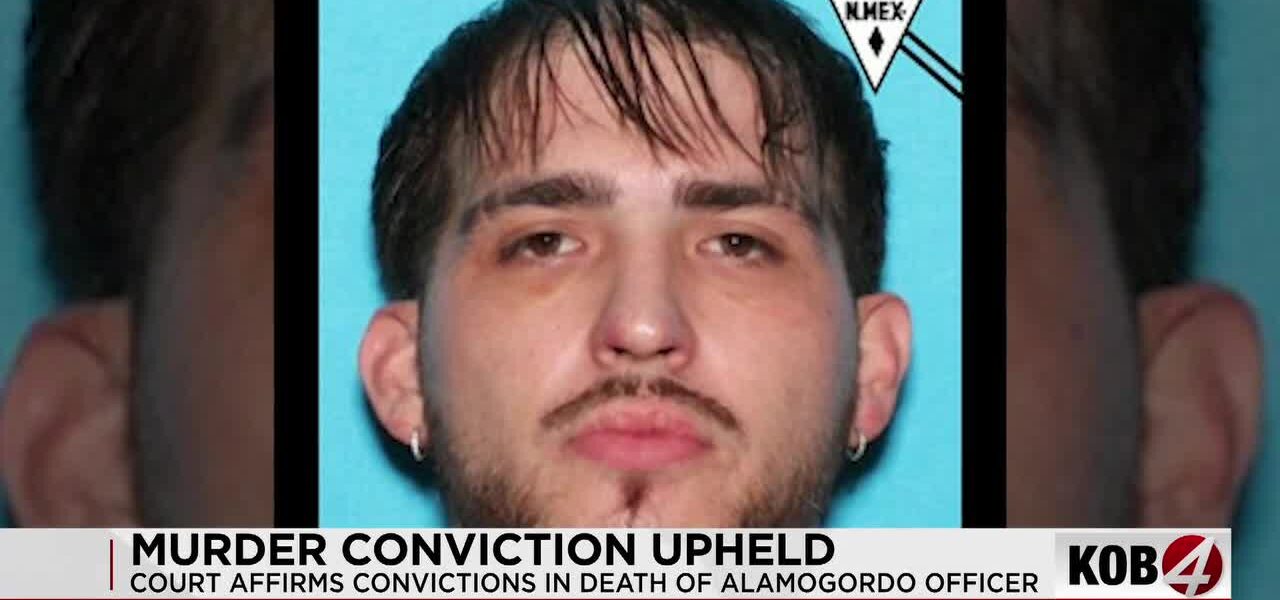
POLICY WIRE — SANTA FE, N.M. — A flickering taillight. That’s often all it takes—a seemingly insignificant infraction—to set in motion a chain of events that rips a hole straight through families and shatters public trust. Such was the genesis of a tragic encounter in Alamogordo last year, one that culminated this past Thursday with the New Mexico Supreme Court, in an unusually blunt fashion, affirming a life sentence for Dominic De La O, the man who fatally shot Police Officer Anthony Ferguson.
It wasn’t a question of whether De La O pulled the trigger. Nobody disputed that. His defense pivoted on a different legal arc: impulsivity versus premeditation. Was it a moment of frantic panic, a tragic burst of rash decision-making—second-degree murder, then? Or was it, as prosecutors meticulously argued, a calculated choice, cold and deliberate, warranting the heft of a first-degree conviction? The high court, it seems, wasn’t having the nuance.
Justice David K. Thomson, writing for a unanimous bench, painted a picture of intent forged in a series of defiant actions. It started with a traffic stop that didn’t go. De La O bolted, weaving through the New Mexico night. He then crashed his vehicle—a predictable outcome, really—and continued his flight on foot, crucially, still clinging to a sawed-off shotgun. It’s tough to spin that kind of determined retention of a weapon, especially one designed for maximum, horrifying effect, as merely ‘impulsive.’ They ruled that a jury could absolutely, logically infer deliberate intent from his choices, his ongoing evasion, and then, the killing of Officer Ferguson.
“When officers ordered him to get on the ground,” the court’s opinion cuttingly noted, “the jury could reasonably have inferred that Defendant deliberately chose not to comply with those orders, but rather to shoot Victim in the face with the sawed-off shotgun that he kept with him for just such a purpose.” No ambiguity there. The argument that he simply acted without thought? The state’s highest court basically scoffed at it. It’s hard to ignore a firearm that’s literally *always* with you, for a “purpose.”
Prosecutors weren’t just contending with De La O’s impulsivity claims. He also wanted a do-over because a witness, in an almost incidental aside, mentioned he had an active arrest warrant. A minor procedural hiccup, his lawyers contended, that could’ve swayed the jury. But, again, the Supreme Court pushed back. “In this case, the other evidence of guilt was overwhelming,” they concluded, brushing aside the warrant comment as unlikely to have affected the verdict. The justices, frankly, seem tired of the delaying tactics. Sometimes, the facts just line up, harsh — and undeniable.
For police departments, rulings like this offer a sort of grim solace. They affirm the dangerous reality of their daily work. “Every day our officers pin on a badge, they know they might not come home,” commented District Attorney John R. Chavez, speaking briefly after the decision was released. “This ruling, it’s not just a legal victory; it’s a solemn reaffirmation that societies demand accountability when someone chooses to target those who stand in the line of duty. Justice for Officer Ferguson serves as a stark reminder.” And he’s not wrong; there’s a public expectation that the rule of law will hold, even against the most desperate of appeals.
Chief Michael Williams of the Alamogordo Police Department added, his voice gravelly, “We send our people out there to keep the peace, to face whatever rolls up on a dark street. They count on the system to back them when they’ve done everything right. Today, that trust was honored. It gives our rank-and-file—and the family of Officer Ferguson—a sliver of closure, an affirmation that his sacrifice wasn’t for nothing.” But what does this mean for the wider community, especially those segments where trust in authority isn’t always a given?
📄 POLICY WIRE WHITEPAPER PUBLISHED: PAKISTAN'S NATIONAL SECURITY POLICY PRIORITIES
👉 READ BY CLICKING HEREWhat This Means
This decision, while specific to a small New Mexico city, resonates far wider than its dusty borders. It sends a chillingly clear signal across jurisdictions: violence against law enforcement, especially when coupled with premeditated actions, will draw the heaviest hammer the justice system possesses. For those contemplating evading authority with deadly force, the message couldn’t be clearer: the judiciary won’t tolerate claims of impulse when the actions scream calculation.
But there’s a deeper current here, one that eddies in places like Karachi and Dhaka just as it does in Alamogordo: the delicate balance between law enforcement’s authority and public trust. Incidents like these, where a seemingly minor stop spirals into deadly confrontation, put a spotlight on the systemic challenges of policing. While the state’s highest court has definitively ruled on intent in this specific instance, it doesn’t quiet the broader conversations about escalation, de-escalation, and community engagement. In countries across the Muslim world, where political and social stability can be razor-thin, public confidence in a fair and just judicial system is the bedrock upon which order rests. An erosion of that trust, particularly when it touches issues of life — and death, can have devastating ripple effects.
And let’s be honest: trust in policing is a tricky thing to build, easily shattered. A 2023 Bureau of Justice Statistics report indicated a statistical rise in fatal incidents during routine traffic stops nationwide over the last decade, sparking fierce debates on police conduct and citizen responsibilities. Every verdict, every legal interpretation, chips away at or bolsters the perceived legitimacy of the state. This one leans heavily towards bolstering—at least from the perspective of law enforcement—insisting that when intent is established, justice is unequivocal. Yet, for communities already grappling with uneven application of law, such stark rulings, however legally sound, sometimes feel less about clarity and more about brute force. It’s a perception, true. And perceptions, whether in New Mexico or a village in rural Pakistan, can drive the social fabric for decades. But sometimes, when faced with undeniable facts, a system just has to deliver an undeniable sentence. And this court, they did just that.
The outcome solidifies that in America’s legal landscape, fleeing, arming oneself, and then engaging in lethal force isn’t just impulsive behavior; it’s a decision with profoundly irreversible consequences, sealed now for good within the cold steel bars of a prison cell. This isn’t just about Alamogordo, after all; it’s about the ever-present tension between individual choice and societal order.