


The Raw Calculus of Talent: FSU’s Diamond Pipeline and MLB’s Relentless Hunger
POLICY WIRE — Tallahassee, FL — The air around Florida State University’s baseball diamond isn’t just thick with humidity and the scent of freshly cut grass; it’s practically...

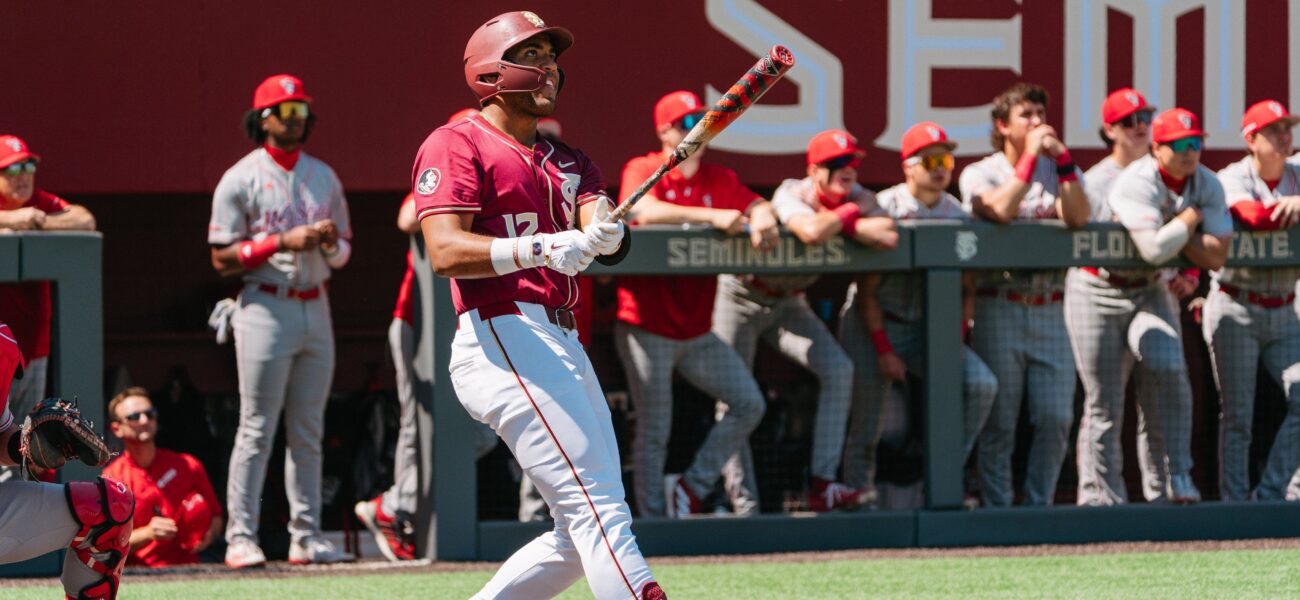
POLICY WIRE — Tallahassee, FL — The air around Florida State University’s baseball diamond isn’t just thick with humidity and the scent of freshly cut grass; it’s practically vibrating with the hum of impending capital. You see, when these young men swing bats and hurl fastballs, it isn’t merely for academic pride or bragging rights in the Atlantic Coast Conference. No, this is an intricate, high-stakes game of economic futures, where raw talent transforms into multi-million dollar contracts, and college campuses become — by default — crucial talent incubators for the sprawling Major League Baseball machine.
Consider the raw material flowing through Tallahassee. A stunning eleven Seminoles were snatched up in the 2025 draft, a program record. But for the class of 2026? Whispers aren’t just saying that record will fall; they’re shouting it from the dugout. It’s an almost vulgar display of depth, a conveyor belt spilling over with first-round possibilities. We’re talking about athletes who spent years perfecting a slider or a line-drive swing, not knowing their university stint was ultimately a glorified job interview. But it’s an interview where the stakes are life-changing. And frankly, the scouting apparatus of professional baseball doesn’t care about their emotional journeys as much as it cares about arm strength and bat speed. That’s the cold reality of it all, isn’t it?
At the top of this particular heap sits Wes Mendes, the left-handed ace whose pitches apparently defy physics. He’s got that mid-90s cutter, a fastball that sings, — and a changeup so devious it ought to be outlawed. He wasn’t just good; he was the ACC Pitcher of the Year, posting a 2.90 ERA and fanning 125 batters in 93 innings during his standout 2026 campaign. Scouts love that kind of dominant production. They’re eyeing him for one of the draft’s opening three rounds, a projection that essentially solidifies his ascent into the game’s upper echelon. Because what we see on the field is merely a performance indicator for what’s to come on a far bigger stage.
Then there’s Myles Bailey, a first baseman whose power borders on the ridiculous. Before an ankle injury tragically cut short his season in March, he’d hammered 13 home runs in just 26 games. That’s an OPS of 1.495—numbers that make grown men weep, or at least salivate with checkbooks open. His recovery is, naturally, the million-dollar question, quite literally. But the consensus remains: first-round talent, plain — and simple. And despite the physical setback, teams won’t shy away. The long game always factors in. Brayden Dowd, another transfer portal gem, and power-hitting outfielder, stepped up significantly after Bailey’s absence. He displayed keen plate discipline — and a dangerous bat, showing he belongs in the conversation for Day 1 as well.
The bullpen’s not to be forgotten. Trey Beard, a lefty whose changeup is pure sorcery, battled through an uneven season but still came up big when FSU needed him. And John Abraham, a would-be starter who reinvented himself as a lights-out reliever with a mid-90s cutter, put up a sparkling 1.91 ERA across 47 innings. They’re both prime examples of adaptable, pro-ready talent. It’s a testament to the program, I suppose, that it just keeps spitting out these potential big-leaguers. Not many schools manage that. As one veteran MLB scout, who asked not to be identified discussing proprietary evaluations, dryly remarked, “You practically don’t need to send anyone below the Mason-Dixon Line to find premium arms anymore. Just go straight to Tallahassee.”
The university, of course, isn’t just a charitable venture for talent development. “These athletes are remarkable, both on the field and in their commitment to their studies,” commented FSU Athletic Director Michael Evans, though his smile seemed to hold an unspoken understanding of the millions of dollars in future endorsements and draft bonuses being funneled, indirectly, back into the sports ecosystem. “Their success is a reflection of our holistic approach to student-athlete development.” An estimated $1.8 billion annually is generated by NCAA Division I athletic programs, according to a recent economic impact report published by the National Collegiate Athletic Association itself — a significant chunk of which can be attributed to the talent funneling directly into professional leagues.
📄 POLICY WIRE WHITEPAPER PUBLISHED: PAKISTAN'S NATIONAL SECURITY POLICY PRIORITIES
👉 READ BY CLICKING HEREBut the world of athletic opportunity isn’t monolithic. While the American collegiate system grinds out prospects for baseball, other nations, especially across South Asia, find their elite sporting talents disproportionately drawn to cricket. Imagine the untapped potential if the MLB’s scouting apparatus, as robust as it’s, were to truly make inroads in places like Pakistan or India, traditionally overlooked for diamond sports but brimming with athletes of comparable physique and raw skill. It’s a market that remains, for the most part, a sleeping giant—though that’s changing with renewed efforts from major leagues to cultivate a global player base.
What This Means
This draft spectacle isn’t merely about individual glory; it’s a policy blueprint in miniature. It showcases the formidable economic power of collegiate sports, operating as a publicly subsidized, high-efficiency development pipeline for professional leagues. Universities invest heavily in facilities, coaching, and athlete welfare—often benefiting immensely from ticket sales and media rights—yet the ultimate payoff, the astronomical salaries, flow predominantly to the professional sphere. The discussion around Name, Image, and Likeness (NIL) rights has started to rebalance this, but the underlying system remains. It’s a dynamic ripe for economic and even political analysis: what exactly is the return on investment for taxpayers and students in these heavily commercialized athletic departments?
FSU’s projected draft class highlights a more insidious truth about global talent flows. American sports dominate the media landscape — and infrastructure for talent cultivation. But for how long? As MLB — and other US leagues — increasingly eye emerging markets, particularly those with dense, athletic populations like the subcontinent, the traditional pipeline might evolve. Will a generation of Pakistani youth eventually choose baseball over cricket, enticed by the vast financial prospects of the American big leagues? It’s a future many are already modeling, one where the gridiron or the baseball diamond becomes a strategic point of focus for new talent, rather than just an academic diversion. The ramifications stretch far beyond July’s draft in Philadelphia. And honestly, it’s not just about sport; it’s about influence, dollars, and the constant search for the next global prodigy.