

Europe’s Jittery Comeback: From Sanctions to Scrabble, the Continent’s High-Stakes Gambit
POLICY WIRE — Brussels, Belgium — The aroma of certainty, once a European staple, feels decidedly faint these days. It’s not just the rising price of morning coffee, though that’s certainly part of...

POLICY WIRE — Brussels, Belgium — The aroma of certainty, once a European staple, feels decidedly faint these days. It’s not just the rising price of morning coffee, though that’s certainly part of it; it’s the gnawing sense that the continent’s very economic architecture, long considered robust, is showing stress fractures under relentless global pressures. Europe isn’t just at a crossroads; it’s driving a vintage car with questionable brakes through a particularly dense fog, blind spots everywhere.
For too long, the European project rode high on predictable trade winds and cheap energy, assuming an almost inherited prosperity. But the past few years—first the pandemic’s supply chain chokehold, then the searing jolt of an actual war on its eastern flank—have shattered that comfy illusion. They’ve gone from sipping Riesling to downing strong espresso, hoping it keeps them awake enough to steer clear of disaster. And, frankly, it’s proving quite the scramble.
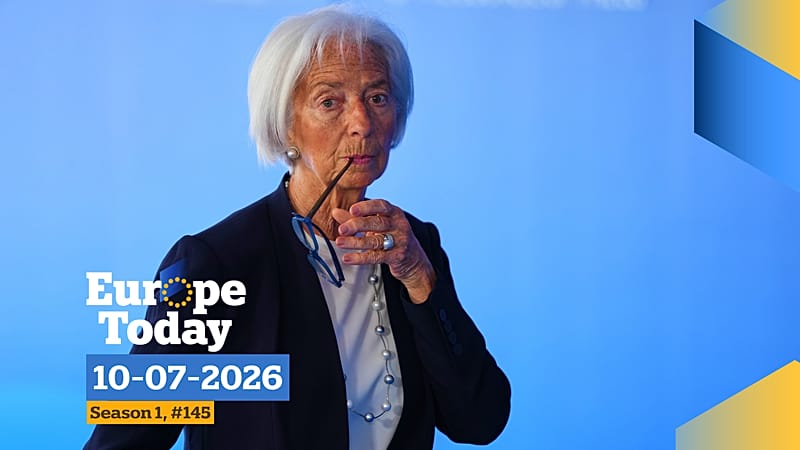
Remember when inflation felt like a relic? Well, it’s back, folks. The European Central Bank has been jacking up interest rates faster than some might like, playing catch-up in an effort to cool a feverish economy without plunging it into an ice bath. “We’re past the peak, perhaps, but the shadows of inflation linger like an unwelcome guest,” Christine Lagarde, the ECB’s unflappable president, reportedly told a closed-door gathering of financiers last month. “Financial resilience? It’s not a given; it’s earned, daily, through measured — and sometimes unpopular — policy adjustments.” You can almost hear the sighs of exasperated finance ministers.
Energy, naturally, remains a monstrous headache. Russia’s gas tap isn’t just turned down; for many, it’s practically sealed. But Europe’s mad dash to find new partners, while necessary, carries its own set of inconvenient truths. Remember the liquefied natural gas tankers, queuing up like an oceanic traffic jam? They helped, yes, but they cost a bomb. According to Eurostat data released in early 2024, the eurozone’s trade deficit ballooned to €53.6 billion in 2022, a dramatic swing from a surplus just two years prior, driven heavily by those skyrocketing energy import costs. That’s a serious bill, even for Europe’s deepest pockets.
And then there’s the bigger picture: the shifting tectonic plates of global power. The US — and China aren’t exactly holding hands, and Europe, ever the pragmatic merchant, is caught right in the middle. The talk now isn’t just about trade; it’s about ‘strategic autonomy’ – a fancy term for trying not to depend on anyone too much. “Dependence, especially on energy or specific supply chains, it’s a weakness our adversaries love to exploit,” said Maroš Šefčovič, Executive Vice-President for the European Green Deal. “We must diversify, we must innovate, and yes, we must forge new, reliable partnerships – not just for green energy, but for stability, period.” It’s a good line, but the practicalities—they’re brutal.
📄 POLICY WIRE WHITEPAPER PUBLISHED: PAKISTAN'S NATIONAL SECURITY POLICY PRIORITIES
👉 READ BY CLICKING HEREThis quest for new partnerships, incidentally, isn’t just about who sells gas or rare earths. It’s about projecting influence, or at least maintaining it, in regions that might feel Europe has been a bit preoccupied with its own backyard. Countries like Pakistan, for example, a nation of over 240 million and a strategic crossroads itself, watch these shifts with keen interest. Islamabad needs steady trade, investments, — and energy. Europe’s reorientation, if managed astutely, could open up avenues for deeper economic collaboration and political dialogue – but only if Brussels remembers that engagement isn’t a one-way street, it’s a bustling bazaar. And frankly, those old colonial assumptions won’t cut it anymore.
What This Means
Europe’s current trajectory isn’t just about weathering an economic storm; it’s a profound recalibration of its place in a truly fractured global order. The choices being made right now, from energy procurement to semiconductor production, will define the continent’s industrial and geopolitical strength for decades. This isn’t just tinkering at the margins; it’s about reshaping foundational alliances — and supply chains. If they get it right, Europe might emerge leaner, tougher, — and more self-reliant. If they stumble, its industrial base could erode, and its global influence, already under scrutiny (take its muted role in resolving ongoing Middle Eastern conflicts, for example—or read more about Europe’s quiet calculus there), could shrink further. It’s a high-stakes gamble where every policy decision feels less like an economic adjustment and more like a poker move. And you’ve gotta wonder who’s got the best hand.