


Football’s Stopwatch Paradox: VAR Stalls Global Drama as Stars Lament Endless Halts
POLICY WIRE — London, UK — The digital stopwatch has replaced the rhythmic pulse of the game, transforming what once were electric, spontaneous moments into meticulous, extended consultations....

POLICY WIRE — London, UK — The digital stopwatch has replaced the rhythmic pulse of the game, transforming what once were electric, spontaneous moments into meticulous, extended consultations. There’s a particular kind of discomfiture that settles over millions of viewers, stretching across continents from Piccadilly to Peshawar, when the flow of sport — specifically, the global spectacle of football — grinds to an arbitrary, technocratic halt. It’s an almost palpable loss of narrative momentum, isn’t it?
It was this peculiar, modern limbo that had one of the game’s undeniable superstars, Kylian Mbappé, stuck in an awkward tableau. Poised for a penalty kick—a scene of singular drama, where a player stands as both hunter and hunted—the Frenchman found his moment, that fleeting sliver of focus, hijacked by bureaucracy. His attempt to secure an early lead in a quarter-final match wasn’t just delayed; it was subjected to an almost farcical elongation. Players still milling, a referee’s command for proper ball placement, and then the inescapable, omniscient eye of VAR began its digital sifting.
And what do you know? Time, which in sport is typically finite — and relentlessly forward-marching, simply kept on going. The incident—a would-be shot at glory—lingered, scrutinized pixel by agonizing pixel. There was, after all, a possibility the entire thing could be overturned. Imagine standing on that spot, the weight of expectation on your shoulders, your focus laser-sharp, only for the world to decide it needed a five-minute coffee break to re-watch a phantom handball. It drains the spirit, plain and simple.
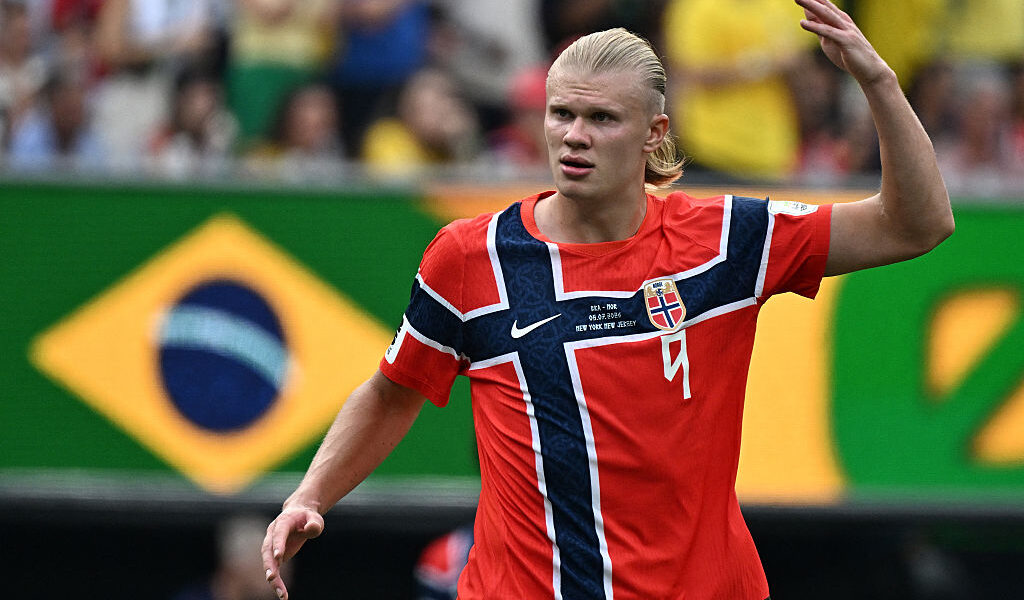
That psychological drain, the one where peak performance meets administrative dawdling, didn’t escape the keen eye of another phenom. Erling Haaland, a man whose entire on-pitch persona is built on ruthless efficiency, didn’t mince words. Speaking out on his Snapchat account, the Manchester City player cut straight to the chase: [QUOTE_PLACEHOLDER] His statement, while brief, carried the exasperated weight of professionals who’ve come to grips with VAR’s cold, hard reality but still chafe at its interruptions.
The sheer velocity of the modern game, the constant push for instant analysis and flawless decisions, seems to ironically create moments of agonizing inertia. But what does that mean for the spectacle? For the raw, human theatre that drew us to this sport in the first place? It’s not just a debate for pundits anymore. When players of Mbappé — and Haaland’s stature start airing their frustrations, you know it’s moved past mere chatter. They’re the product, yes, but they’re also the customer of the system, and they’re telling us the customer experience is lacking. We’ve optimized the referee to death—a computer in their ear, a video screen at their command—and perhaps, we’ve inadvertently sterilized the spontaneous genius that defined football for generations.
It’s an uncomfortably familiar pattern in an increasingly regulated world, where the pursuit of unimpeachable fairness often comes at the cost of dynamism and human flair. A recent FIFA analysis—often disputed, it must be said—claimed the average VAR review extended match play by an additional 1.2 minutes per incident over the last year. This doesn’t account for the cumulative effect, the mental breaks in rhythm, or the sheer boredom that can set in for both players and spectators. You’ve got to wonder if all this quest for granular precision is, paradoxically, diluting the game’s essence.
And it’s a global essence we’re talking about. Football, particularly European football, is more than just a pastime in places like Pakistan and across the broader Muslim world. It’s a shared passion, a unifying cultural phenomenon that transcends borders — and sometimes even local loyalties. Families gather; street vendors hawk tea — and snacks. The big European leagues provide a continuous thread of narratives, heroes, and rivalries that deeply resonate. When the core drama—the on-field contest—is fractured by prolonged, perplexing pauses, that experience shifts. It’s no longer pure immersion; it becomes an observation interrupted.
What This Means
This isn’t just about a couple of frustrated football stars; it’s a symptom of a larger, evolving tension in global sports and entertainment. Economically, prolonged delays might seem minor, but they erode viewer engagement. Every second of dead air during a major broadcast is a missed opportunity for advertising, for sustaining the emotional investment of the audience. The financial powerhouse that’s international football relies heavily on that unbroken connection, on moments that become memes and legends, not on moments spent staring at an official huddle around a monitor. A game that becomes too stop-start risks alienating casual fans and, more dangerously, the younger demographic who grew up on the instant gratification of TikTok and YouTube Shorts. Their attention spans are notoriously fleeting, — and they haven’t got the patience for lengthy technical interjections. For major broadcasters and commercial partners—from Adidas to Emirates—ensuring the ‘product’ remains engaging and dynamic is absolutely non-negotiable. The economics of excellence, it turns out, don’t care for a lengthy pause button. There’s a subtle political undercurrent too; international sport is one of the few truly unifying global forces, offering a rare shared language. If that language becomes bogged down in rules — and restarts, we lose a little bit of that invaluable connection, too.