


Wimbledon’s ‘Prince’ of Paradox: Arthur Fery Challenges Tennis Elites, Echoes Global Divides
POLICY WIRE — London, UK — Centre Court was supposed to be a gilded cage, an imposing arena for the sport’s anointed few. Instead, Arthur Fery, the 23-year-old Brit with the unassuming demeanor and...

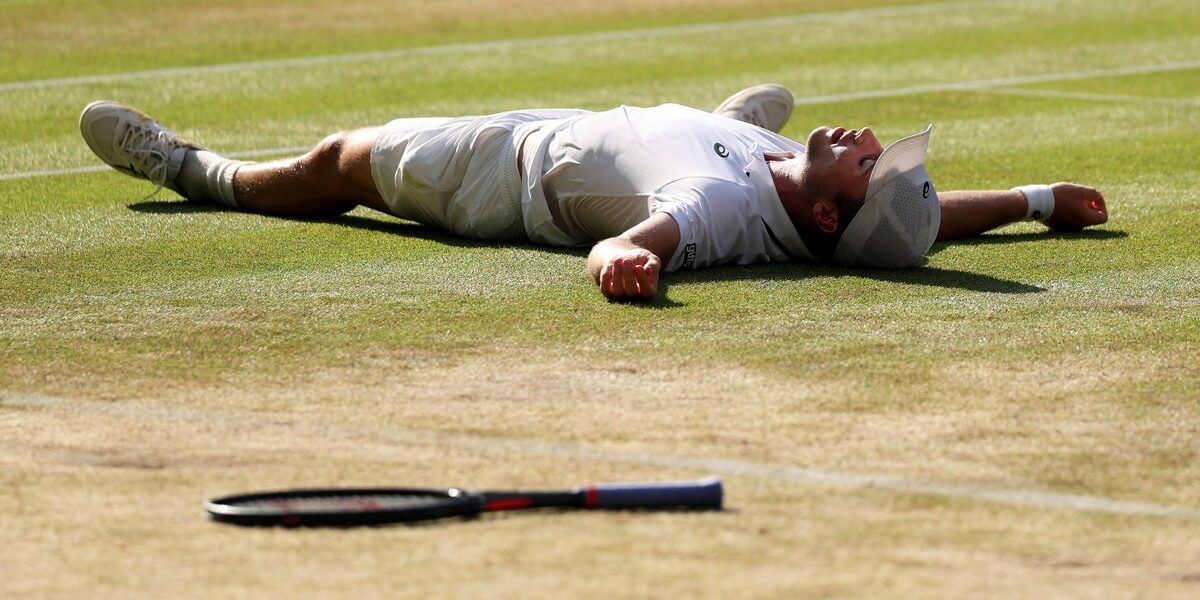
POLICY WIRE — London, UK — Centre Court was supposed to be a gilded cage, an imposing arena for the sport’s anointed few. Instead, Arthur Fery, the 23-year-old Brit with the unassuming demeanor and the startling power, has made it his personal playground, ripping through seeds and expectations alike. Folks whispered he was born with a silver spoon—and they aren’t wrong, his lineage quite comfortable, to say the least. But watching him dismantle opponents, you quickly realize wealth doesn’t serve aces like that. That’s pure, raw nerve.
It wasn’t the gilded gates of the All England Club that forged this run, despite them being five minutes down the road from his childhood home. Nor was it his father’s considerable fortune (a reported £275 million, which makes his £900,000 prize money feel, well, modest). No, what we’re seeing is something messier, more primal—a sheer belief in himself that cuts through the polite applause and privileged air. You could say he plays like someone with nothing to lose—because, in a very specific competitive sense, he doesn’t. He already owns a life many can only dream of. Yet, he still fights like hell, something money just can’t buy.
The murmurs started weeks ago, a slow rumble among the hardcore. Fery, the world No. 114 at the tournament’s outset, wasn’t just winning; he was dismantling. Like a wrecking ball through a delicate tea set, he’d already taken out three higher-ranked players before his astonishing straight-sets rout of ninth seed Flavio Cobolli. “It’s remarkable, frankly,” noted Brenda Caldwell, a veteran sports psychologist consulted by the Lawn Tennis Association, in a phone interview. “We see players with all the natural talent, all the funding, crumble under the pressure. But Fery—he feeds on it. It’s an almost aggressive self-assurance, a complete lack of doubt. He wants these big moments.”
And he craves the big stages, apparently. His coach, Jeroen Benard, didn’t mince words after the Cobolli match. “He loves the pressure. It’s something he was probably born with,” Benard confided to reporters, a slight exasperation mixed with pride in his voice. “He really likes the magnitude of a match, a big stadium.” That internal fire, observers note, seems to burn hotter precisely when others might melt. Think of it: the collective gaze of a nation, the history of Wimbledon heavy on one’s shoulders—many find that suffocating. Fery? He inhales it.
Of course, this isn’t an overnight phenomenon, even if it feels that way. Three years back, while playing collegiate tennis at Stanford—hardly a struggling underdog’s journey, mind you—Fery was already drawing comparisons. To Andre Agassi, of all people. “I used to sometimes be compared a little bit to [Andre] Agassi in the way that I stay close to the baseline, take balls early,” he’d said back then. At a time when he languished outside the top 400, that sort of pronouncement would’ve sounded like bravado. Today, with him staring down Alexander Zverev, the second seed and French Open champion, in the semi-finals, it sounds like prophecy. That’s because the kid’s talent, plus that unshakeable self-belief, has reshaped his reality. He acts, walks, and talks like he belongs among the elite—which, in the brutal arithmetic of this sport, is half the battle. Fery now stands as just the fifth British man to reach the Wimbledon semi-finals in the Open Era. He’s already up to World No. 36 in the live rankings, a staggering leap for anyone. That climb represents pure, grinding work.
This run forces a fresh look at the brutal arithmetic of player valuation in a sport still dominated by established nations. It’s easy for us in the West to focus on the ‘wildcard underdog’ narrative. But for young aspiring athletes in places like Pakistan, battling resource scarcity and minimal infrastructure, Fery’s ‘privilege’—even if he’s transcending it—is an unquantifiable head start. We don’t see many wildcard entries from, say, Karachi reaching the latter stages of Wimbledon, do we? And that’s not for a lack of talent or passion. It’s simply the stark reality of how opportunity concentrates, making this Fery story, for all its individual glory, also a stark reminder of who gets to play.
What This Means
Fery’s surprising journey through Wimbledon isn’t merely a feel-good sports story; it’s got layered implications. Economically, unexpected runs like this can significantly disrupt sponsorships and endorsements, forcing brands to scramble and recalibrate their strategies, even creating sudden value for a previously overlooked athlete. From a policy standpoint, it reignites debates around access — and meritocracy in sports development. Should federations, especially in nations with robust sporting infrastructure like the UK, double down on identifying talent from diverse backgrounds, rather than solely relying on athletes who’ve had inherent advantages? Politically, an unexpected national hero can generate soft power, boosting morale and fostering a temporary sense of unity, particularly refreshing amidst more contentious issues. It’s a convenient distraction, a shared moment of simple pride for a country usually embroiled in bigger, grittier challenges. This phenomenon—the underdog turning prince, especially from a background of inherited wealth—also serves as a peculiar sort of validation for the individualistic, self-made narrative, even when the foundations for that ‘making’ are considerably cushioned. But it doesn’t change the cold hard truth: in a sport increasingly globalized but stubbornly stratified, those starting points matter. Though Fery himself is clearly proving that sheer guts can, sometimes, overcome even the biggest statistical long shots.
He’s said he’s ready. “I have nothing to lose. I’m just going to go out there — and just put my game on the court, do what I’ve done, believe in myself. We’ll see where that takes me.” It’s already taken him to the precipice of an impossible dream. But really, who are we kidding? He’s a professional tennis player who’s never doubted his path. Wimbledon was always the destination, no matter the detours. His extraordinary, against-the-odds narrative is a fantastic, unscripted drama, a reminder that the world’s most storied sporting events can still rewrite their own script.