


78-Year Solace: Israeli Gravesite Discovery Illuminates Conflict’s Enduring Ghosts
POLICY WIRE — Tel Aviv, Israel — Seventy-eight years. That’s a lifetime, often two, separating a violent end from anything resembling peace. But sometimes, even the relentless march of decades...

POLICY WIRE — Tel Aviv, Israel — Seventy-eight years. That’s a lifetime, often two, separating a violent end from anything resembling peace. But sometimes, even the relentless march of decades bends to persistence, delivering a final, brutal solace. It seems Private First Class Yaakov Zrihan, a young man swallowed by the ferocious, chaotic dawn of the 1948 Arab-Israeli War—what Israel calls its War of Independence—has finally, belatedly, found his way home. They’ve located his bones. He won’t just be a name on a memorial anymore; he’ll have a burial plot. Finally.
It’s a stark, somber footnote to a conflict that began before most of us were even a glimmer in our grandparents’ eyes. The Israel Defense Forces (IDF) recently announced its remarkable, painstaking success in pinpointing Zrihan’s burial site in the village of al-Maliya. He fell near what was then an Arab Christian village, far from home, during those desperate, formative months of combat in July 1948. His unit, the 21st Carmeli Brigade Battalion, engaged in a bitter struggle around Operation Dekel, a rather grand name for a grinding, bloody series of skirmishes. Pfc. Zrihan was among the many ‘missing in action’—a cold designation that disguises an inferno of family grief.
For nearly eight decades, Zrihan’s family, presumably whittled down by time and loss, lived with a question mark instead of a headstone. Imagine that, not knowing. Just a bureaucratic cipher for a son, a brother. The recent discovery comes from years of grunt work—cold case files, digging through archival battle maps, maybe some dusty civilian accounts that surfaced out of sheer luck. And that’s really what it often is with these things, a sprinkle of forensic science meeting a heap of stubborn investigative toil.
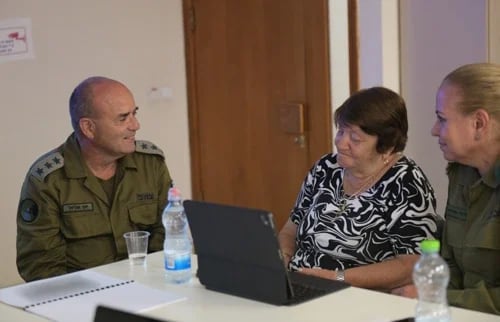
Brigadier General (Res.) Dror Livnat, Head of the IDF’s Missing Soldiers Department, didn’t pull any punches about the significance. "It’s never too late to honor our fallen," Livnat asserted, his voice gravelly with institutional memory. "Each soul accounted for closes a chapter not just for a family, but for the nation itself. It’s about remembering our founding story, the costs borne." This isn’t just about one soldier; it’s about legitimizing a narrative, cementing a shared sacrifice that forms the bedrock of a nation-state born in blood.
But this belated closure for one family underscores a far larger, still-open wound across the region. Across the contentious borders, thousands upon thousands remain unaccounted for, casualties of conflicts ranging from Algeria’s struggle for independence to the labyrinthine proxy wars that pepper the Middle East today. We’re talking generations of unresolved sorrow, a haunting reminder that wars end, but their shadows are long, so long.
Because, really, when you start peeling back these layers, the region looks less like a modern geopolitical stage and more like a massive, open-air necropolis, with ghosts perpetually wandering, seeking recognition. Dr. Amina Sharif, a Middle Eastern history professor at Tel Aviv University—whose own great-uncle, she notes parenthetically, remains missing from the 1973 war—explains the deep, cultural imperative. "For many, a lost soldier is just a name on a list," she told me, a faraway look in her eyes. "But for us, the families, it’s a constant, aching silence. Finding even a fragment of what happened… it changes everything. It doesn’t erase the past, but it grounds it, somehow."
📄 POLICY WIRE WHITEPAPER PUBLISHED: PAKISTAN'S NATIONAL SECURITY POLICY PRIORITIES
👉 READ BY CLICKING HEREIt grounds it. What a plain, simple way to put a profoundly complex thing. The meticulous process of identifying remains from decades past requires advanced forensics, DNA technology not available when Zrihan vanished. This technological prowess helps, but it doesn’t solve everything. According to official Israeli figures, more than 170 Israeli soldiers from conflicts since 1948 remain unaccounted for, a stark reminder of the enduring scars of war, even with significant resources dedicated to finding them. This isn’t just Israel’s burden; it’s a regional malaise.
And then there’s Pakistan. Consider the sheer scale of disappearances in places like Balochistan or the persistent questions surrounding soldiers from the Kargil conflict. While the geopolitical contexts differ dramatically, the raw, human anguish of a family left with a void, never quite knowing, resonates deeply. It’s a cross-cultural current running through every conflict zone. The unrest in regions like Azad Jammu and Kashmir, for example, feeds a similar uncertainty, where lives are lost, and accounts are blurred, swallowed by state apparatuses and geopolitical machinations.
What This Means
This discovery, while ostensibly a small act of belated recognition, carries substantial weight beyond Private Zrihan’s family. Politically, it’s a powerful narrative tool for the current Israeli government, a way to re-emphasize the foundational myths of sacrifice and unwavering national commitment, particularly important during periods of intense internal dissent or external pressure. It reinforces the idea that the state never forgets, which is crucial for military morale and public legitimacy, especially when you’re asking young people to risk their lives every single day. The cost of ‘nation-building’ in the region never really stops getting paid, you see.
Economically, there’s not much direct impact, save for the continued—and expensive—efforts of dedicated military search units and forensic teams. But the implicit cost of decades of unresolved trauma, the burden on families, — and the communal psychological toll? That’s impossible to quantify, yet it shapes societies, dictating how they grieve, how they remember, and how they project their identity onto a very unforgiving world. It’s not a direct market mover, but it molds the collective psyche. You can’t just slap a price tag on that sort of burden.
Ultimately, Zrihan’s discovery serves as a grim, almost theatrical reminder of conflict’s ceaseless ripple effects. It takes seventy-eight years for one man to find a resting place, while other conflicts erupt and recede, leaving new layers of forgotten dead and grieving families in their wake. It’s a macabre inheritance. This particular closure doesn’t bring peace to the broader region, not really. But it does, for one moment, pull focus onto the relentless, painstaking effort—a small candle against a monumental darkness—to simply account for those devoured by history’s insatiable maw. It’s a reminder of what Pakistan must learn, or any nation that’s been forged and continues to be shaped by such brutal, historical violence. The dead always ask for their due.
📖 GET YOUR FREE COPY NOW OF POLICY WIRE DIGITAL MAGAZINE JULY 2026 EDITION
👉 READ & DOWNLOAD FREE MAGAZINE