


East China Sea Tensions: Tokyo and Beijing’s Ritualized Brinkmanship Over Disputed Isles
POLICY WIRE — Tokyo, Japan — In the sprawling theater of Asian geopolitics, certain acts play out with an almost liturgical precision. We’re talking about the perpetually simmering dispute in...

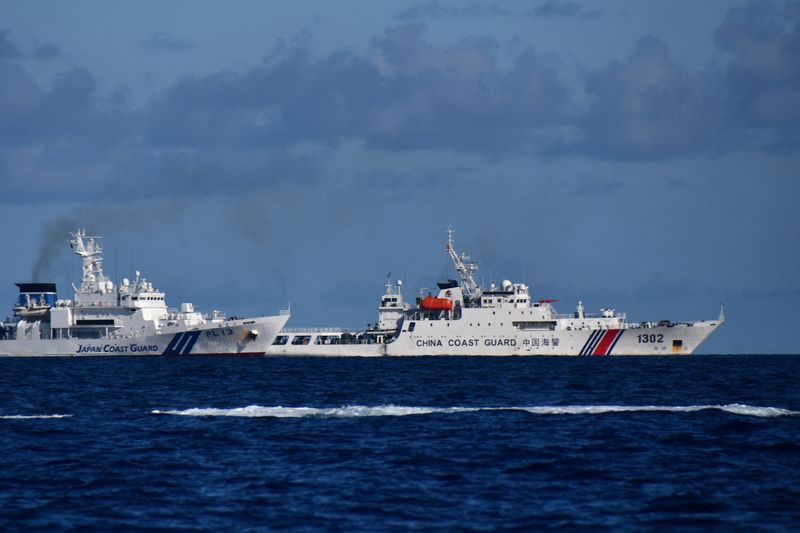
POLICY WIRE — Tokyo, Japan — In the sprawling theater of Asian geopolitics, certain acts play out with an almost liturgical precision. We’re talking about the perpetually simmering dispute in the East China Sea, specifically around those rocky outcrops Tokyo calls Senkaku and Beijing names Diaoyu. It isn’t merely a border skirmish; it’s a grand, high-stakes game of “he said, she said,” only with coast guard cutters and very real implications for global commerce.
It turns out that, despite decades of a tightly choreographed ballet of claims and counter-claims, neither side can quite agree on what just happened out there. Again. One recent spat, you see, left both Japanese and Chinese officials spinning narratives that couldn’t be more diametrically opposed if they were speaking different languages. But hey, they kinda are, both literally — and diplomatically.
For Japan, the routine goes something like this: its Coast Guard patrol vessels were going about their business, minding sovereign waters. Then, like clockwork, Chinese vessels — often from their own Coast Guard, sometimes fishing fleets operating as de facto naval adjuncts—enter what Tokyo considers its territorial integrity. Tokyo views these entries as [QUOTE_PLACEHOLDER], a blatant disregard for international law. But Japan maintains that its response remains [QUOTE_PLACEHOLDER], characterized by restrained warnings and monitoring activities. We’re told these patrols are simply ensuring navigational safety — and protecting Japanese fishermen.
And then there’s Beijing’s take, which always paints a starkly different picture. From their perspective, their Coast Guard vessels were operating [QUOTE_PLACEHOLDER], asserting historic rights in waters they claim have always belonged to China. Their actions, they argue, are purely defensive, responding to [QUOTE_PLACEHOLDER] by Japanese vessels in their traditional fishing grounds. They’ve called Japanese maneuvers [QUOTE_PLACEHOLDER] — and provocations. Because for Beijing, those islands aren’t disputed; they’re an unassailable part of Chinese territory. And every move by Japan, therefore, is an infringement on China’s sovereignty.
It’s a classic chicken-and-egg situation, if the chickens and eggs were heavily armed and capable of disrupting a good chunk of the global economy. These conflicting accounts aren’t new; they’ve become part of the background hum of East Asian relations. But each instance ratchets up the underlying tension, leaving very little wiggle room for miscalculation. And the risk? That some junior officer on either side, perhaps feeling a bit too zealous, might just cross that invisible line. The waters here are far too important for such blunders.
But the ramifications don’t stop at Tokyo’s or Beijing’s doorstep. This perennial face-off has global implications. The East China Sea is a choke point, a crucial maritime highway for international shipping. Think about it: goods from across Asia, including much of what makes it to Europe and North America, traverse these exact waters. Any significant disruption—even an accident—could send shockwaves through supply chains that are still smarting from the past few years’ upheavals.
📄 POLICY WIRE WHITEPAPER PUBLISHED: PAKISTAN'S NATIONAL SECURITY POLICY PRIORITIES
👉 READ BY CLICKING HERELook at Pakistan, for instance. Or any nation in South Asia, really, deeply integrated into global trade via these sea lanes. Instability here translates directly into potential economic insecurity back home. For nations relying on energy imports and commodity exports, dependable shipping routes aren’t just convenient; they’re an existential necessity. Pakistan’s burgeoning economic partnership with China, notably the Belt and Road Initiative and projects like the China-Pakistan Economic Corridor (CPEC), also means its strategic interests are inextricably linked to Beijing’s global reach. Increased assertiveness from China in these disputed areas only raises questions about the long-term stability of the broader Indo-Pacific, which in turn influences Pakistan’s own balancing act between major powers.
This dynamic plays out against a backdrop of surging military spending across the region. China’s defense budget, for instance, was an estimated $296 billion in 2023, according to data from the Stockholm International Peace Research Institute (SIPRI). That’s a staggering sum, and it certainly informs Beijing’s increasingly assertive posture, not just around Senkaku/Diaoyu but across the broader Indo-Pacific.
What This Means
This endless loop of claims and counter-claims over barren rocks isn’t just bureaucratic posturing; it’s a deeply concerning bellwether for regional stability. Politically, it erodes trust, not just between Japan and China, but also amongst other regional players who watch Beijing’s expanding maritime ambitions with apprehension. Economically, the constant threat of escalation—even a minor one—casts a long shadow over investment and trade forecasts. Insurers, shipping companies, — and international investors pay close attention to these stand-offs. It’s an unspoken risk premium embedded into doing business in the region. There’s a constant pressure cooker element to it all. It won’t ignite into a full-blown war overnight, no. But the probability of accidental contact, of a tense interaction spinning out of control, that just creeps up with every single patrol. Because these islands are just a flashpoint. They’re a proxy for a much larger contest over regional influence — and control, and everyone knows it. The broader geopolitical calculus dictates that a contained maritime spat is infinitely preferable to any direct confrontation. Still, even controlled tension can fray nerves.