


America’s Patchwork Immunity: Free Vaccine Drives Signal Deeper Health Divides
POLICY WIRE — RIO RANCHO, N.M. — It’s a recurring scene in America, and not one we should take much comfort in: a public institution, under-resourced and perpetually harried, steps up to offer what a...

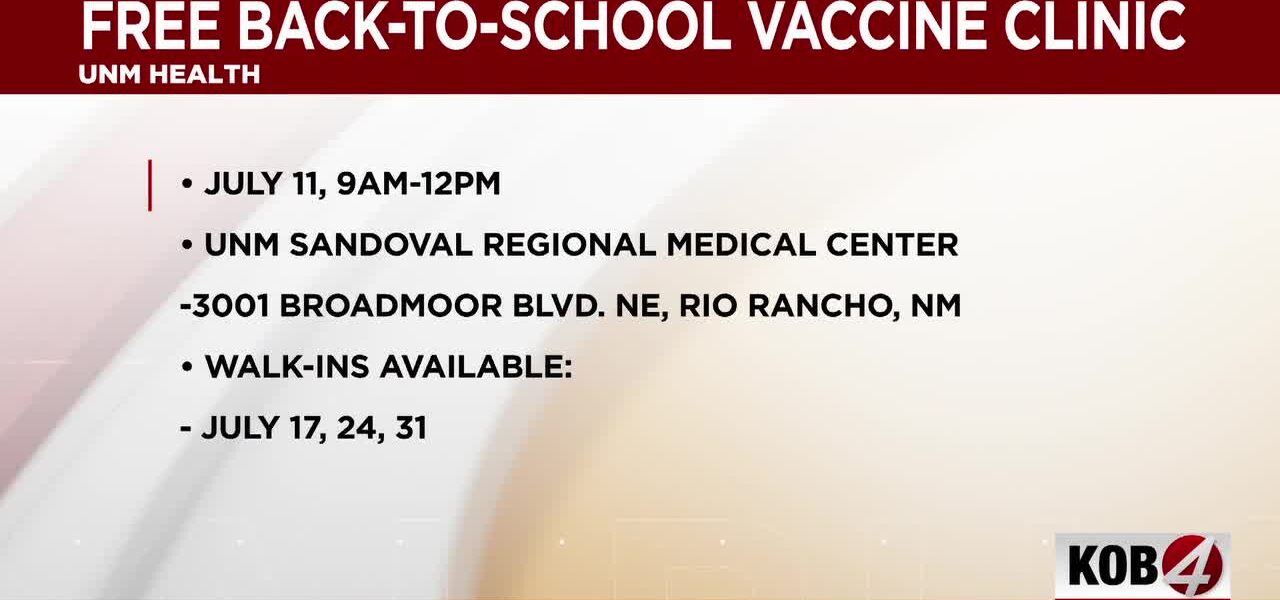
POLICY WIRE — RIO RANCHO, N.M. — It’s a recurring scene in America, and not one we should take much comfort in: a public institution, under-resourced and perpetually harried, steps up to offer what a functional society might consider a baseline necessity. Free childhood immunizations, courtesy of the UNM Sandoval Regional Medical Center, cropping up this Saturday and for three subsequent Fridays, aren’t merely a generous gesture—they’re a grim spotlight on systemic inadequacies. They scream that something, somewhere, has gone rather off-kilter when access to basic public health measures becomes a sporadic, feel-good event rather than an embedded right.
Parents, desperate to check boxes before the school bell rings, will flock to the family practice clinic on the third floor, scrambling for slots. Good on the hospital, don’t get me wrong. But consider the implication: in a nation of unimaginable wealth, preventative healthcare for its children still often depends on charity and piecemeal outreach programs. This isn’t innovation; it’s adaptation to a failure state, isn’t it?
And it’s a phenomenon that echoes far beyond the sun-baked plains of New Mexico. The scramble for immunizations—often in ad-hoc, underfunded settings—is tragically familiar to nations grappling with much larger structural hurdles, where humanitarian aid frequently fills gaps governments can’t, or won’t, address. Imagine the policy architects looking at these initiatives — and congratulating themselves. It’s almost — almost — endearing.
“We’re doing our part, certainly,” stated Dr. Elena Rodriguez, Public Health Director for Sandoval County, in a recent local briefing. “But these clinics—they’re a band-aid. A really good, sticky band-aid, but a band-aid nonetheless. We can’t perpetually rely on temporary solutions for permanent problems.” She’s not wrong. Because without sustained funding and integrated healthcare access, these drives are simply an annual pilgrimage for those caught in the cracks. It’s a stop-gap measure in an otherwise flowing river of need, providing critical relief for a few, but leaving many more behind.
But the problem goes deeper than local efforts. State Representative Marcus Thorne, a perennial voice on health appropriations in Santa Fe, voiced his frustrations, as he often does, to our Policy Wire correspondent. “We keep having this same conversation, year after year. The budgets are tight, yes, but when are we going to admit that preventative health isn’t a line item to be trimmed—it’s an investment? We’re not talking about discretionary spending here. We’re talking about kids. And honestly, it’s not just a moral failing; it’s an economic one too, you know? Unvaccinated children get sick, they miss school, parents miss work. It costs us more down the line.” A stark summation of economic logic that, unfortunately, seems to perpetually lose to political expediency.
The situation isn’t unique. A recent report from the New Mexico Department of Health, still awaiting full publication but widely cited in private briefs, found that nearly 1 in 5 children in underserved communities across New Mexico miss at least one standard childhood immunization by age five. That’s a statistic that should keep anyone remotely responsible for public welfare awake at night. These free clinics, bless ’em, chip away at that deficit, but they don’t dismantle the underlying economic or geographic barriers.
📄 POLICY WIRE WHITEPAPER PUBLISHED: PAKISTAN'S NATIONAL SECURITY POLICY PRIORITIES
👉 READ BY CLICKING HEREWe’re looking at a global context for this. Consider countries like Pakistan, for instance, where mobile vaccine drives navigate treacherous terrain and deeply ingrained societal mistrust to reach isolated communities. Their struggles, while perhaps more visible due to resource scarcity, are fundamentally about the same principle: delivering basic health security against incredible odds. And for the vast diaspora from such regions now residing in places like Rio Rancho—communities sometimes struggling with language barriers, cultural differences, and less familiarity with American healthcare bureaucracy—these walk-in clinics can represent their only viable pathway to keeping their children safe. The structural parallels are uncanny, if disheartening. One could argue, quite reasonably, that while the external circumstances differ, the internal scramble for essential health access carries a brutal poetry of return.
What This Means
This localized, seemingly innocuous announcement about free vaccines carries significant implications. Economically, these efforts are often subsidized by philanthropic endeavors, federal grants, or stretched hospital budgets, representing a hidden cost to a system that, ostensibly, provides healthcare. When public health interventions rely on temporary campaigns, it suggests a broader disinvestment in foundational health infrastructure—which, over time, drives up costs in emergency care and crisis management. Politically, it signals a quiet admission of policy failure. Policymakers, while lauding these community efforts, simultaneously avoid confronting the more intractable issues of insurance accessibility, health education, and the spatial distribution of medical services. It’s a classic case of celebrating the symptom-solver while neglecting the disease. The long-term implications are clear: continued disparities in health outcomes, reduced community resilience against disease, and an ever-widening gap between rhetoric and reality in America’s healthcare promises. Such fractured, reactive health initiatives aren’t a national policy; they’re an anxious hope. And frankly, hope isn’t a strategy, especially when global health crises continue their silent siege against the vulnerable.
For parents in Rio Rancho, though, this Saturday and the upcoming Fridays simply mean one less thing to worry about, at least for now. But for the policy wonks, it’s a red flag—or perhaps a perpetually fluttering white one, signaling surrender to the complex, inconvenient truths of modern public health.