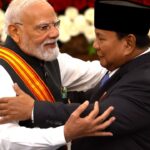



Digital Diplomacy: India’s UPI Push into Indonesia Reshapes Regional Tech Scramble
POLICY WIRE — New Delhi, India — Forget the traditional flags and treaties, because the battle for regional sway these days might just be waged through your smartphone. What began as a humble...

POLICY WIRE — New Delhi, India — Forget the traditional flags and treaties, because the battle for regional sway these days might just be waged through your smartphone. What began as a humble utility—a quick tap to settle a dinner bill—is morphing into India’s unexpected diplomatic cavalry, riding eastward on circuits and pixels. This isn’t just about faster payments; it’s about power, — and a decidedly modern flavor of it.
Southeast Asia, with its burgeoning economies and immense digital frontier, has become the proving ground for this peculiar brand of soft power. And who’s leading the charge? Indonesia, that sprawling archipelago nation and the region’s heavyweight economy, is giving New Delhi’s digital export dreams some serious consideration. They’re not just window shopping, either. [QUOTE_PLACEHOLDER]
Officials in Jakarta are reportedly examining India’s homegrown systems—the kind that changed how millions of people manage their daily cash. India’s goal, plain as day, is to turn one of its biggest domestic technology successes into a tool of diplomacy. And, let’s be real, a pretty savvy one at that.
The core of this push? The Unified Payments Interface, or UPI to those in the know. It’s India’s instant payment rail, a public digital infrastructure built to move money faster and, perhaps more importantly, cheaper. Indonesia, a nation of nearly 280 million souls, many still underbanked, sees the potential. Their interest isn’t mere curiosity; they’re trying to figure out whether India’s low-cost digital systems can be adapted to their own needs. They’ve got their own financial inclusion headaches, after all.
But this isn’t just a friendly tech exchange. Not by a long shot. Think about it: a country embeds its digital backbone into another nation’s economy. That’s a subtle but significant influence, almost a technological handshake across borders. It bypasses old-school economic aid — and goes straight for structural integration. You could say it’s the economic equivalent of understanding the strategic implications of major sporting events—geopolitics by other means. And, let’s face it, that game is getting complex. Beyond the Pitch: World Cup Quarterfinals Kick Off, Woven with Geopolitics and Gold.
Consider the wider neighborhood. India — and its tech aspirations often rub up against the long shadow of China’s own digital Silk Road initiatives. For many countries in the Indo-Pacific, India offers a different flavor of technological partnership, one perhaps seen as less beholden to overt geopolitical agendas, or at least a distinct alternative. Pakistan, for instance, a nation grappling with its own digital transformation goals and financial inclusion issues, has yet to embrace a nationwide unified payment interface with the same public-utility fervor as India. While Islamabad has made strides in digital banking and mobile payments, a system as universally accessible and low-cost as UPI remains a distant ambition, creating a growing technological divide in a region otherwise intimately connected.
The talks centre on the Unified Payments Interface (UPI), sure. But they really centre on India demonstrating that it can not only build world-class digital infrastructure for its own colossal population (which, let’s be honest, is a feat in itself), but then export that model. This isn’t just about providing an API; it’s about exporting an economic philosophy, a model for financial decentralization and instant, ubiquitous transactions. India has, as per data compiled by the Global Financial Inclusion Index 2023, seen over 80 billion UPI transactions annually. That’s a mind-boggling volume—it proves the system works at scale, even under immense pressure.
📄 POLICY WIRE WHITEPAPER PUBLISHED: PAKISTAN'S NATIONAL SECURITY POLICY PRIORITIES
👉 READ BY CLICKING HEREThis whole play highlights India’s ambition to become a technology exporter — and a strategic partner, not just a market. And it puts Jakarta in an interesting spot, caught between the allure of Indian innovation and the sheer gravity of its domestic development needs. It’s a balance. But it’s one Indonesia can’t afford to ignore.
They’ve got to weigh the advantages: lower transaction costs, greater financial inclusion for their remote populations, and an independently developed framework. Contrast that with solutions from some other global tech players that might come with their own, less obvious, strings attached. This isn’t a simple procurement deal; it’s a strategic alliance, built byte by byte.
What This Means
The implications of this move are quite stark. Politically, if Indonesia successfully adopts India’s UPI, it positions New Delhi as a credible, large-scale tech provider and leader in the Global South, directly challenging the narrative that only Western or Chinese firms possess the muscle to power national digital economies. It signals a shift away from aid-based diplomacy towards shared technological sovereignty — and capability building.
Economically, for Indonesia, adopting UPI could dramatically boost financial inclusion, particularly for its vast unbanked population and small-to-medium enterprises. This could unlock immense domestic market potential, reducing the dominance of costly proprietary systems and fostering indigenous innovation. But it also means India gains a degree of systemic economic interdependence with Southeast Asia’s biggest economy, providing it with valuable strategic leverage and prestige. It solidifies a technological sphere of influence—a critical asset in the ongoing geopolitical competition for regional dominance, affecting everything from trade patterns to cultural exchanges. We’re not just talking about payments; we’re talking about foundational infrastructure. It’s an astute chess move on India’s part, — and one Jakarta will monitor with intense scrutiny.