

Desert’s Fury: New Mexico’s Looming Climate Reckoning Tests Policy, Exposes Vulnerability
POLICY WIRE — Santa Fe, N.M. — It’s not just a forecast; it’s a receipt. Not for a gallon of milk or a tank of gas, but for decades of shifting weather patterns and, frankly, the all-too-predictable...

POLICY WIRE — Santa Fe, N.M. — It’s not just a forecast; it’s a receipt. Not for a gallon of milk or a tank of gas, but for decades of shifting weather patterns and, frankly, the all-too-predictable aftermath of wildfire seasons that now seem perennially etched into the American West. New Mexico, that sun-drenched canvas of red rock and high desert, now faces a confluence of environmental exasperations. Forget the usual romanticism of its wide-open spaces—this week, the land’s raw vulnerability is on full display.
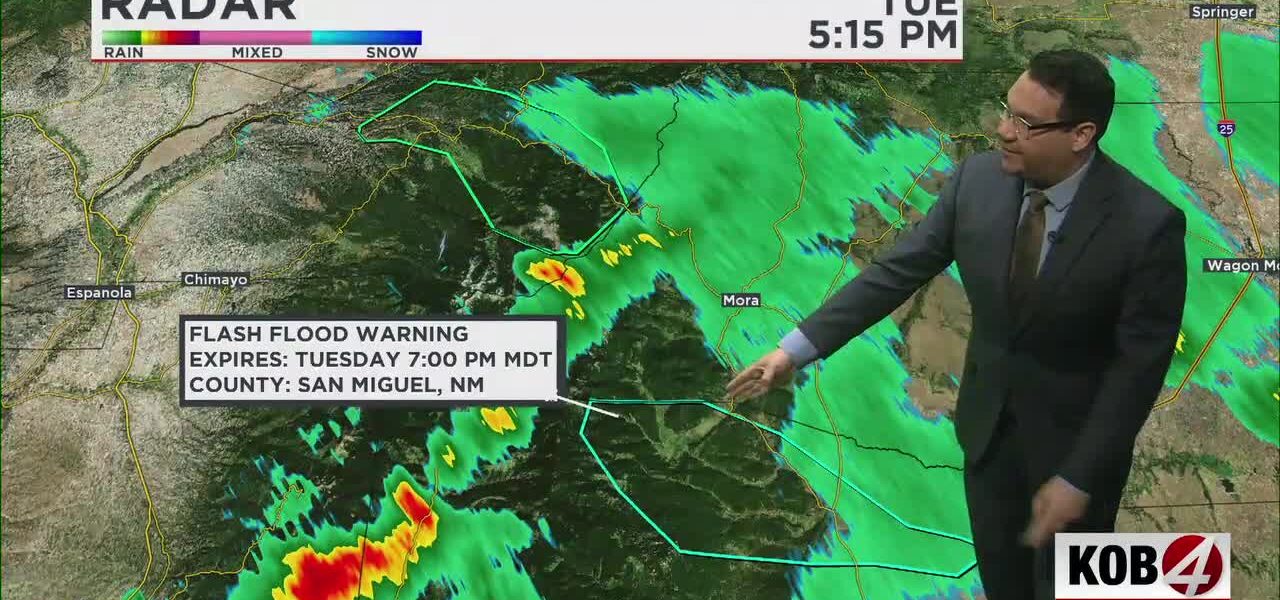
While local broadcasters predictably detail upcoming atmospheric theatrics, the real story unfolds quietly: an anticipated repeat of daily deluges across the state. They’ll be rolling in, these rounds of showers and thunderstorms, creating what meteorologists coolly label a low to moderate flash flood risk on area burn scars. Those aren’t just patches of scorched earth. They’re ghosts of wildfires past, now conduits for an unsettling future.
And then there’s the heat. It’s coming, a stifling blanket building from Wednesday right through the weekend. A moderate heat risk, we’re told, will grip those lower elevation spots. It’s not a uniform threat, mind you. But it’s an insidious one, disproportionately preying upon the most vulnerable—those without adequate cooling, without proper hydration. They’re the invisible populace in every weather report, the ones whose very existence is a stark critique of inadequate social infrastructure. This isn’t abstract; it’s a matter of public health policy.
Look, the experts are saying there’s a low risk of severe storms across the northeast part of the state come Friday. But honestly, the bigger threat lies in the systemic implications of these recurring cycles. New Mexico, a state that grapples with significant socio-economic disparities, is effectively receiving a public service announcement about its own precarious footing. These weather advisories, mundane as they might appear, actually read like an audit of environmental negligence and policy lassitude. The repeated storm chances — and the nagging concerns over burn scars? That’s what happens when yesterday’s crisis morphs into today’s chronic condition. You just deal with it.
It’s a peculiar thing, the way familiar phrases can dull our senses to impending trouble. But let’s call it what it’s: a cascading crisis, playing out in real-time. For a policy wire, this isn’t merely weather data; it’s a dataset for how communities adapt—or don’t—when the environment keeps shifting the goalposts. And they’re shifting ’em pretty fast, these days. Chief Meteorologist Eddie Garcia has [QUOTE_PLACEHOLDER] in his full forecast, we’re told. Fine. But what’s the full forecast for *governance* when this becomes the new normal?
This isn’t an isolated incident, either. The challenges New Mexico faces, battling drought-induced fires one season and flood risks on their aftermath the next, mirror climatic anxieties rippling across the globe. You see it in the arid plains of Balochistan, where water scarcity often precedes devastating, unseasonal floods, impacting millions in an agrarian economy already teetering on the edge. Or the increasing intensity of monsoon rains across Bangladesh and India—often exacerbated by prior droughts—leading to displacement and public health emergencies. These nations, too, find their infrastructure and social safety nets tested by environmental extremes, a familiar narrative for those sensitive to global climate patterns.
📄 POLICY WIRE WHITEPAPER PUBLISHED: PAKISTAN'S NATIONAL SECURITY POLICY PRIORITIES
👉 READ BY CLICKING HERENew Mexico, in its unique way, is experiencing its own version of this global drama, albeit on a different scale. The latest projections, drawn from National Oceanic and Atmospheric Administration data, indicate a nearly 20% increase in the frequency of ‘extreme precipitation events’ (defined as the heaviest 1% of all daily events) across the southwestern United States over the last five decades. That’s not just rain. That’s a fundamentally altered climate, demanding fundamentally altered responses.
The issue isn’t whether it will rain; it’s about the land’s capacity to absorb it, and the community’s capacity to endure it. Especially when, as the forecast explicitly notes, ‘The heat risk will affect people who are sensitive to heat most, especially those without adequate cooling or hydration.’ That’s less a weather prediction and more a demographic alert. The climate crisis, you see, often holds up a mirror to existing inequalities.
What This Means
This localized weather scenario, seemingly innocuous on its surface, packs a much larger punch for policymakers and the public purse. The recurrent cycles of fire followed by flood risks on burn scars aren’t just inconvenient; they’re financially debilitating. It means continuous pressure on emergency services, substantial costs for hazard mitigation, and, eventually, reconstruction. And we’re not even talking about the long-term health implications for communities repeatedly exposed to such stressors, both physical and psychological. It’s a slow-motion public health crisis, manifesting in hospital visits for heatstroke and mental health strain from constant threat. For a state perpetually balancing its books—sometimes with difficulty—these climate-induced costs erode what little fiscal flexibility exists. Economic vulnerability — and climate change are becoming, you could say, uncomfortable bedfellows.
Beyond the immediate human impact, these events directly influence key economic sectors. Agriculture, tourism—cornerstones of New Mexico’s economy—are exceptionally sensitive to erratic weather patterns. Sustained periods of heat, coupled with flash floods, destabilize crop yields — and deter visitors. And don’t forget, these patterns are becoming the norm, not the exception. The implications aren’t just local. They suggest a broader national struggle with climate adaptation, a struggle that nations like Pakistan and Bangladesh have been intimately familiar with for years. It’s about designing resilience, crafting durable policies that account for a changing climate, and most critically, acknowledging that the most obvious and expensive solutions are often needed long before the forecasts turn grim. What happens when the infrastructure can’t take it? What happens when communities, already strained, simply break? These aren’t just rhetorical questions; they’re the pressing realities staring down legislators and budget committees today, tomorrow, and every sweltering, stormy day after that.