


When Political Muscle Flexed on the Pitch: The Balogun Ban and America’s Lost World Cup Morality Play
POLICY WIRE — Washington, D.C. — Sometimes, the unwritten rules hit harder than any referee’s whistle. Sometimes, the most potent play isn’t a brilliant goal, but a well-placed...

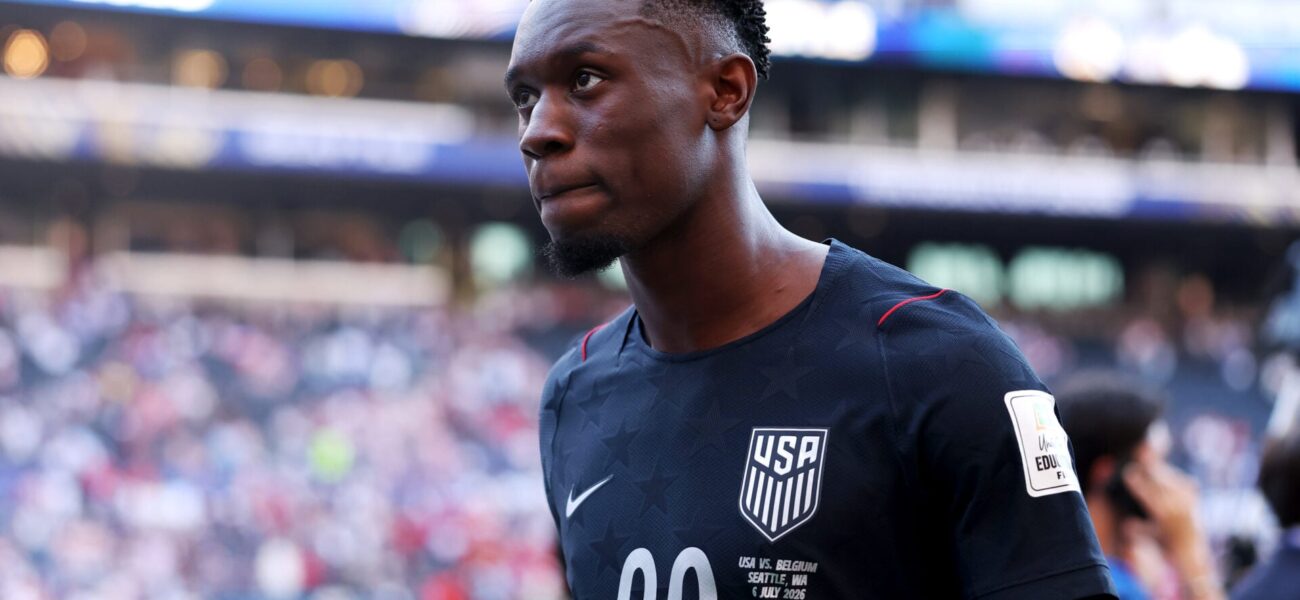
POLICY WIRE — Washington, D.C. — Sometimes, the unwritten rules hit harder than any referee’s whistle. Sometimes, the most potent play isn’t a brilliant goal, but a well-placed phone call. The United States men’s national team didn’t just lose a World Cup Round of 16 match against Belgium, 4-1; they appeared to have lost something far more amorphous—a sense of fair play, perhaps—in the shadow of a rather unusual presidential intervention. That’s the real story everyone’s whispering about.
Nobody’s debating Folarin Balogun’s talent. The striker’s suspension following a red card against Bosnia should have kept him off the pitch for one game. Except it didn’t. Just days before the knockout stage showdown, Donald Trump—not then in office, but still a formidable political presence—reportedly placed a call to FIFA President Gianni Infantino. A chat, some might call it. A direct line, others observed. Regardless, Balogun’s ban got magically suspended. Suddenly, a U.S. star was back in play, but the stink of interference, it turns out, clung far longer than any yellow card could.
And what a smell it was. The team, previously seen as a plucky underdog making a global splash, seemed to become something else. “They had so much neutral love,” mused former England international Gary Neville on ITV Sport, cutting through the usual punditry fluff. He went on, his frustration practically bleeding through the airwaves, to suggest the team’s ‘American morals’ wouldn’t sit well with such an unfair advantage. Players, he said, they crave a level field. They wouldn’t have enjoyed that, not one bit. You can practically picture the team huddle, the discomfort thicker than the Seattle Stadium humidity.
It wasn’t just a British analyst seeing red. Across the digital sphere, in living rooms from Cairo to Karachi, the move raised eyebrows. You see, when a major Western power, especially one accustomed to projecting influence, overtly flexes its muscles in international sports governance, it doesn’t always land well. The optics, particularly in South Asian and Muslim-majority nations, often read as a thinly veiled exhibition of ‘might makes right’ – a perception that can overshadow genuine athletic achievement. These are regions where the delicate balance of international relations, sport, and sovereignty is often a raw nerve, where football or cricket are more than just games, but deeply interwoven with national identity.
“Look, when you’re used to winning, you pull out all the stops,” a former senior White House official, reflecting what many believe to be Donald Trump’s own philosophy, was overheard saying. “It’s about having the best players available. Period.” A less triumphalist perspective came from a State Department spokesperson who, preferring anonymity due to the delicate nature of discussing FIFA, remarked, “While sports diplomacy is important, it’s critical that all international bodies maintain a perception of independent, impartial adjudication. Any perceived deviation from that standard can complicate broader diplomatic efforts, eroding trust where we seek to build it.” Because ultimately, it’s not just about one game; it’s about a global stage. The international governing body for football, FIFA, raked in a staggering $7.6 billion in revenues for the 2019-2022 cycle alone. That kind of economic leverage doesn’t just fund tournaments; it fuels quiet diplomacy, or in this case, rather loud phone calls.
📄 POLICY WIRE WHITEPAPER PUBLISHED: PAKISTAN'S NATIONAL SECURITY POLICY PRIORITIES
👉 READ BY CLICKING HEREMauricio Pochettino, the U.S. manager, must’ve walked a tightrope. Leaving Balogun out, some suggested, would’ve been a powerful, honorable statement, proving his squad played by the rules even when higher-ups didn’t. But then, there’s the specter of presidential displeasure. Can you imagine the pressure? It’s not just a coach’s decision; it’s a geopolitical minefield dressed up as a lineup choice. They called it a distraction. It wasn’t just a distraction. It was a narrative, a poisoned well from which the USMNT ultimately drank deep, watching their World Cup dream turn into a PR nightmare.
What This Means
This incident, small in the grand scheme of global politics perhaps, nonetheless carries considerable weight for how the U.S. is perceived on the world stage. It doesn’t just erode the integrity of global sports; it chips away at America’s soft power. When an American president, or ex-president, can apparently strong-arm FIFA, what message does that send to other nations, particularly those with less geopolitical clout? It implies that the rules, often touted as universal and impartial, are actually rather flexible, bending for the powerful. This precedent could embolden other major nations to intervene similarly, transforming sporting events from contests of athletic skill into arenas for political arm-wrestling. For a country that often preaches fair play and democratic values, the Balogun affair stands as an uncomfortable counter-narrative, forcing a reckoning with how its actions are interpreted beyond its borders. And it’s an awful lot harder to win hearts — and minds when you’re perceived as having rigged the game.