


New Mexico’s Diamonds in the Dust: Baseball’s Harsh Grasp on Elusive Glory
POLICY WIRE — Albuquerque, N.M. — In a nation perpetually chasing narratives of rugged individualism and the promise of ascension through sheer will, a pair of minor league baseball players, tied to...

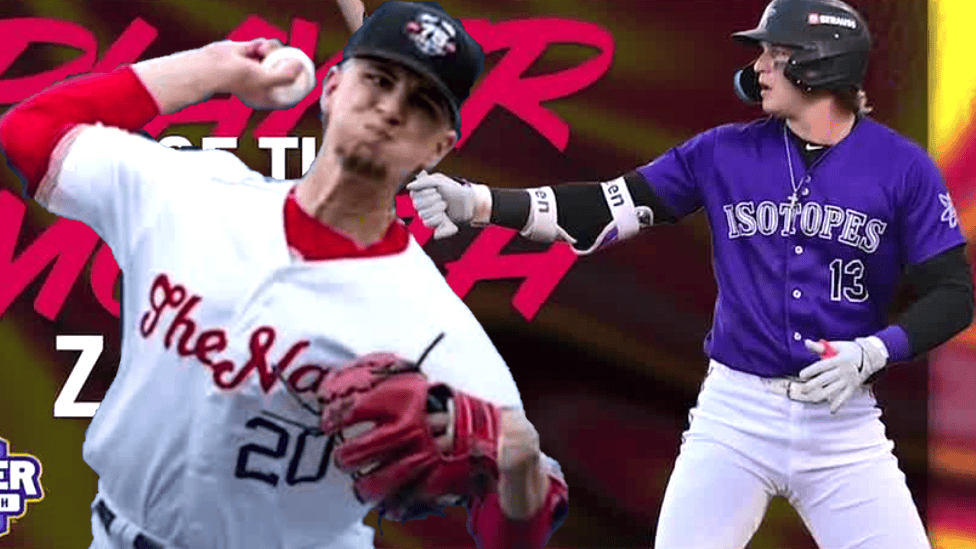
POLICY WIRE — Albuquerque, N.M. — In a nation perpetually chasing narratives of rugged individualism and the promise of ascension through sheer will, a pair of minor league baseball players, tied to the sprawling desertscapes of New Mexico, recently captured some fleeting local headlines. Not for a groundbreaking political achievement or an economic breakthrough, mind you. No, their triumph is on the dusty diamonds, a testament to raw athleticism in a system often described as both a dream factory and a meat grinder. Zac Veen, an outfielder for the Albuquerque Isotopes, clinched a ‘Player of the Month’ nod in the Pacific Coast League for June. Concurrently, Nolan Perry, a former Carlsbad pitching sensation, notched a promotion to Double-A within the labyrinthine Toronto Blue Jays organization.
It’s an outcome, for both Veen and Perry, that offers a flicker of warmth in an economic climate that doesn’t always reward local talent, especially not with the immediate, outsized contracts we see in top-tier professional leagues. They’ve made their plays; they’ve hit their marks. Veen, for his part, had a rather prolific month: 13 doubles, four triples, seven home runs, and 19 RBIs across just 24 games. That’s production, by any measure, leading all of minor league baseball in total bases for June. And Perry? The guy debuted with three scoreless innings, fanning seven, for the New Hampshire Fisher Cats. He’s even slated for the 2026 MLB Futures Game. These aren’t just local kids; they’re the sort of athletic commodities that inspire barbershop banter and the fleeting belief that a system can still identify, polish, and promote raw ability.
But the glittering façade of these achievements belies a far grittier reality that journalists don’t often dwell on when touting local heroes. The minor leagues aren’t about the grand salary splashes—they’re about the grind, the barely-minimum wage existence, and the ever-present specter of an early exit. You see it across the spectrum of professional sports, this high-stakes, low-return lottery for the vast majority of participants. The price of legacy isn’t always $73 million; often, it’s closer to an annual salary that forces a second job in the off-season. Because while the headlines trumpet a ‘Player of the Month’ honor, the average Triple-A minor league salary hovered around $15,000 in 2023, according to the Associated Press, with Double-A players making even less. That’s for a full season, mind you, not just for a glorious June.
New Mexico’s elected officials, of course, can’t resist a good story, especially one that evokes local pride. “These young men aren’t just athletes; they represent the heart and determination that beats throughout our communities, from Carlsbad to Albuquerque,” remarked Senator Elena Gutierrez (D-Santa Fe), offering the customary blend of civic enthusiasm and political capitalization. “Their success is a symbol of what our youth can achieve, and it inspires us all to continue investing in the dreams of the next generation.” She’s not wrong about the inspiration, but one might wonder about the ‘investment’ when the institutional payout for these dreams is, for so many, a one-way ticket to obscurity.
And it’s a peculiar system, isn’t it? A uniquely American enterprise that monetizes aspirational struggle in a way that, say, the cricketing behemoth of Pakistan or other South Asian nations might find baffling, if not a touch cynical. In those geographies, sports are often a direct path to national identity, and while economic disparities exist there too, the sheer volume of youth pouring into baseball’s development pipeline for such slim pickings is, well, striking. It’s a system where hundreds of thousands of dollars are spent on development, yet players themselves earn pocket change. That contrast, the gulf between global aspirations and systemic realities, is just another subtle, often unnoticed layer to this complex game.
📄 POLICY WIRE WHITEPAPER PUBLISHED: PAKISTAN'S NATIONAL SECURITY POLICY PRIORITIES
👉 READ BY CLICKING HEREDr. Anjali Sharma, a Senior Fellow at the Global Sports Policy Institute, didn’t mince words. “Let’s be frank; the minor leagues are less about individual development — and more about inventory management for MLB. These ‘success stories,’ while personally gratifying, don’t change the underlying economics for the vast majority. It’s a funnel, ruthlessly efficient, where hope is the primary currency, not substantial wages.” And hope, as any economist worth their salt will tell you, isn’t a long-term investment strategy. It’s fleeting; it fades. That’s just how it’s designed. We’re talking about an ecosystem, really, that churns through talent with startling speed, where very few emerge into the stratospheric pay scales of the major leagues.
What This Means
The spotlight currently shining on Veen and Perry, however momentary, provides a localized flashpoint for a national discussion often left to sports blogs and policy wonks. These stories aren’t merely about two athletes. They represent the continuing allure—and the underlying, stark economics—of America’s vast, for-profit sports development machine. Politically, localized athletic success can be a potent, albeit temporary, unifier, allowing state and city officials to trumpet civic pride without addressing systemic issues that leave many aspirants financially vulnerable. Economically, minor league teams themselves often function as significant, albeit underappreciated, cultural and monetary anchors for smaller communities. They generate local employment, food and beverage sales, and a form of family entertainment that might otherwise be unavailable. But because so little of that trickles down to the vast majority of players, the narratives of individual glory sometimes obscure the structural exploitation that underpins it all.
For Policy Wire, these ‘feel-good’ tales also act as a kind of cultural barometer. They tell us about where our collective societal values lie: a disproportionate celebration of athletic achievement often outpaces the recognition of academic or vocational milestones. It’s a snapshot of the persistent American dream narrative—work hard, beat the odds—that conveniently overlooks the overwhelming odds themselves. But it’s what makes the wheels turn, doesn’t it? It fuels the stadium seats, sells the jerseys, — and keeps millions watching. It’s a high-stakes, low-percentage gamble played out under the hot lights, far from the polished offices where the real money decisions are made.