

Zelenskyy Mocks Russia’s Stalled War, Dismisses Peace
Zelenskyy publicly mocks Russia's stalled military campaign and rejects its 'peace offers' as demands for capitulation. Learn Kyiv's strategy and the conflict's global impact.

POLICY WIRE — Kyiv, Ukraine — Forget the grand pronouncements of victory parades; these days, the talk out of Kyiv often leans more towards grim jests at Russia’s tactical blunders. It’s less about sweeping advances and more about the protracted grind, punctuated by a President who’s grown accustomed to dissecting Moscow’s military ambitions with a surgeon’s precision—and a stand-up comedian’s timing, it seems. And that, frankly, tells you everything about the current state of affairs, doesn’t it?
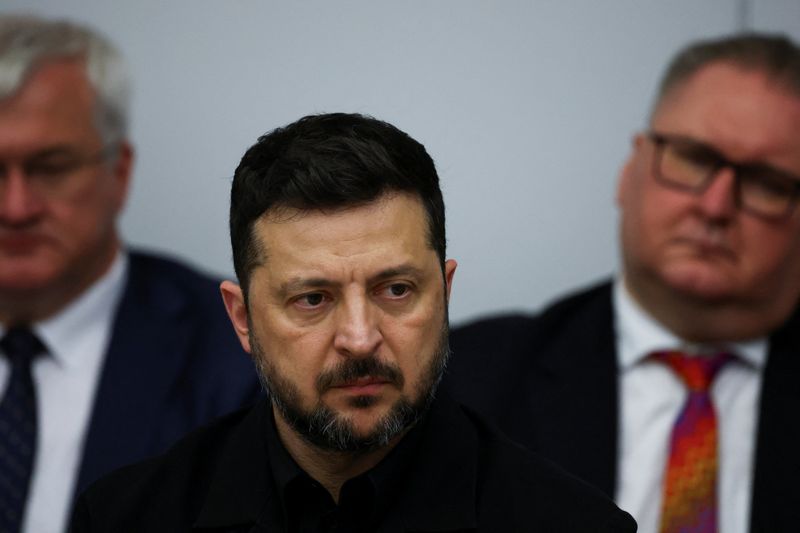
President Volodymyr Zelenskyy didn’t just deliver a routine update this week. He tossed out a gauntlet draped in acerbic observation, turning the spotlight squarely on Russia’s military drive, characterizing it less as an inexorable march and more as a flailing attempt to reclaim some shred of battlefield credibility. He didn’t mince words about the cost, either, on both sides. But it’s the diplomatic dead-end he highlighted—the apparent outright refusal from Moscow to entertain any actual off-ramps—that sticks in the craw.
For weeks now, the official line from Kyiv has coalesced around the idea that Moscow’s posturing isn’t about negotiation, it’s about entrenchment. Zelenskyy articulated this frustration directly, stating, [QUOTE_PLACEHOLDER]. That sort of definitive dismissal from a head of state, while not surprising given the last two years, always carries an undeniable weight. It signifies a profound lack of faith, a recognition that—for now, anyway—the path to peace isn’t paved with treaties but with tenacity.
He’d go on to describe the Kremlin’s actions as a strategy built on attrition, a hope that Western resolve might finally fray at the edges. But Ukraine, he insisted, won’t bend. His team, he clarified, would remain open to meaningful discussions, not just public relations ploys. However, it seems the very notion of ‘peace proposal’ from Russia, as interpreted by Ukraine, currently equates to a demand for capitulation—which, let’s be real, isn’t exactly a negotiating tactic designed for success.
This isn’t just about battlefield losses or gains. It’s about perception, about who controls the narrative. Because in this kind of prolonged, grinding conflict, morale—both on the front lines and among international partners—becomes as important as any missile system. The public mocking of a global power’s military isn’t just bluster; it’s a calculated psychological strike. It’s a way of saying, ‘they’re not invincible; their tactics are failing.’
The situation isn’t isolated to Eastern Europe’s borders. The ripples from this war stretch across continents, impacting everything from energy prices to regional stability. Consider Pakistan, for instance. A country that historically maintains delicate diplomatic balances with various global powers, including Russia, faces heightened complexities. Sustained conflict fuels uncertainty in global markets, directly impacting import-dependent economies. Higher energy costs and disrupted supply chains don’t just register as abstract numbers; they mean harder choices at the grocery store for everyday folks in Lahore and Karachi.
the shifting alliances and antagonisms emerging from this war necessitate continuous recalibration of foreign policy for nations like Pakistan. Navigating a landscape where Washington and Moscow are locked in direct opposition, albeit via proxies, demands strategic agility. It also presents unique, often unwelcome, choices regarding trade — and diplomatic overtures. Nations across the Muslim world—many already grappling with their own internal complexities and regional rivalries—must carefully consider how their allegiances and actions are perceived on this global stage. The stakes are just that high.
📄 POLICY WIRE WHITEPAPER PUBLISHED: PAKISTAN'S NATIONAL SECURITY POLICY PRIORITIES
👉 READ BY CLICKING HEREAnd what about those ‘peace proposals’ Moscow supposedly offers? Zelenskyy didn’t simply brush them aside; he called them disingenuous, saying [QUOTE_PLACEHOLDER]. It’s a bitter assessment, reflecting the depth of mistrust accumulated over two years of brutal fighting. The West watches this exchange, weighing its own commitments against the persistent aggression. Over 60 countries, for example, committed an estimated 100 billion USD in aid to Ukraine in the conflict’s first year alone, according to the Kiel Institute for the World Economy. That’s a staggering figure, highlighting the international community’s deep-seated concern, but also raising questions about sustainability as global political winds shift. Because sooner or later, everyone wants to know: what’s the end game here?
The ongoing struggle, then, is a multidimensional one. It’s military. It’s economic. But crucially, it’s a battle of wills — and narratives. Kyiv knows this. Moscow, too, despite its bluster. We’re witnessing a stubborn impasse, maintained by conflicting, deeply held convictions—and an unfortunate willingness to let the bloodshed continue rather than find genuine common ground. You don’t have to be a seasoned diplomat to grasp the chilling implications of that.
What This Means
Zelenskyy’s public stance, especially his mockery of Russia’s military shortcomings and his blunt dismissal of Moscow’s ‘peace offers,’ isn’t just venting frustration; it’s a deliberate strategy. Firstly, it aims to fortify the resolve of Ukraine’s Western backers by framing the conflict as a righteous defense against an aggressor whose proposals are mere window dressing. It’s an appeal for sustained military and financial support, signaling that any wavering on their part would be a tacit endorsement of Russian maximalism. Secondly, it plays to the domestic audience, bolstering national unity and morale by portraying a leadership confident in its ability to resist, even mock, its adversary.
Economically, this entrenched position prolongs global uncertainty. Energy markets remain volatile, and agricultural supply chains face continuous pressure, exacerbating inflation worldwide. For nations like Pakistan, already navigating high debt and climate-induced challenges, these extended global economic headwinds directly impede recovery efforts and heighten social unrest potential. Politically, the outright rejection of peace dialogues solidifies a bifurcated international order, forcing countries to choose sides, implicitly or explicitly. It narrows the diplomatic space for mediation, pushing the conflict into an open-ended, attritional phase with no clear path to resolution, but plenty of collateral damage. It’s a grim calculus, — and no one, really, seems to have a winning formula for getting out of it just yet.