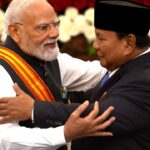



Digital Colonialism’s Quiet Dawn: India Bets Big on Tech Diplomacy in Jakarta’s Orbit
POLICY WIRE — New Delhi, India — Forget the flashy high-speed rail lines and the grand port investments; the true battle for influence in Southeast Asia isn’t always fought with steel and...

POLICY WIRE — New Delhi, India — Forget the flashy high-speed rail lines and the grand port investments; the true battle for influence in Southeast Asia isn’t always fought with steel and concrete. Sometimes, it’s waged in the mundane—the everyday digital flutter of cash changing hands. For years, the narrative felt fixed: Beijing, with its vast pockets and technological prowess, was the unavoidable gravitational pull for emerging economies, doling out everything from AI surveillance systems to TikTok trends. But a different force, far subtler and built on bits and bytes rather than bilateral loans, is starting to assert itself, and Jakarta—ever the strategic dancer—is paying close attention.
India, that often-underestimated behemoth, has found its unexpected trump card: its Unified Payments Interface (UPI). What started as a messy, ambitious scramble to bring millions of unbanked citizens into the digital fold—let’s be honest, that’s what it was—has morphed into a stealth weapon of diplomatic outreach. This isn’t just about sending money. It’s about sending a message. It’s about India’s economic ascent and, more tellingly, its ability to offer a non-Western, non-Chinese model for digital public infrastructure to nations like Indonesia, the archipelago giant.
They call it ‘digital public goods,’ which sounds nice, doesn’t it? But really, it’s smart diplomacy with a techno-futuristic veneer. UPI, a marvel of interoperability allowing instant, cheap bank-to-bank transfers via mobile apps, now sits at the heart of quiet negotiations between Delhi and Jakarta. Imagine a whole nation’s financial transactions—billions of them—handled by an Indian-designed system. That’s power, isn’t it? Economic clout, soft power, data flow—all rolled into one deceptively simple API.
India’s External Affairs Minister, Dr. S. Jaishankar, isn’t one for understatement when it comes to national aspirations. “We see our digital solutions not just as domestic successes, but as a gift to the world,” he recently remarked in a slightly veiled swipe at alternative models. “It’s about empowerment, transparency, and truly equitable access, something many nations still deeply need.” His Indonesian counterparts, for their part, appear pragmatic. “Our goal is efficiency and financial inclusion for all our people,” stated Finance Minister Sri Mulyani Indrawati, eyeing the impressive statistics. “If a robust, proven, and cost-effective system like UPI can be adapted, then we’re certainly eager to explore its potential to catalyze our digital economy.” She wouldn’t dismiss the local political calculations, of course; this is about delivering results for her constituents.
And results, UPI certainly delivers. The National Payments Corporation of India (NPCI) reported that as of January 2024, UPI processed an astonishing 12.20 billion transactions, totaling over 18.29 trillion INR (approximately USD 220 billion) in that single month alone. That’s a system that handles immense pressure. But this move isn’t just about technical capabilities; it’s also about strategic positioning.
Indonesia, the world’s most populous Muslim-majority nation, — and a linchpin of ASEAN, has always been a prize. This quiet digital handshake allows India to project an alternative vision of technological sovereignty, contrasting starkly with Beijing’s often opaque digital ‘Belt and Road’ initiatives. And while Pakistan might grapple with its own fragmented payment systems—a complex blend of traditional banking and nascent digital wallets—the broader Muslim world watches, keen to see how digital bridges are built without compromising economic or strategic independence.
📄 POLICY WIRE WHITEPAPER PUBLISHED: PAKISTAN'S NATIONAL SECURITY POLICY PRIORITIES
👉 READ BY CLICKING HEREIt’s an interesting shift. Countries in South Asia, perpetually navigating the geopolitical currents between larger powers, understand this tightrope act inherently. India, long seen by some as just another developing economy, is now selling expertise, not just exporting goods. And for those nations wary of getting too entangled with any single superpower, India’s ‘digital public goods’ pitch offers a seemingly neutral, open-source-flavored alternative. A bit like choosing Android over iOS, if you will—less brand loyalty, more underlying framework.
What This Means
The burgeoning collaboration between India — and Indonesia on digital payments goes well beyond convenience. This isn’t just about faster money transfers for Indonesian hawkers — and commuters (though it certainly helps). It’s a foundational play. Politically, it grants India significant soft power in a region historically dominated by other major players. If Indonesia successfully adopts a UPI-like system, it could become a blueprint for other ASEAN nations, allowing Delhi to quietly architect vast swathes of regional digital infrastructure without deploying a single warship. Because who needs explicit military alliances when you control the economic plumbing, right?
Economically, it represents a substantial opportunity for financial inclusion for millions in Indonesia who might still operate in cash-heavy economies, driving efficiency and formalizing countless small businesses. But it also means India’s tech ecosystem gains an international foothold, potentially opening doors for its companies and talent in new markets. Data flows will invariably follow the money flows, which brings its own set of concerns around privacy and sovereignty – an ongoing global debate. But at the end of the day, nations need systems that work. India’s just offering one that’s proven, adaptable, and—crucially for the current geopolitical climate—not beholden to Beijing. It’s a very modern form of diplomatic chess, playing out one digital transaction at a time.