


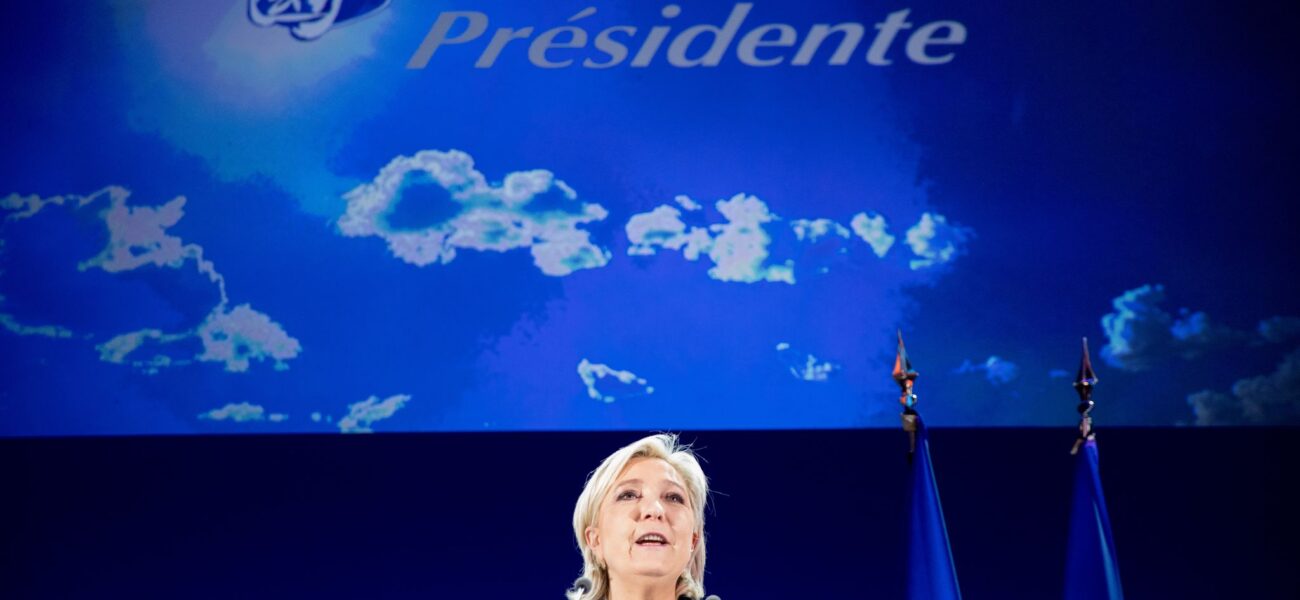
Judicial Scrutiny Looms Large for Le Pen, Setting French Election Stage Ablaze
POLICY WIRE — Paris, France — Another season, another electoral drama. It’s becoming a bit of a French tradition, isn’t it? Right on cue, the legal gears grind, throwing a wrench into the...

POLICY WIRE — Paris, France — Another season, another electoral drama. It’s becoming a bit of a French tradition, isn’t it? Right on cue, the legal gears grind, throwing a wrench into the meticulously planned presidential ambitions of a familiar figure. Marine Le Pen, doyenne of France’s far-right National Rally, finds herself in yet another judicial crucible, with an appellate court preparing to issue its verdict—a decision that could either pave her path to the Elysée or send her campaign spiraling into the muck.
This isn’t just about technical legalities; it’s a cold, hard test of political survival. You’d think she’d be used to it by now, given her family’s lengthy dance with various legal tangles. The core of this current fracas? Allegations surrounding misuse of European Parliament funds and fictional assistant jobs, dating back to her days as an MEP. Her team, naturally, says it’s a smear job. A politically motivated witch hunt, they claim, designed to kneecap a front-runner. We’ve heard that song before. But courts, unfortunately for politicians, tend to deal in facts, not rhetoric—or at least they’re supposed to.
And the stakes couldn’t be higher. This verdict isn’t just a slap on the wrist. A guilty finding could lead to disqualification from holding public office, plunging her meticulously crafted electoral strategy into chaos. Her supporters would howl about democratic subversion, naturally. Her detractors? They’d likely pop champagne corks, quietly. It’s a binary choice, really: a clean bill of health or a political death sentence, at least for this cycle. The judgment day for this appeal has been fixed for [QUOTE_PLACEHOLDER], and trust me, all eyes aren’t just on Paris; they’re across the continent.
Think about it. A candidate who’s steadily tightened her grip on a substantial segment of the French electorate suddenly facing the real possibility of being barred. It creates an almost instant vacuum. Who fills it? Does the National Rally fragment, or does it coalesce around a new, albeit less established, leader? Does Emmanuel Macron breathe an easier sigh, or does a fresh face from the right-wing emerge, perhaps even more radical and less burdened by Le Pen’s judicial baggage? These are the questions rattling the gilded halls of French power, — and let’s be frank, beyond.
Across the world, particularly in fledgling democracies or those grappling with their own challenges against institutional corruption, such public accountability has varying impacts. Look at Pakistan, for example. Political figures there often face legal battles, too—disqualification, corruption charges—that dramatically reshape the political terrain. Yet, the systemic response, the perceived impartiality of the judiciary, and the ultimate electoral consequences often differ wildly. In Pakistan, electoral disqualifications of prominent leaders can spark widespread civil unrest, whereas in France, while certainly a crisis for the party, the system largely, however controversially, holds. It’s a contrast that tells you plenty about judicial independence — and public trust.
Let’s not kid ourselves: these aren’t just obscure financial infractions. These are alleged breaches of trust by someone seeking the highest office. It brings to mind Beijing’s recent hardline stance on corruption—a stark reminder that public office comes with strings attached, strings that, if yanked hard enough, can snap a career clean off. According to a 2023 Eurobarometer survey, only 40% of French citizens trust their political parties, suggesting a significant trust deficit that scandals like this only deepen.
📄 POLICY WIRE WHITEPAPER PUBLISHED: PAKISTAN'S NATIONAL SECURITY POLICY PRIORITIES
👉 READ BY CLICKING HEREFor Le Pen, this appeal isn’t just a legal maneuver; it’s her last stand, politically speaking. She has positioned herself as the voice of the unheard, the champion against the globalist elites. A conviction—especially one related to financial misconduct—would make that narrative a touch difficult to maintain. But then again, we’ve seen politicians rebound from worse, haven’t we? It’s politics, after all. There’s always a surprise lurking just around the corner. But this one? It feels particularly… high voltage.
What This Means
The impending verdict in Marine Le Pen’s appeal case casts a long shadow over French—and indeed, European—politics. If the court upholds her conviction or imposes a ban from holding office, the immediate implication is a frantic scramble within the National Rally to anoint a successor. This could be Le Pen’s niece, Marion Maréchal, or another emerging figure. A change in leadership, however, would inevitably disrupt the party’s carefully cultivated image of moderation, a strategy Le Pen herself meticulously pursued to shed the more radical image of her father. This internal upheaval might, paradoxically, either invigorate a new, harder line or fracture the party’s base, benefitting mainstream parties.
Economically, prolonged uncertainty regarding Le Pen’s eligibility, and by extension the far-right’s prospects, often introduces jitters in markets. Her party’s protectionist and Eurosceptic stances, if seen as gaining traction, tend to concern investors focused on the stability of the Eurozone’s second-largest economy. A disqualified Le Pen, while perhaps initially reassuring to markets concerned about her policies, could also ignite a populist backlash from her staunch supporters, creating a different kind of instability. We’re talking civil unrest, maybe. Think of the yellow vests, amplified.
Geopolitically, the Muslim world and countries in South Asia observe French politics closely, particularly given France’s colonial history and its significant Muslim population. Le Pen’s platform has historically been characterized by stringent anti-immigration rhetoric and a hard stance on secularism, often perceived as targeting Muslim communities. Her disqualification, or even a conviction, would temporarily dampen these nativist anxieties for diaspora communities but wouldn’t eradicate the underlying tensions in France or its international image. Conversely, if she walks free, it’s a morale boost for far-right movements across Europe, emboldening their calls for similar policies, potentially creating diplomatic friction with countries like Turkey or Algeria, already sensitive to French domestic policy’s spillover effects. It’s never just about France; it’s about what France represents.