
Political Theater Meets Legal Maneuver: Kirk Murder Case Kicks Off Amidst High-Stakes Evidence Battle
POLICY WIRE — Provo, Utah — Silence hung thick and expectant in the Fourth District Courthouse, pierced only by the shuffling of papers and the soft clicks of reporters’ keyboards. This wasn’t just...

POLICY WIRE — Provo, Utah — Silence hung thick and expectant in the Fourth District Courthouse, pierced only by the shuffling of papers and the soft clicks of reporters’ keyboards. This wasn’t just another legal proceeding; it felt more like the opening act of a grim, protracted drama, starring a deeply polarized nation’s anxieties.
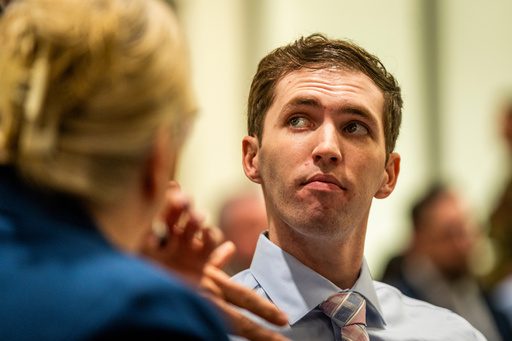
It was Monday morning, and the preliminary hearing for 23-year-old Tyler Robinson, accused of assassinating conservative firebrand Charlie Kirk, began. But what dominated the air wasn’t the prosecution’s damning evidence, not immediately anyway. It was the spectacle of two families – the Kirks, draped in grief, and Robinson’s parents, equally burdened – alongside a procession of high-profile political figures, notably Donald Trump Jr. The sheer weight of public and partisan scrutiny pressing down on what should have been a cold, dispassionate legal exercise was palpable.
Prosecutors, with their sights set on convincing State District Judge Tony Graf that they possess enough evidence to send Robinson to trial for aggravated murder, stumbled early. A major blow landed when initial surveillance footage, compiled from Utah Valley University (UVU) — a supposedly ironclad piece of evidence — was blocked. And that’s because someone, somewhere, thought it’d be grand to muck about with the video, adding markings and zooming in. Judge Graf, quite rightly, sided with defense attorneys who argued the altered footage shouldn’t be allowed. Prosecutors now say they’ll remove those pesky alterations before the five-day preliminary hearing resumes. A pretty basic oversight, don’t you think, for a case of this magnitude? It’s not a good look.
And then there was the question of identification, which, in court, is often a more delicate dance than many realize. When Deputy Utah County Attorney David Sturgill asked former State Bureau of Investigation Agent David Hull to look around the courtroom and point out the suspect, the defense pounced. Defense attorney Kathryn Nester called it “unduly suggestive in-court identification,” asserting it would violate Tyler Robinson’s constitutional rights. She’s got case law on her side; it’s widely accepted that asking a witness to finger the lone person at the defense table effectively taints identification. After a private huddle at the bench, Graf merely stated that the court record would reflect Robinson had been identified. That’s an unsatisfying outcome for everyone involved, or should be.
But the day wasn’t entirely devoid of drama. Earlier, Bagley had said he spotted something “that looked out of place to me” on the roof of the Losee Center: a red-and-black screwdriver. He had also observed a “sniper pad” disturbance in the gravel rooftop. This, he noted, looked like someone had been lying in position to shoot a weapon, with distinct marks for elbows and knees. Bagley then recounted the chaos, hearing a gunshot as Kirk spoke, — and the rapid dispersal of the crowd. He recalled hearing officers over the radio say that someone was in custody.
The alleged motivations behind Kirk’s killing have already been made public through court filings, paints a stark picture of ideologically charged animosity. Prosecutors revealed Robinson had supposedly left a note for his roommate stating, “I had the opportunity to take out Charlie Kirk and I’m going to take it.” He allegedly texted his roommate about Kirk, saying, “I had enough of his hatred. Some hate can’t be negotiated out.” These are direct quotes, pulled from the evidence. But Robinson has yet to enter a plea, — and his attorneys aren’t talking. You can’t blame them.
Mark Kouris, a former prosecutor and state judge in Salt Lake City now teaching law at the University of Utah, underscored the relatively low hurdle prosecutors face. To clear this preliminary stage, he explained, they don’t need to prove guilt beyond a reasonable doubt, merely a plausible case. “Effectively, it’s 51% — there’s a 51% chance they did it,” Kouris explained. This standard, he notes, “is extremely low, and the chances of them not getting through it are, quite frankly, almost nothing.”
Security is predictably tight around the Provo courthouse. Armed officers are perched on rooftops, binoculars in hand, while drones hum overhead. Television crews — and photographers jostle for position. It’s a scene you’d expect for a high-stakes, politically charged incident. Erika Kirk, the widow, has navigated this very public grief with an unexpected declaration, offering forgiveness at her husband’s memorial. She’d stated then, [QUOTE_PLACEHOLDER] A sentiment that put her at odds with others, including former President Donald Trump, who publicly advocated for the death penalty.
📄 POLICY WIRE WHITEPAPER PUBLISHED: PAKISTAN'S NATIONAL SECURITY POLICY PRIORITIES
👉 READ BY CLICKING HEREThe state of Utah, a curious contradiction, is an open carry state. Utah Valley University allows concealed firearms for permit holders. Officer Chris Bagley, cross-examined by the defense, revealed there were only six officers for an event attracting thousands, with no metal detectors or security drones in use. No law enforcement on the roof either, which, in hindsight, seems like a pretty significant lapse in planning. The public, they’ve always got questions, you know?
Consider the deeply ingrained, often volatile ideological divisions. This incident isn’t just a domestic crime; it resonates on a global scale. Similar narratives of high-profile political figures being targeted, of violent acts arising from stark ideological disagreements, unfortunately aren’t alien to the landscape of Pakistan or other parts of South Asia. There, as here, such incidents are often seized upon, amplified, and become potent symbols in much broader, more existential struggles over national identity or political direction. See the volatile incidents often erupting in South Asian prisons, for example, stemming from similar undercurrents of social tension, though of course, with vastly different contexts.
What This Means
This preliminary hearing, despite its technical legal underpinnings, functions as much as a public referendum on American political civility—or its complete absence. The proceedings aren’t simply about Tyler Robinson’s guilt; they’re a litmus test for how a justice system processes acts perceived as politically motivated. The presence of Donald Trump Jr. and the explicit public comments about the death penalty from the former President demonstrate just how deeply intertwined politics and justice have become. It’s a calculated gamble by prosecutors to pursue a capital case, especially after the recent judicial reprimand concerning pre-trial comments. The stakes are immense, not just for Robinson, but for the entire judicial process.
Economically, such high-profile cases can exert a chilling effect, even if subtle. Event organizers and academic institutions will surely face increasing pressure to beef up security, driving up costs and potentially limiting public engagement. More broadly, the continued visibility of deep ideological chasms, sometimes escalating into violence, makes for a nervous polity. For media outlets like Policy Wire, the challenge becomes maintaining objectivity and reporting fact amid a raging torrent of opinion and politically charged narratives. It’s not just a court case anymore. It’s an entire segment of the evening news cycle.
The ongoing procedural wrangles over video evidence and courtroom decorum reveal the system’s deliberate, if sometimes frustrating, insistence on process, which stands in stark contrast to the swift, often emotionally charged condemnations heard outside its walls. It’s an arena where meticulous adherence to rules is meant to ensure fairness, yet simultaneously feels excruciatingly slow for a public hungry for immediate answers and justice, whatever that means to them. And the legal back-and-forth continues. It’ll be a long week, you betcha.