

Cristiano Ronaldo’s World Cup Curtain Call: A Star’s Legacy Defined By Absence
POLICY WIRE — Lisbon, Portugal — The final whistle always blows, doesn’t it? Even for titans, even for those whose names ring out from Manchester to Mumbai, from Madrid to Malir. Cristiano...

POLICY WIRE — Lisbon, Portugal — The final whistle always blows, doesn’t it? Even for titans, even for those whose names ring out from Manchester to Mumbai, from Madrid to Malir. Cristiano Ronaldo, an athlete whose silhouette became synonymous with unattainable achievement, found himself facing an irrefutable clock on football’s grandest stage. His last World Cup minute now logged, not with a winner’s medal slung over his neck, but with the quiet dignity—or perhaps, stubborn pride—of a man grappling with a singular, high-profile omission on his unparalleled C.V.
It’s the kind of sports story that writes itself across generations, endlessly debated in chai shops across Karachi and coffee houses in Casablanca. An indisputable legend—an all-time great—concludes his bid for football’s premier international prize without ever clutching the golden statuette. But the 41-year-old Portuguese captain isn’t going quietly into that good night, not without reshaping the narrative, at least in his own estimation. He insists his Euro 2016 triumph with Portugal is “just as significant.” That’s a bold stance for anyone, let alone for someone whose career has been so meticulously, so aggressively, defined by conquest.
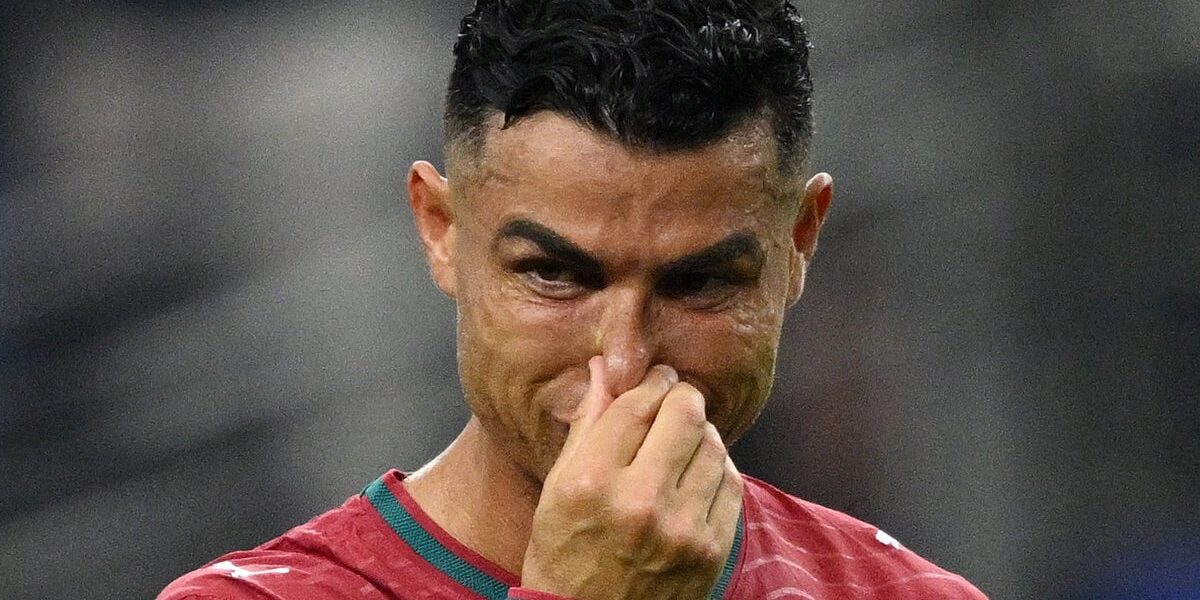
His tears after Portugal’s last-16 exit to Spain—a defeat settled by a stoppage-time Mikel Merino goal, a cruel punctuation mark to his final World Cup game—weren’t just for the loss. They were, no doubt, for the closing of a chapter, the finality of a pursuit that will now forever bifurcate the narrative of his career from that of his Argentine counterpart, Lionel Messi, whose Qatar 2022 victory clinched the elusive global crown. For countless fans, from Peshawar to Paris, this contrast provides an eternal talking point, a never-ending pub debate over who truly is the greatest.
But he ain’t accepting that without a fight, or at least a firm declaration. Going without a World Cup winner’s medal, he maintained, ain’t the be-all — and end-all. He harked back to the European Championship victory from a decade ago as equally important. He’s got a point, sort of. His legacy within Portuguese football is undeniable, utterly transformative. before Cristiano Ronaldo, Portugal hadn’t won a single title,
he put it plainly. He’s right. And: The biggest title the national team has ever won was in 2016, the European Championship, which, to be honest, is just as significant to me as a World Cup.
He was, by all accounts, quite emotional post-match, clapping and waving to the loyal Portuguese fans who made the pilgrimage. He’d already signaled this was his final tilt, a decision he reiterated in interviews. But he carefully avoided drawing a line under his *entire* international career. I’m sad to be leaving the World Cup like this,
he admitted, a sentiment many could share. I gave it my all. I did my best — and I’m leaving with a clear conscience. It was my last World Cup, yes, but I’ll now have time to reflect — and be with my family. I won’t be making any rash decisions.
An artful dodge, perhaps, leaving a sliver of an opening, even as the ultimate prize remains unclaimed. He’s still got goals to score, apparently. And records to polish. Records show Ronaldo is the most decorated player in international football history with 146 goals in 233 appearances for his country.
📄 POLICY WIRE WHITEPAPER PUBLISHED: PAKISTAN'S NATIONAL SECURITY POLICY PRIORITIES
👉 READ BY CLICKING HEREWhat This Means
This isn’t just about a sportsman’s unfulfilled dream. Oh no, it’s far grander, messier even. It’s about legacy in the age of hyper-individualized branding, where an athlete’s worth isn’t just tallied in goals, but in global reach, social media metrics, and sponsorship dollars. Ronaldo, like few others, became a veritable economic engine for club — and country. His image, cultivated with such fierce intent, generated enormous soft power for Portugal on the international stage—a potent form of diplomacy, sometimes more effective than conventional statecraft. This pursuit of the World Cup, therefore, became less about just winning a trophy and more about validating an entire empire, a persona. It’s an exercise in public relations on a truly global scale. Because in today’s interconnected world, an athlete’s perceived completeness or incompleteness feeds into a larger media apparatus that profits from narrative creation. It impacts everything from jersey sales in Lahore to television rights deals impacting sovereign wealth funds. Just consider how even regional stories, like the Mumbai’s annual deluge, struggle for bandwidth against global sports narratives. So, when a figure like Ronaldo publicly attempts to reframe what counts as ‘significant,’ it isn’t just self-consolation; it’s a sophisticated maneuver within the complex geopolitical landscape of sports economics and national pride.
It’s a masterclass in managing public perception, ensuring that even in defeat, the narrative shifts slightly to personal triumph over perceived systemic failing. Or maybe, it’s just the raw, stubborn truth from a man who genuinely believes he’s given everything and owes nothing. Regardless, the impact of his departure without that final trophy will continue to fuel debates, not just in sports pages, but in economic forecasts for global merchandising and the symbolic projection of national success.