


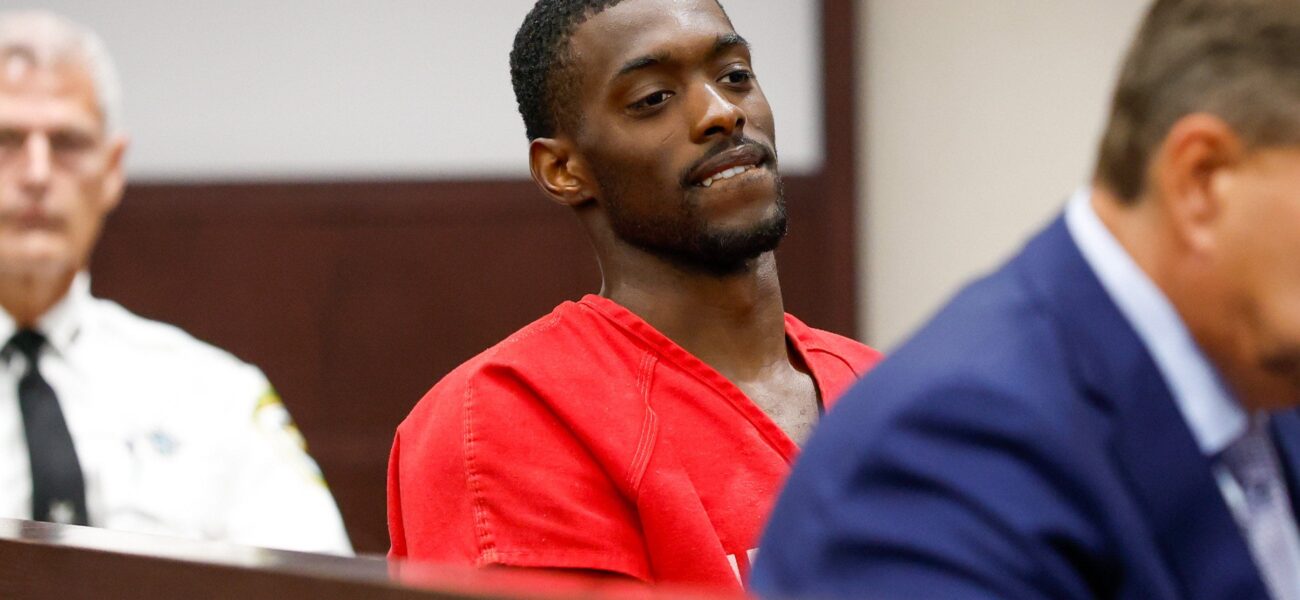
Fumbled Justice: Terrion Arnold’s Bail-Out Navigates Gridiron’s Murky Waters
POLICY WIRE — Washington, D.C. — A million-dollar bond. Three interested NFL teams. One alleged armed robbery — and kidnapping. It’s a stark illustration of where American priorities often...

POLICY WIRE — Washington, D.C. — A million-dollar bond. Three interested NFL teams. One alleged armed robbery — and kidnapping. It’s a stark illustration of where American priorities often lay—squarely at the intersection of prodigious talent and bewildering market forces. That former Detroit Lions cornerback Terrion Arnold, barely removed from serious allegations, finds himself back in the sporting scrum is less a tale of redemption and more a cynical testament to the capricious algorithms of professional athletics. He cleared waivers this Monday, a free agent once again.
It’s almost quaint, really. June 29. That’s when the Lions let him go. But for the alleged incident—an armed robbery and kidnapping from back in February—the market moves on its own schedule. Arnold, at just 23 years old, was out of Hillsborough County Jail on June 30. And how? By posting that formidable $1 million bond. His release came after a judge—blessedly—rebuffed the prosecution’s plea to keep him locked up without bail. [QUOTE_PLACEHOLDER]
Prosecutors, predictably, wanted to slap a GPS tether on him. A leash, essentially, to keep track of a man facing down such hefty accusations. But Arnold’s defense had a sharp retort: a tether would interfere with his ability to play football. The judge, Chief Judge Christopher Sabella, sided with the defense on that point. Imagine that—the unfettered pursuit of a paycheck trumping a measure designed for public safety, even if temporary. This initial rejection by the judge says a lot about the peculiar weight sports, particularly contact sports, carry in certain jurisdictions. It speaks volumes.
But when the Lions showed him the door, the prosecution circled back. Another crack at that GPS tether. They don’t give up easily, these legal eagles. But then, Harvey Steinberg, Arnold’s attorney, threw out a new variable. A potent one. He’d apparently been chatting up some serious movers — and shakers. Three NFL teams, the attorney declared, had already touched base with Arnold.
Steinberg made it plain: Arnold anticipates that he will have employment with another NFL team within 30 days. And just like that, the scales of justice seemed to waver—not under the weight of evidence or innocence, but under the gravitational pull of potential endorsement deals and sold-out stadiums. It’s a phenomenon that speaks to the distinct economic realities of professional sports, where the monetary value of an individual’s athletic skill can, at times, appear to overshadow other considerations. It’s a transactional ecosystem, ultimately.
Because, let’s be honest, we’re not talking about a casual Sunday pickup game. This is the NFL. An enterprise where players, on average, have careers lasting only about 3.3 years. The clock’s always ticking. That fleeting window, that pressure to perform, that hunger for the next contract—it shapes decisions in courtrooms just as much as on the field. The pursuit of continued employment is, in many ways, an unspoken legal defense strategy.
Contrast this with, say, the judicial systems in many South Asian or Muslim-majority nations—Pakistan comes to mind, with its often protracted legal battles and fewer opportunities for swift re-entry into high-value professional sectors after such charges. In Karachi, for instance, a similar high-stakes, high-profile criminal case would likely play out against a dramatically different economic and social backdrop. The concept of posting a $1 million bond (roughly 278 million Pakistani Rupees, an astronomical sum for most) as a casual stepping stone back to elite employment is, well, practically unfathomable for the average citizen. Here, a mere allegation, regardless of outcome, could effectively end a public-facing career, irrespective of underlying talent. Justice, or at least the path through it, moves at a decidedly slower, less financially lubricated pace.
📄 POLICY WIRE WHITEPAPER PUBLISHED: PAKISTAN'S NATIONAL SECURITY POLICY PRIORITIES
👉 READ BY CLICKING HEREAnd so, Terrion Arnold now floats in that nebulous space. The Lions washed their hands of him. But the wider league? That’s another story. His value, it seems, transcends his legal woes. It’s not about forgiveness; it’s about competitive advantage. Teams need bodies. They need talent. And a 23-year-old with his kind of speed — and potential? That’s a commodity too valuable to let legal niceties get in the way—not for long, anyway. His attorney made that clear. It’s an inconvenient truth for those who prefer their athletes unsullied. But this is professional football, folks. It’s often anything but clean.
What This Means
This episode, bizarre as it might appear, provides a disquieting glimpse into the unique societal compact we maintain with our athletic celebrities. For political leaders — and economic policy shapers, it serves as a peculiar case study. On one hand, the justice system attempted its due process—albeit with the extraordinary concession for a tether on the basis of professional impediment. On the other, the open market, represented by three NFL teams, didn’t even wait for a judicial resolution before initiating contact. It illustrates how rapidly capital, particularly in hyper-competitive markets like professional sports, can decouple from conventional legal or ethical frameworks.
The implications extend beyond the gridiron. The perception of justice, both domestically and internationally, gets skewed when immense wealth or athletic prowess appears to offer a distinct, preferential track through legal challenges. For societies like those in Pakistan, struggling to instill consistent rule of law and fight corruption, observing such American episodes can unintentionally reinforce skepticism about equitable treatment under the law. It raises questions about how deeply economic value intertwines with personal accountability, prompting discussions about the fairness inherent in systems where opportunity is so starkly linked to market demand—or the sheer magnitude of one’s legal defense fund.
But hey, a football season’s always just around the corner. And a quick search for a player who might still contribute valuable snaps often trumps, well, pretty much everything else. For a glimpse into another market that prioritizes immediate economic gain, one might consider how Beijing’s rapid push for driverless tech navigates its own set of ethical and legal grey areas. After all, the pursuit of capital, — and its human vehicles, tends to write its own rules.