


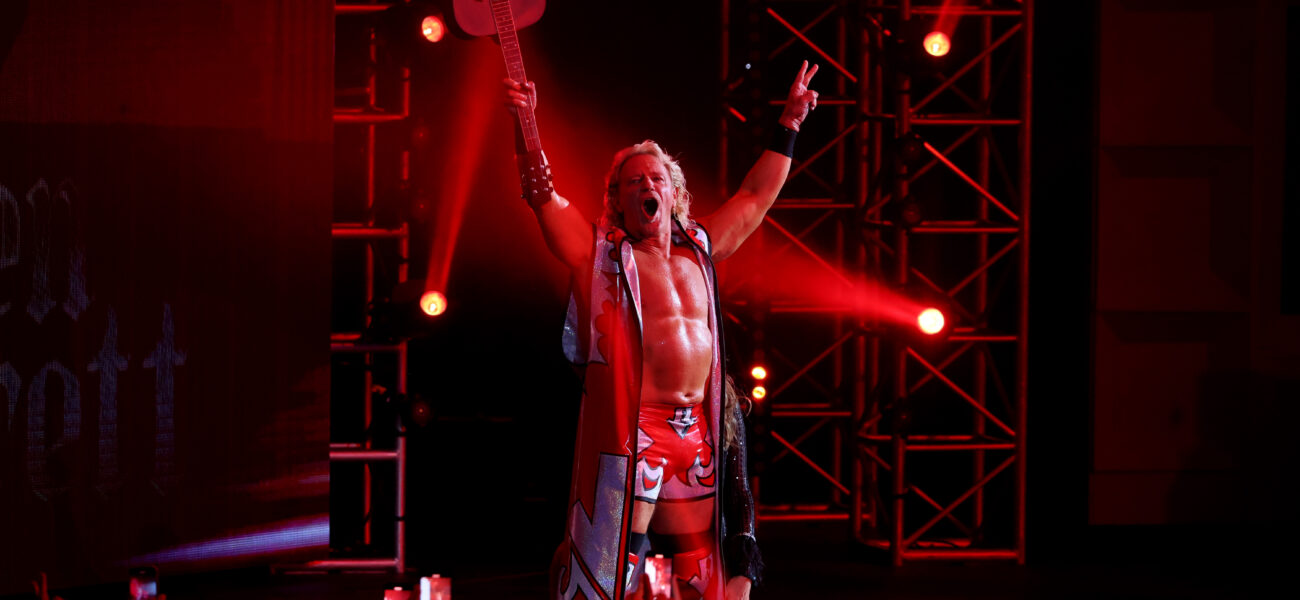
The Art of the eleventh-Hour Heist: One Wrestler’s Unorthodox Play Against a Titan
POLICY WIRE — New York, USA — It isn’t always about who you know. Sometimes, it’s about when the top boss isn’t looking, isn’t home. In the often-bombastic realm of professional wrestling, where...

POLICY WIRE — New York, USA — It isn’t always about who you know. Sometimes, it’s about when the top boss isn’t looking, isn’t home. In the often-bombastic realm of professional wrestling, where reality bends to narrative, the legend of Jeff Jarrett’s 1999 exit from Vince McMahon’s then-WWF has long been shrouded in myth and convenient corporate memory. But forget the tales of an audacious stick-up; the real story is far more intricate, a masterclass in exploiting market dynamics and corporate distraction.
See, it wasn’t some wild demand thrown directly at McMahon himself. No, it was a finely timed maneuver against a colossal enterprise caught flat-footed. At that very moment, the Chairman, Vince McMahon, was off globe-trotting, peddling his wrestling empire to public investors, hoping to launch his company on the stock market. You see how these things go? Corporate bigwigs get tunnel vision, don’t they? And that left a sizable chasm back at headquarters, an operational vacuum filled by intermediaries like Jim Ross.
Jarrett, a wrestling veteran with an astute business sense cultivated over years on the road, found his contract expiring right as he was slated for a high-profile Intercontinental Championship match against Chyna at a pay-per-view. It was Sunday. His deal was up Saturday. And Vince was, well, not exactly glued to his phone handling mid-card talent negotiations. What was originally spun as Jarrett holding up the company for $200,000 before his final match was, Jarrett now clarifies, a much cannier play. [QUOTE_PLACEHOLDER] he explained recently, setting the record straight.
Instead, the former champ simply leveraged a predicament of the company’s own making. The creative arm booked a match, the talent relations arm—Jim Ross—couldn’t finalize a deal. And Vince? He was hustling around the world. [QUOTE_PLACEHOLDER] Jarrett articulated. This left Ross, already trying to keep the volatile roster appeased during the red-hot Attitude Era, holding the bag. It created a situation—a unique one, it must be said—that worked perfectly in Jarrett’s favor. He’d made his arrangements elsewhere, striking a deal with rival WCW. He was set to jump ship, but still held championship gold.
This isn’t just a wrestling anecdote; it’s a masterclass in market timing and asymmetric information—a situation not entirely unfamiliar to shrewd operators across South Asia, where informal networks and quick thinking can often bypass rigid corporate hierarchies. In economies like Pakistan, for instance, an individual’s ability to adapt quickly to fluid circumstances, anticipate institutional bottlenecks, and exploit a competitor’s temporary weakness, can prove decisive for survival, sometimes even leading to disproportionate gains, just as Jarrett did. It’s a scrappy form of capitalism, a very street-smart negotiation tactic. Just a thought.
So, on the day of the pay-per-view, with his contract officially null — and void, Jarrett walks in, champ still. McMahon, remember, had made attempts to call, leaving voicemails, but by then, Jarrett’s decision to move to WCW was locked. Ross — and Terry Taylor approached him backstage. [QUOTE_PLACEHOLDER] they asked. Jarrett laid out his cards. He had several pay-per-views and house shows upcoming, contracts where talent received payment 90 days post-event. But he wouldn’t be around then. [QUOTE_PLACEHOLDER] he explained, having already consulted his attorney. Because, why wouldn’t he?
📄 POLICY WIRE WHITEPAPER PUBLISHED: PAKISTAN'S NATIONAL SECURITY POLICY PRIORITIES
👉 READ BY CLICKING HEREThe company, in a bind, agreed to pay him. But Jarrett had one more curveball, one rooted in personal history. Back in ’97, after his wife’s breast cancer diagnosis, Linda McMahon had mandated he stay off the road for house shows. This directive meant he didn’t meet his guaranteed downside pay. The company cut his earnings in his second year, despite the circumstances not being his doing. Now, with the shoe on the other foot, Jarrett presented his grievance, essentially holding up a moral IOU. [QUOTE_PLACEHOLDER] Jarrett recalled saying. And then came the punchline: “So because of that directive of Linda, I didn’t meet my downside. I did not meet my downside number. And you came to me and said, Hey, Jeff, you didn’t meet your downside. We’re going to cut your pay in year two. And I said, I have a sick wife, and you’re going to cut my pay, and it wasn’t my doing. I was willing to work. So you kind of reneged on the deal. Well, Jim, we just came to an agreement. I’m reneging on this.” And with that, he doubled his demanded payout, winning a financial battle that saved WWE an immediate, embarrassing fiasco. McMahon’s WWF, by the way, completed its IPO on October 27, 1999, selling 10 million shares at $17.50, raising $175 million (source: Securities and Exchange Commission filing S-1, October 1999).
But the real kicker came after the match, after Jarrett had honorably done the job, dropping the title. McMahon himself approached. “Vince walked around. Three-piece suit, smiling from ear to ear, pulls out the check from the venue,” Jarrett recollected. It wasn’t some corporate check. No. It was a check right from the Gund Arena, payable on the spot. [QUOTE_PLACEHOLDER] McMahon reportedly said. Jarrett didn’t even wait; he ran straight to his rental car, locking away his windfall before Road Dogg could even register the spectacle. He wasn’t going to tempt fate, not after such a surprising victory.
What This Means
This episode serves as a fascinating microcosm of power dynamics, demonstrating how even a juggernaut like WWF, during its commercial ascent, could be vulnerable to an individual’s leverage—especially when the institutional head was strategically diverted. It tells us that organizational strength is often predicated on the perceived invulnerability of its leadership. When that perception wavers—or when leadership is literally absent, as McMahon was on his IPO roadshow—even mid-level talent, properly prepared and connected (remember his lawyer?), can exert significant, disproportionate influence. It speaks to a certain entrepreneurial audacity within the entertainment industry, where personal brand and timely maneuvering often override formal corporate protocols.
Economically, it underscores the mercenary nature of contract negotiations, particularly in performance-based sectors. It’s a cold truth: when one party has unique, immediate value (a championship match that must happen) and the other has a structural disadvantage (the expiring contract, the absentee CEO), the market power shifts dramatically. It’s an unusual example of labor, albeit high-value specialized labor, momentarily dictating terms to capital, even in an industry infamous for company-friendly agreements. This kind of spontaneous re-negotiation highlights the sometimes chaotic, sometimes ruthless, but often profoundly human element that can derail even the most carefully constructed corporate narratives.