

Europe’s Fraying Façade: Wildfire Scars French Riviera, Igniting Deeper Climate Questions
POLICY WIRE — Saint-Tropez, France — The Côte d’Azur, famed for its azure waters and sun-kissed glamour, typically beckons the world’s elite to its shores—a place of tranquil indulgence,...

POLICY WIRE — Saint-Tropez, France — The Côte d’Azur, famed for its azure waters and sun-kissed glamour, typically beckons the world’s elite to its shores—a place of tranquil indulgence, impervious, it often seems, to the raw fury of nature. Not this time. No, the predictable summer charm gave way to a harrowing scene this past week as an apocalyptic wall of flame swallowed acres of pine forest, pushing more than ten thousand souls into a panicked retreat from their holiday havens and permanent homes alike.
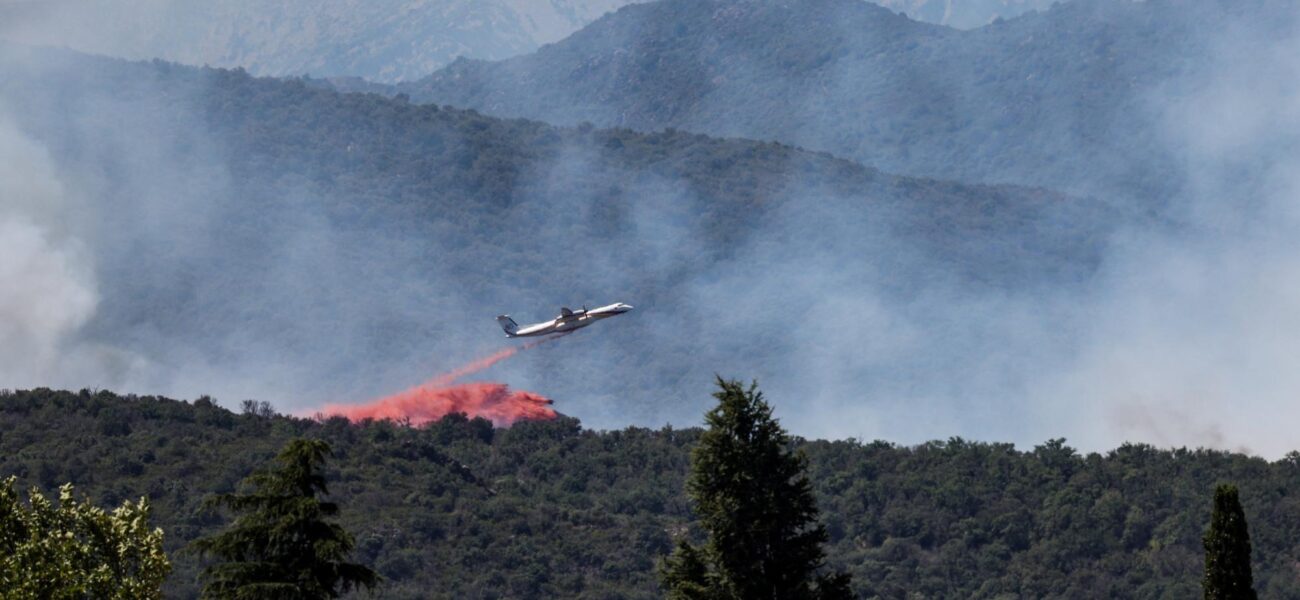
Helicopters, tiny silhouettes against smoke-choked skies, dumped tons of water onto an inferno that had taken root just inland from the shimmering Mediterranean. Authorities described the operation as gargantuan. Think about it: a tourist paradise turned charred wasteland, an exodus not from war but from fire. For many, it’s a bitter pill to swallow, this stark realization that even their postcard-perfect corners of the continent aren’t beyond the reach of increasingly ferocious climate shifts. It’s a sobering reality check for a region so accustomed to predictable rhythms.
Minister of Interior Gérald Darmanin didn’t mince words, his voice thick with the gravity of the situation. ‘This isn’t just a fire; it’s a front in a war against a changing climate,’ he observed grimly from the front lines. ‘Our response is immense, but the scale of these events demands we reassess everything. We’re talking about lives, livelihoods, — and an entire way of life up in smoke. It’s devastating.’ Darmanin’s remarks weren’t for mere political theater; they mirrored a mounting apprehension that these episodes are quickly becoming the new normal.
From Brussels, an exasperated EU Climate Commissioner Wopke Hoekstra shared a similar sentiment. ‘We’ve seen the data. We’ve published the reports. It’s no longer just about mitigation; it’s about sheer survival for some regions,’ Hoekstra told Policy Wire. ‘And Europe—wealthy, sophisticated Europe—isn’t immune. That’s the hard lesson, isn’t it? The sheer financial and human costs of this instability, they’re only climbing.’ He didn’t have to specify what that meant for the upcoming EU budget allocations. Everyone gets it.
The situation isn’t confined to France’s opulent shores, of course. Across the Mediterranean, the ghost of summer fires haunts countries from Algeria to Turkey, while in South Asia, regions like Pakistan grapple with their own climate extremes, albeit of a different kind—from devastating floods to searing heatwaves. Remember 2022? One-third of Pakistan submerged in floods, displacing millions. The French Riviera’s blaze, devastating as it’s, merely scratches the surface of a global struggle. It underscores the unfortunate reality that climate change, in all its chaotic forms, respects no borders nor GDP figures. Because whether it’s European pine forests or South Asian farmlands, communities pay the price.
📄 POLICY WIRE WHITEPAPER PUBLISHED: PAKISTAN'S NATIONAL SECURITY POLICY PRIORITIES
👉 READ BY CLICKING HEREBut the numbers themselves tell an even more stark tale. A recent report from the European Commission’s Joint Research Centre indicated that the annual number of wildfires larger than 30 hectares in the EU has increased by approximately 43% over the last decade compared to the decade before. It’s not a blip; it’s a trend. And trends, especially these sorts of accelerating trends, carry very real implications for infrastructure, agriculture, and—let’s not forget—political stability. Because when people lose everything, they often look for someone to blame. And sometimes, they find them.
The displaced, temporarily housed in makeshift shelters, aren’t just statistics; they’re families whose lives have been uprooted, businesses reduced to ash. Their faces carried the dull ache of sudden homelessness—a jarring contrast to the tanned, carefree visages that usually populate this corner of France. And it’s not just the immediate destruction. Think of the psychological scar, the deep unease of living in a landscape forever altered, knowing next summer might bring the same, or worse.
What This Means
This blaze isn’t just another news item about a natural disaster; it’s a very public—and very hot—examination of Europe’s climate resilience and its collective policy will. Economically, the hit to the local tourism sector will be significant. Rebuilding infrastructure — and reforesting will run into the tens, if not hundreds, of millions of euros. Insurers will feel the crunch. Politically, it’s a moment of reckoning for leaders, particularly those who’ve perhaps paid lip service to environmental policy while prioritizing immediate economic growth. The public’s patience for inaction on climate issues, it’s fair to say, is wearing thinner with every new inferno. it shines a spotlight on the disparate impacts across the globe: what’s a tragic fire here is an existential threat elsewhere, highlighting the interconnectedness of climate vulnerabilities and the need for comprehensive global strategies that don’t just mitigate but genuinely protect. There’s a tangible fear now, a new baseline for what a summer in France might entail.