

Europe’s Concrete Albatross: The Maginot Line’s Legacy of Strategic Myopia
POLICY WIRE — Washington D.C., USA — There’s a particular hubris, isn’t there, in believing a nation can simply wall off its problems, cementing away vulnerabilities with steel and concrete?...

POLICY WIRE — Washington D.C., USA — There’s a particular hubris, isn’t there, in believing a nation can simply wall off its problems, cementing away vulnerabilities with steel and concrete? It’s a recurring fantasy, usually quite expensive, that rarely delivers on its ironclad promises. Consider the Maginot Line. A monument, really, to France’s collective post-Great War trauma, yet a stunning miscalculation of future warfare. We don’t just build physical walls; we build psychological ones, — and the cost can be catastrophic.
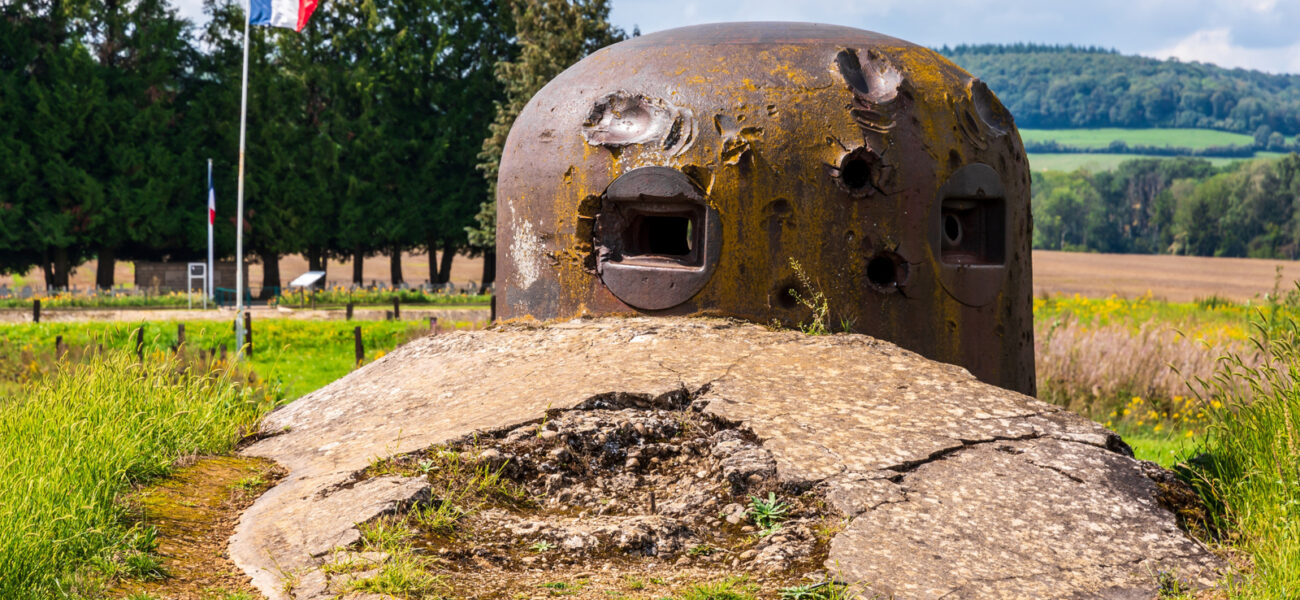
Begun in 1930, this wasn’t some minor defensive ditch. We’re talking about an elaborate system of bunkers, artillery casemates, underground railways, and anti-tank fortifications stretching along France’s eastern frontier with Germany and Italy. It felt like the definitive answer to the brutal trench warfare that had chewed up a generation. Politicians, many of whom had seen that horror firsthand, thought they’d found a technological shortcut to peace, or at least, safety. They thought they’d learned the lessons of the Somme, only to ignore the coming lessons of the Blitzkrieg.
“It’s a truly magnificent defensive structure,” General Maurice Gamelin, then commander-in-chief of the French Army, is often paraphrased to have proclaimed, even after its perceived vulnerabilities began to surface. “An impregnable shield for the French homeland, capable of deterring any aggressor and conserving our precious manpower.” But even with such bold pronouncements, the chinks were already showing. But the budget, dear God, the budget. By 1936, the system had gobbled up some 3 billion French francs—an astronomical sum for the time, roughly equivalent to several years’ worth of military expenditure. And that was just the construction. Maintenance alone was a beast. And, they didn’t extend it.
Here’s the thing, armies are funny creatures. Give them a massive, expensive, static defense, — and they’ll focus on it. They’ll spend more time maintaining it than considering whether it might simply be bypassed. Which, of course, it was. When Germany decided it was time to dance in 1940, they simply went around it, pouring through the dense Ardennes Forest — a sector deemed ‘impassable’ by French planners, a fatal assumption – and into Belgium. The Germans didn’t smash into the Maginot Line; they just wheeled past it, like a savvy running back avoiding a lumbering tackle. Belgium, naturally, got steamrolled. It’s an old truism: no wall is effective if you don’t secure its flanks. This wasn’t just a tactical failure; it was a profound strategic blindness.
It led, perhaps, to an unshakeable sense of false security among the French populace, diverting their attention and resources from more mobile, flexible defenses, or from diplomatic maneuvering for that matter. Prime Minister Édouard Daladier, battling budget constraints and public expectation, encapsulated the national mood years prior when he stated, with a sort of weary resignation, “We’ve built this formidable barrier not merely with steel and concrete, but with the hope of a generation. It’s a defense that secures our borders and, more importantly, spares our youth from the grinder.” That hope, of course, was brutally dashed.
📄 POLICY WIRE WHITEPAPER PUBLISHED: PAKISTAN'S NATIONAL SECURITY POLICY PRIORITIES
👉 READ BY CLICKING HEREThis kind of thinking — that a fixed, physical barrier provides absolute security against an adaptive, fluid threat – isn’t exclusive to France, or to a bygone era. Look at current-day South Asia, for instance. Countries like Pakistan grapple with porous, complex borders, constantly contested both externally and by various non-state actors internally. Investment often swings wildly between massive, conventional military procurements and attempts at physical border control, much like the extensive fence-building initiatives along parts of the Durand Line with Afghanistan. Yet, these often fall short when confronted by highly mobile insurgencies or proxy forces operating with local support or exploiting ungoverned spaces. There’s a constant dance between the tangible, defensible ‘line’ and the ephemeral, ideological threat that can just slip right past, rendering the concrete, if not useless, then certainly insufficient. As we see in countless regional flashpoints, relying on static measures to counter a dynamic enemy is a fool’s errand, as tragically laid bare by the French a lifetime ago. Indeed, strategic agility often proves a more potent deterrent than mere physical presence, a lesson many modern militaries are still grappling with. Nations are always trying to find an independent security course, but it’s rarely just about walls.
What This Means
The Maginot Line stands as a stark object lesson in strategic planning — and the perils of technological overconfidence. Politically, its creation showcased a nation still traumatized, desperate for tangible security, but whose leadership lacked the imaginative foresight to grasp evolving threats. Economically, it diverted monumental resources from other, arguably more pressing, military — and societal needs. For example, tank production or a more robust air force. Today, the echoes of this folly resonate in debates over everything from border walls to cyber defenses, where complex, dynamic problems are often met with expensive, static solutions. It’s not enough to build something; you’ve got to understand how your adversary thinks, how they might innovate, and where your blind spots truly lie. Because history has a funny way of teaching the same lessons over and over, sometimes with devastating consequences. We just don’t always listen. This isn’t just about French failure; it’s about universal strategic complacency.