

Arctic Echoes: F-35s Engage Russian Recon in the High North’s Geopolitical Chess
POLICY WIRE — London, UK — It wasn’t exactly a dogfight, was it? More like a grim, well-rehearsed pas de deux in the frigid expanse of the Barents Sea. A subtle yet chilling reminder that even...

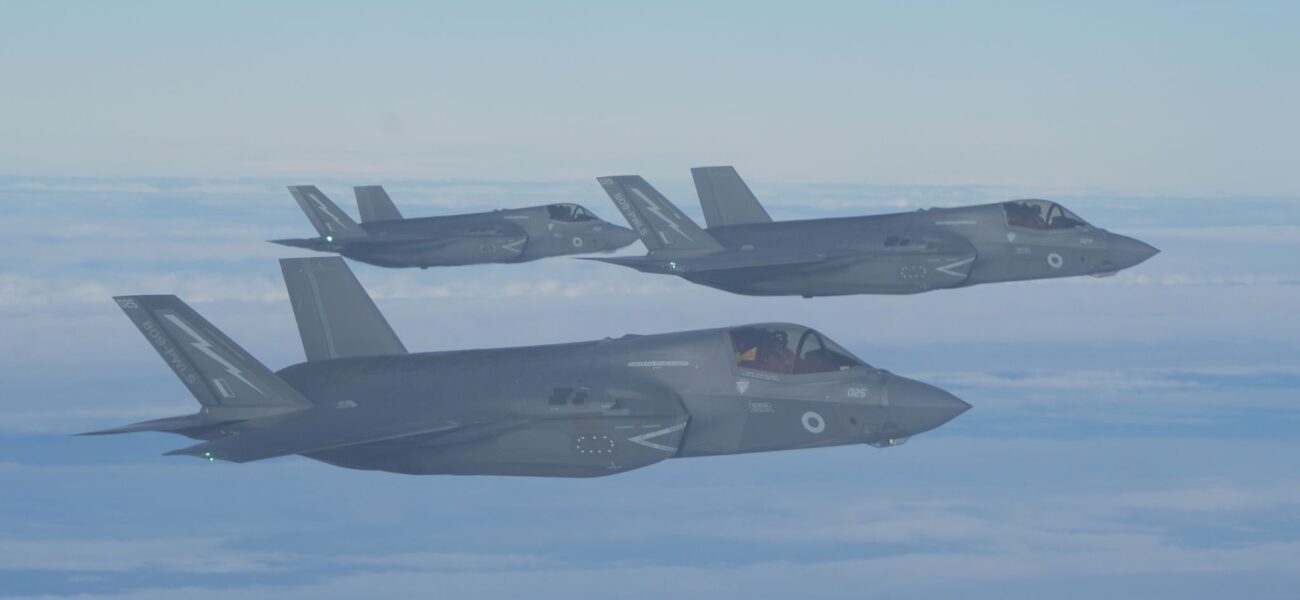
POLICY WIRE — London, UK — It wasn’t exactly a dogfight, was it? More like a grim, well-rehearsed pas de deux in the frigid expanse of the Barents Sea. A subtle yet chilling reminder that even as headlines scream about flashpoints in hotter climates, the old, cold war tango continues its relentless rhythm high above the waves. British F-35B Lightning II stealth jets—those technological marvels built for dominance—recently nudged a Russian long-range reconnaissance aircraft away from the vicinity of the UK’s carrier strike group, then tooling around the Norwegian coast.
No missiles exchanged, no desperate maneuvers. Just the sterile, professional execution of an unwritten aerial code, a tacit understanding born of decades of superpower sparring. It’s what you might call, to put it lightly, Tuesday. The Russians, masters of probing, of testing boundaries, had sent their familiar Tu-142 ‘Bear-F’ patrol plane—a four-turboprop relic, admittedly, but still quite capable of snooping—to get a better look at HMS Prince of Wales and its entourage. And the British, for their part, had deployed their state-of-the-art interceptors from RAF Lossiemouth, ensuring Moscow knew its gaze hadn’t gone unnoticed.
And let’s be honest, this isn’t exactly groundbreaking news to anyone paying attention. But each such interaction adds another layer to the complex, frayed quilt of East-West relations. “Our pilots don’t just fly; they protect our sovereign airspace, keeping a sharp eye on those who’d test our resolve,” Air Chief Marshal Sir Gavin Finch didn’t mince words when addressing the incident. “It’s what we train for, day in, day out, — and today, they demonstrated that readiness again. No histrionics, just quiet professionalism.”
Because frankly, beneath the calm communiqué, there’s a potent message being delivered by these supersonic sentinels. Moscow’s Foreign Ministry spokesperson, Maria Zakharova, always ready with a retort, predictably shrugged it off from her platform across the continent. “Routine observation flights over international waters are simply that—routine. Unless, of course, some find mere presence provocative,” she retorted, with a public smirk that felt almost audible over the wire.
But this ‘routine’ isn’t just about showing off; it’s intelligence gathering, pure — and simple. What systems is the carrier group running? How do the new F-35s react? What’s the crew’s operational tempo? These aren’t trivial questions. Indeed, statistics compiled by Janes Defence Weekly suggest that instances of Russian military aircraft—particularly surveillance and bomber platforms—operating near NATO airspace have climbed by nearly 15% since the full-scale invasion of Ukraine in 2022. It’s a busy sky, these days.
This subtle, aerial joust underscores a larger game. The UK’s carrier strike capabilities aren’t just for prestige; they project power and presence in regions where Russia remains acutely sensitive. Just consider the shifting sands of security in regions like Pakistan — and its neighbors. Countries like Pakistan—a significant non-NATO ally and nuclear power with its own strategic anxieties—watch these European maneuvers intently. They understand that such close-quarters, technological standoffs illustrate the ever-present dangers of an escalating, interconnected global theatre. When Western and Russian airpower meet, even without incident, it reverberates across geopolitical fault lines, signaling alliance strengths and potential vulnerabilities from the North Atlantic all the way to the Indian Ocean, informing local defense posturing and diplomatic alignments.
📄 POLICY WIRE WHITEPAPER PUBLISHED: PAKISTAN'S NATIONAL SECURITY POLICY PRIORITIES
👉 READ BY CLICKING HEREThe F-35, with its advanced sensors and networking capabilities, gives NATO an edge it hasn’t had since… well, since forever, really. These jets are designed to collect data, process it, and share it across a network before an adversary even knows what hit them—or, in this case, what just flew past. They’re more than just interceptors; they’re airborne nodes in a vast, interconnected strategic grid. And their deployment alongside one of the Royal Navy’s flagship carriers is hardly a coincidence; it’s a statement. Not a shout, perhaps, but a very firm whisper.
And this isn’t merely about protecting British ships. It’s about projecting Western resolve, demonstrating NATO interoperability, and reminding Moscow that while it flexes in Ukraine, the broader European flank isn’t undefended. It’s a message, written in contrails, that freedom of navigation—and information—isn’t a negotiable item. But make no mistake; Russia hears it. They always do. This aerial choreography, for all its perceived normalcy, always carries undertones of high-stakes tension, making every ‘routine’ encounter a subtle power play.
What This Means
The Barents Sea incident, far from being isolated, provides a window into the chronic, simmering friction defining contemporary global power dynamics. Economically, this constant vigilance doesn’t come cheap; the sustained readiness of fleets like the F-35 squadrons drains national coffers, funds that could otherwise address domestic concerns. Politically, it signals a deeper entrenchment of geopolitical blocs. The UK’s aggressive projection of carrier power, underpinned by cutting-edge stealth assets like the F-35, reflects a post-Brexit drive to cement its standing as a formidable global player, inextricably linked to its NATO partners, but also keen on flexing independent strategic muscle. It says, ‘We’re here, we’re capable, — and we’re watching.’
For Moscow, these ‘probing’ flights serve multiple objectives: testing NATO response times, gathering valuable intelligence on cutting-edge platforms and naval formations, and projecting an image of defiance to its domestic audience. It’s a cost-effective way—compared to an open conflict, obviously—to keep adversaries on edge, to gather actionable intelligence, and perhaps most brutally, to normalize a heightened state of military tension. This normalization, in turn, can subtly reshape international perceptions of acceptable aggression and sovereign boundaries. the increasing frequency of these encounters, while professionally managed, heightens the ever-present risk of miscalculation or technical failure—a single, unscripted moment that could spirally destabilize an already precarious geopolitical balance, far beyond the confines of the icy northern waters.