


Grand Spectacle, Minor Inferno: Brooklyn Bridge Incident Echoes Urban Fragility
POLICY WIRE — New York, USA — They’d come for the spectacle, you see—the kind of carefully choreographed urban explosion meant to soothe collective anxieties with glitter and bang. New York’s...

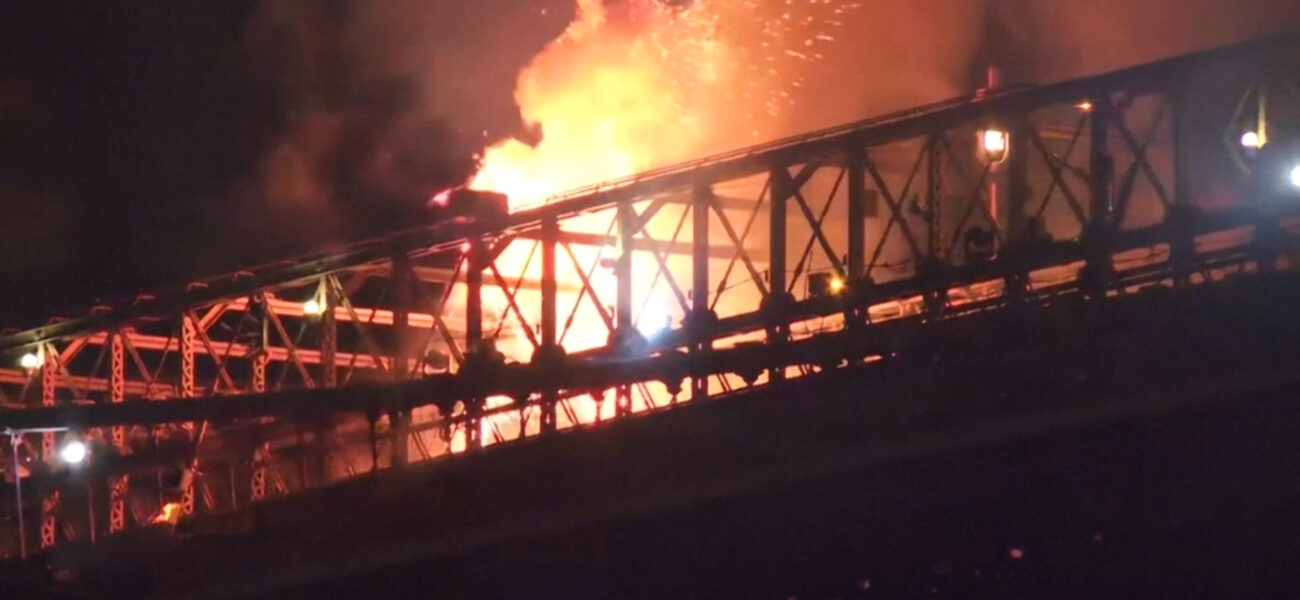
POLICY WIRE — New York, USA — They’d come for the spectacle, you see—the kind of carefully choreographed urban explosion meant to soothe collective anxieties with glitter and bang. New York’s waterfront was thick with anticipation, ready to embrace the quintessential summer night celebration. But amid the scheduled pyrotechnics, something quite unplanned, distinctly more elemental, decided to steal the spotlight: a fire on the iconic Brooklyn Bridge.
It wasn’t the sort of blaze one usually associates with fireworks. More of a smolder, a stubborn orange glow amidst the aged steel and cables that form one of the city’s most recognizable arteries. This wasn’t some dramatic, engulfing inferno ripped from a Hollywood disaster flick—no, it was something far more unnerving in its mundane, jarring reality. A patch of New York’s legendary resilience seemed, for a few awkward hours, to be quite literally smoldering.
The incident, coinciding with a city-wide fireworks display, certainly injected an unplanned dose of irony into the evening’s festivities. Crowds, momentarily distracted from the sky by the very real embers dancing over the East River, grappled with a cognitive dissonance: grand celebration on one hand, a stark reminder of decay on the other. It’s funny, isn’t it, how effortlessly the magnificent can brush up against the mundane mishap? Or perhaps, it’s not funny at all.
City officials, ever keen to manage optics, were quick to downplay any lingering threat. We’re told [QUOTE_PLACEHOLDER], — and that things are [QUOTE_PLACEHOLDER]. They’re always quick to reassure, aren’t they? And yes, traffic was redirected, emergency services deployed with customary efficiency. It’s what New York does. But the mental image—a historic bridge, arguably a symbol of American ambition and engineering prowess, quietly catching fire during a public holiday—it just sits there. You can’t un-see it.
One might easily dismiss this as an isolated quirk, a mere hiccup in an otherwise smooth display of urban management. But I’d suggest otherwise. New York’s aging infrastructure, like that of many older metropolises across the globe, demands constant, vigilant attention. Consider that nearly 46,000 bridges across the United States, roughly 8% of the total, are deemed structurally deficient, according to a 2023 analysis by the American Road & Transportation Builders Association. It isn’t just about grand, new projects, but the painstaking, often invisible work of keeping the old giants standing. Because neglecting them? Well, that eventually leads to unwelcome, public revelations.
📄 POLICY WIRE WHITEPAPER PUBLISHED: PAKISTAN'S NATIONAL SECURITY POLICY PRIORITIES
👉 READ BY CLICKING HEREThink about cities like Karachi, Pakistan’s sprawling economic heartland. There, the daily grind involves a constant, almost casual negotiation with infrastructure that often feels like it’s held together with prayer and stubborn optimism. Roads buckle, power grids flicker with routine abandon, and bridges—while perhaps not quite catching fire during celebratory displays—suffer from deferred maintenance that puts countless lives at risk. An event like a bridge fire in New York might be a fleeting media spectacle; in other parts of the world, it would simply be another Monday, only perhaps with fewer swift emergency responses. But the underlying issue, this persistent challenge of maintaining complex urban ecosystems, that’s a common thread.
It’s not just a technical challenge, either. It’s a political one. It’s about funding priorities, public perception, and the short attention spans of a citizenry easily captivated by shiny new things over the critical, but unglamorous, upkeep of existing ones. For decades, New York has benefited from an implicit global confidence in its capacity for effective self-governance, a sense of robust, almost inevitable, competence. But even an accidental, minor fire on a celebrated landmark during a grand celebration, well, it can poke holes in that perception. Especially when the spectacle is meant to affirm stability.
What This Means
This localized mishap carries more weight than just a logistical nuisance; it’s a subtle but significant crack in the carefully constructed facade of predictable urban resilience. Economically, while a temporary bridge closure has immediate local impacts, the broader concern lies in investor confidence and perceived stability. Major financial centers like New York rely heavily on the unstated assurance that their foundational systems operate flawlessly, 24/7. Even a small, high-profile incident like this one — during prime media attention, no less — can inject a nagging question mark into that narrative. It suggests vulnerabilities that even advanced Western economies aren’t entirely immune from, especially when their infrastructure has been weathering decades of wear. But. The long-term implications are also political: how quickly does the city’s leadership address the root causes of such failures? Because failure to do so risks feeding into a global skepticism about the practical realities of governing dense, aged metropolises. For nations observing, particularly those grappling with their own systemic issues in South Asia or the wider Muslim world, such events offer both a peculiar reassurance that even the mighty can stumble, and perhaps, a reminder of the relentless burden of maintaining order amid inevitable entropy.