


Live Wire vs. Hindsight’s Glare: Why Instant Scrutiny Eludes the Best Broadcasts
POLICY WIRE — New York, USA — We demand instant verdicts, don’t we? Not just on political machinations or economic forecasts, but on a basketball court, too. That insatiable thirst for immediate,...

POLICY WIRE — New York, USA — We demand instant verdicts, don’t we? Not just on political machinations or economic forecasts, but on a basketball court, too. That insatiable thirst for immediate, unequivocal judgment? It’s not just Twitter noise; it’s a foundational crack in how we consume — and dissect critical moments. And sometimes, even the most seasoned broadcasters just can’t deliver it live, no matter how much we scream at our screens.
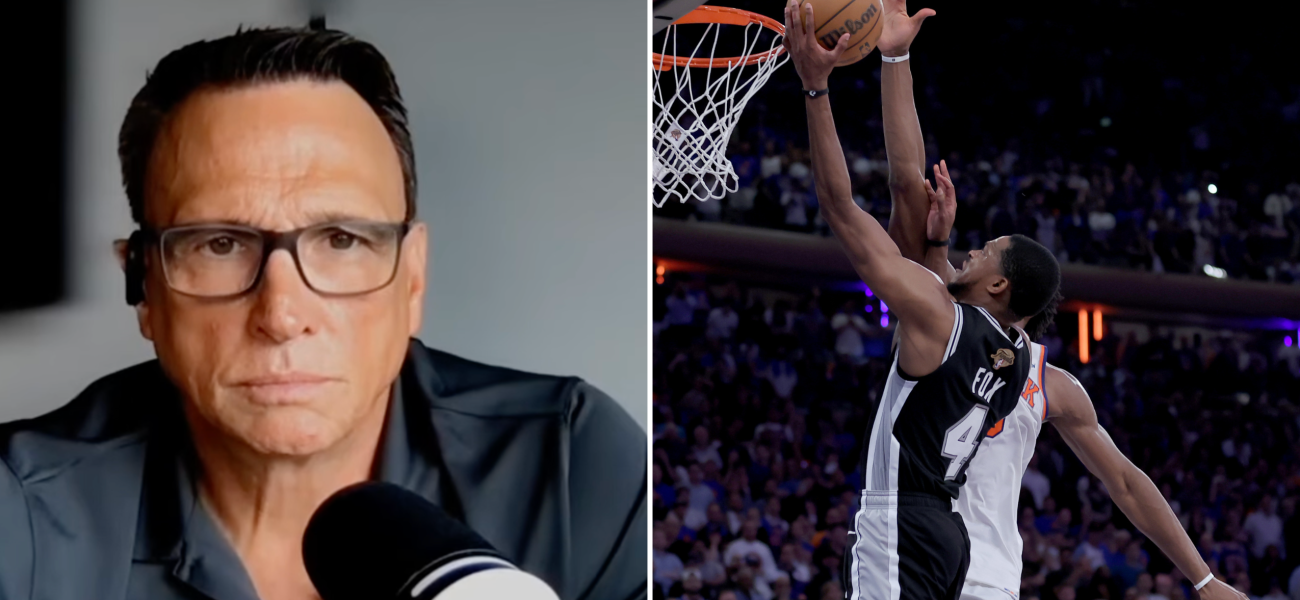
Take ESPN’s much-maligned coverage of De’Aaron Fox’s fateful late-game decision in Game 4 of the Knicks-Spurs series. The broadcast crew – Mike Breen, Richard Jefferson, — and the venerable Tim Legler – caught flak. A lot of it. Fans wanted them to rip apart Fox’s choice to drive for a breakaway layup instead of drawing a foul. Anunoby swatted it, the Knicks won, and the next day, everyone from First Take to your cousin’s conspiracy theories on Reddit piled on. But, — and this is crucial, the world didn’t look quite the same from inside the booth.
Legler, a sharp basketball mind himself, recently spilled the tea on the Awful Announcing Podcast (a publication well-versed in media missteps, mind you). He wasn’t dodging accountability, but he was laying bare the messy reality of live sports commentary. You’ve got a job to do. That job isn’t always forensic analysis in real-time. It’s triage. “You got a chance potentially to be calling a game-winning shot right there going the other direction,” Legler told host Brandon Contes. “So it’s like a lot was going on in that moment.” Chaos, pure — and simple. The Knicks were racing the other way. Every eyeball was tracking *that*, not the play that just ended.
Then, another curveball. Jose Alvarado gets fouled – bizarrely, inexplicably, with one foot in the front court — and the ball somewhere else. A potential backcourt violation. Social media melted down. The broadcast, facing immediate, widespread viewer panic, had to prioritize clarity over post-mortem. “We had to basically work through that — wasn’t a backcourt, here’s why — let’s show the replay, explain that,” Legler recalled, “because people are freaking out.” They did. They explained it. Went to commercial. Came back. Briefly revisited *that* replay, not Fox’s. They were extinguishing the most urgent fires, not conducting an autopsy on yesterday’s battle.
This isn’t just about sports, is it? The global information landscape demands instantaneous interpretation. Whether it’s a political leader’s gaffe or a diplomatic shift in South Asia, the immediate media narrative often defines public perception long before careful deliberation. The relentless push for real-time analysis leaves little room for nuance or complexity, pushing live commentators into an unenviable position. The world expects clarity — and conviction, and it wants it *now*. An analysis by SportScan Analytics revealed that post-game social media commentary on critical in-game decisions skyrockets by an average of 340% within 15 minutes of the final whistle, indicating an insatiable demand for immediate, detailed explanations.
Legler admitted, with a sigh of professional wistfulness, “I wish maybe one of us could have got a quick comment in.” But he won’t be losing sleep. “By no means were we looking at that the next day, saying, ‘Oh, damn,’ you know, beating ourselves up because of what was still happening in the moment.” It’s a pragmatic stance. And Legler’s got a point. You’re paid to react to the living, breathing narrative, not pause it for a doctoral thesis.
📄 POLICY WIRE WHITEPAPER PUBLISHED: PAKISTAN'S NATIONAL SECURITY POLICY PRIORITIES
👉 READ BY CLICKING HEREFox himself told the broadcast crew he barely ever gets caught on a breakaway. His unique quickness, he felt, offered a ‘window’. He processed. He drove. He lost. And that, in an instantaneous game, is that. But for those like Charles Barkley, whose opinion lands with the force of a tectonic plate, the verdict was clear. Barkley, five minutes into the Inside the NBA postgame, didn’t hesitate: Fox should’ve taken the foul. This instantaneous declaration, untethered from the live broadcast’s constraints, crystallized public opinion. And this divergence, between live professional necessity and immediate analytical posturing, underscores a deepening fault line in how we understand expertise in a high-speed world.
But the pressure to get it ‘right’ instantly echoes even in the highest echelons of diplomacy, where misinterpretation or a delayed reaction can have consequences far more severe than a basketball game. Imagine a situation like Tehran’s ‘Hands Off’ Hormuz stance, where the initial media spin, right or wrong, shapes global political responses. The challenge isn’t merely accuracy; it’s the instantaneous calibration of ‘truth’ for a voracious audience.
What This Means
This wasn’t a failure of journalistic integrity or analytical skill, but a stark illustration of the inherent tension between the unscripted chaos of live events and the public’s expectation for instant, definitive explanation. For media organizations, it’s a constant, unwinnable war: dissecting moments versus simply keeping pace with them. Financially, missing that ‘crucial’ moment—or the perception of it—can dent credibility and viewership, particularly when rival outlets or social media pundits fill the void with more decisive (if often less informed) commentary. The long-term implication is a subtle erosion of trust in traditional media as the ultimate arbiter of truth, shifting influence to those who can deliver the fastest, if not the most nuanced, take. This doesn’t mean broadcasters should halt the game; it simply means the demand for immediate clarity is now an intractable force, shaping both the narratives we consume and the media tasked with producing them.