

Iran’s Somber Successor Dance: The Phantom of a Leadership Vacuum
POLICY WIRE — Tehran, Iran — The chill hanging over Tehran wasn’t just the autumn air; it was the unspoken question, the glaring absence. When Supreme Leader Ali Khamenei,...

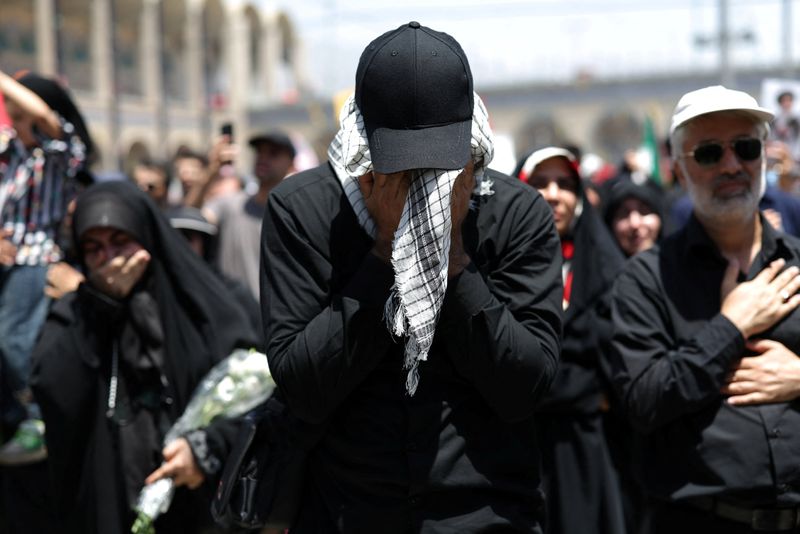
POLICY WIRE — Tehran, Iran — The chill hanging over Tehran wasn’t just the autumn air; it was the unspoken question, the glaring absence. When Supreme Leader Ali Khamenei, Iran’s highest authority for decades, was suddenly laid to rest, it wasn’t the usual parade of anointed power that captivated—or rather, unnerved—observers. No, the conspicuous figures flanking the coffin weren’t his handpicked political heirs or even the nation’s sitting president. Instead, it was his three sons. An extraordinary tableau, painting a clearer picture of uncertainty than any pronouncement ever could. You had to wonder what it all meant.
It was a stark departure from the choreographed transitions nations like this typically engineer. They’re usually quite keen on continuity, on showcasing a smooth, unassailable transfer of command. But the recent passing of Ayatollah Khamenei—a figure who’d steered the Islamic Republic for a considerable stretch, effectively holding the rudder since 1989—threw a serious spanner in those works. The absence of an immediately identifiable, publicly recognized successor at such a ceremony doesn’t just raise eyebrows; it triggers outright speculation about fractures deep within the regime’s gilded cage. It’s not just about a funeral; it’s about power, plain — and simple.
And let’s be real, the sons are prominent in their own right, holding various positions of influence, both formal and informal. But they’re not the Supreme Leader. Not yet, anyway. Their very visible presence, coupled with the striking absence of figures one might assume would be jostling for immediate recognition as his successor, spoke volumes in the tightly controlled echo chambers of Iranian politics. It implies a succession mechanism that’s either severely compromised, deeply contested, or simply not yet ready for public consumption. That sort of vacuum never goes unfilled for long. But who fills it? That’s the rub.
This isn’t merely an internal Iranian affair; it carries considerable weight across the Muslim world and specifically for neighbors like Pakistan. Historically, Iran’s stability—or lack thereof—has a ripple effect through the region. A clear leadership can project authority, mediate disputes, or challenge established norms. A fractured leadership? That’s an invitation for external pressures — and internal jockeying that could escalate into something uglier. We’ve seen this movie before, countless times. From Karachi to Cairo, regional capitals are undoubtedly holding their breath, parsing every nuanced signal from Tehran.
But the true implications, of course, extend beyond immediate geopolitics. Iran, a nation of over 88 million people, as per recent estimates from the World Bank, isn’t some backwater principality. Its strategic importance, energy reserves, and historical clout mean this isn’t just about who leads, but about the direction they take the ship of state. Will it be a hardened pragmatist, a firebrand ideologue, or something altogether more unpredictable? An unanswered question that sits heavy on the international agenda.
For weeks leading up to the unexpected news of Khamenei’s death, there had been quiet murmurings, hushed conversations among analysts who monitor the intricate dance of Qom and Tehran. Rumors about his health, always denied, had intensified. So the sudden, stark reality of his passing and the subsequent funeral’s unusual guest list—or lack thereof, for a key role—certainly threw cold water on any illusions of an orderly pre-ordained transfer of power. And they weren’t alone in that observation; countless foreign policy shops scrambled to recalibrate their understanding of the situation on the ground. Everyone wanted to know: Is this a temporary glitch, or the first crack in a system that’s been outwardly monolithic for decades?
📄 POLICY WIRE WHITEPAPER PUBLISHED: PAKISTAN'S NATIONAL SECURITY POLICY PRIORITIES
👉 READ BY CLICKING HEREIt’s fascinating, really, how carefully chosen public appearances—or their absence—can communicate so much more than fiery rhetoric. The family members were present, fulfilling their filial duty. But where was the next Supreme Leader? Where was the man everyone had supposedly been preparing for, grooming for, for years? [QUOTE_PLACEHOLDER] is a sentiment frequently heard among Iranian expats — and policy watchers alike. His absence from that crucial public moment just underscored how truly volatile the situation likely was, behind closed doors.
This kind of situation, a prolonged interregnum, offers both peril — and opportunity. For outside actors, it’s a moment for cautious engagement, for measuring the potential fault lines. For the internal players, it’s a knife-edge moment, where alliances can shift with a whispered word or an opportune gesture. Nobody’s sleeping easy. Not in Tehran. Not in Washington. Not in Islamabad, for that matter, given the complex and often fraught historical relationship between Pakistan and its neighbor to the west. The political climate just got a whole lot more opaque.
What This Means
The highly unorthodox appearance of Supreme Leader Khamenei’s sons as the most prominent public figures at his funeral, rather than an obvious successor, suggests that Iran is facing an uncharacteristically unstable leadership transition. It isn’t simply a matter of a leadership vacuum; it’s an indication that the deep state apparatus, often characterized by intricate clerical and revolutionary guard networks, might be deeply fractured on the path forward. This internal disagreement—or outright struggle—could manifest in a few ways. We might see a prolonged period of uncertainty, making Iran an even more unpredictable actor on the global stage. It might lead to a more hardline successor attempting to consolidate power swiftly, or conversely, a power-sharing arrangement among factions that inevitably makes national policy more sluggish and prone to internal negotiation. This sort of power shuffle will certainly ripple across the broader Middle East, likely emboldening or alarming various state and non-state actors who’ve come to rely on or fear Iran’s particular brand of influence. Consider the proxies in Yemen, Lebanon, and Iraq: they’re all watching for signs of strength or weakness from Tehran. It’s a high-stakes moment, — and a quick, clear resolution seems less likely by the hour. Because instability in Tehran very rarely stays contained within Iran’s borders. It’s a regional contagion.